
Can Memory Foam Mattresses Be Wet Cleaned?
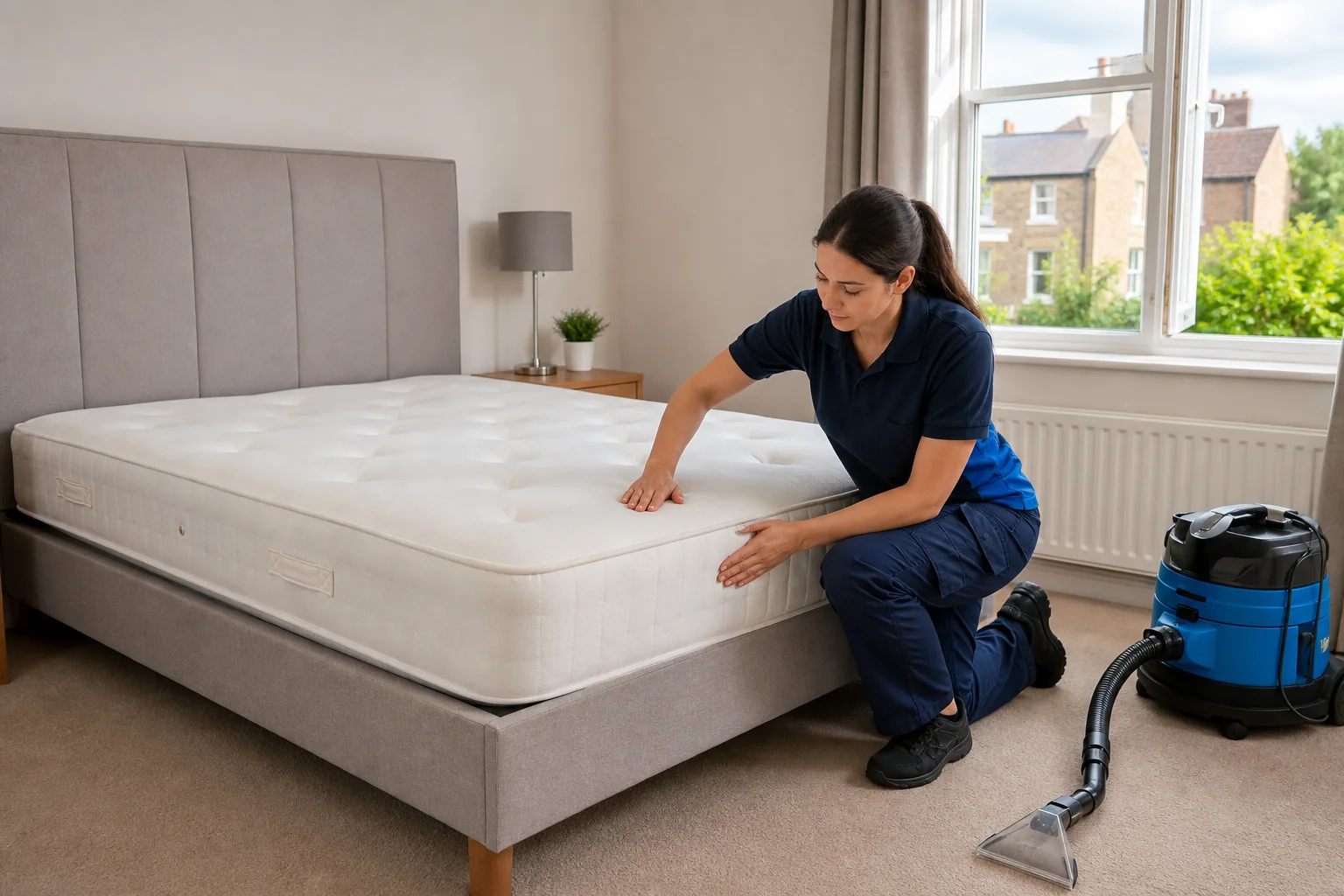
Do not assume a memory foam mattress can be wet cleaned through its full depth. Many models contain thick foam layers that are difficult to inspect and dry once soaked. The outer ticking or a maker-approved removable cover may permit a particular surface treatment, but that is different from saturating the core. The right decision starts with the instructions for the exact model, how much liquid entered, and whether the mattress can be dried safely afterwards.
If a drink has just spilled, remove wet bedding and any separately washable protector. Blot the surface gently with clean white absorbent cloths; avoid rubbing or pouring more water into the foam. Record the amount and type of liquid. A small damp patch on a protector is not equivalent to a glass that passed through the cover and into the core.
The cover may have its own rules
A zip does not automatically mean that the cover may be removed or put in a washing machine. Some makers restrict cover removal for safety or care reasons; others provide precise wash and refit instructions. Check the label and manual for your model. Do not cut open the ticking to investigate a stain or remove a cover against the maker's directions.
If the cover is separately washable under the manufacturer's rules, follow its instructions and dry it completely before refitting. The exposed foam still needs protection and inspection. A cleaned cover does not establish that an affected core is dry. The guide to How to Prepare a Mattress for Professional Cleaning helps distinguish removable bedding layers from the mattress itself.
Why deep foam moisture is difficult
Foam can take in liquid through the surface and hold it inside a thick structure. Air may reach its exterior while the centre dries much more slowly. A normal cleaner cannot verify the condition of every internal point without taking the mattress apart. Product residue or a spill can later move to the cover and leave a ring. Repeated extraction on the surface may improve its appearance without resolving what remains deeper.
This matters especially for large or contaminated spills. A mattress that smells persistently damp or shows possible mould needs a broader assessment, and replacement may be more sensible than another wet attempt. A professional should not promise that a routine surface clean has sanitised the full foam core. The Why Mattress Construction Affects the Cleaning Method explains those reach and drying limits.
What a professional can assess
A technician can read the maker's guidance, inspect the cover, seams, visible marks and accessible underside, and discuss the spill history. They may propose limited surface cleaning if the model and condition allow it. Ask what will be applied, how it will be recovered and what the treatment cannot reach. A small test can inform whether a mark lightens; it cannot prove that a deep wet core is sound.
If the visible concern is gradual surface soil rather than a spill, a cautious process may be possible. If the concern is an odour from liquid absorbed months ago, the expected outcome is less certain. A fragrance or surface deodoriser can mask a smell temporarily while leaving its source below. Describe when the odour appears and whether it changes after the room has been closed for a period.
Drying without creating a new problem
Follow the technician's and manufacturer's positioning and ventilation instructions. Do not fold a model that is not designed to bend, prop it insecurely against a wall or use a powerful heater directly on the foam. Leave bedding and waterproof covers off treated areas until they are dry. Check the accessible underside and bed base; a wet support can keep reintroducing moisture.
The How Long Does a Mattress Take to Dry After Cleaning? explains why room humidity and airflow matter. A fixed promise of a few hours is unreliable without knowing the model and method. If dampness remains beyond the expected period, contact the cleaner promptly rather than sleeping on the bed or sealing it under a protector.
When replacement is the better question
Consider replacement if a large amount of liquid entered the core, an odour persists despite suitable surface care, there is possible mould, or the mattress is structurally damaged. The guide to Mattress Odour Treatment: Expectations and Limits considers condition beyond the visible mark. A small permanent stain on an otherwise dry, sound mattress is a different situation and may not justify replacement.
For a specific quote, provide the brand, model, care label and spill history through the contact page. The mattress cleaning service can discuss a suitable surface scope. The honest answer to “Can it be wet cleaned?” may be yes for a controlled cover treatment, no for deep saturation, or uncertain until the exact construction is checked.
A small surface mark versus a soaked core
Imagine two memory foam mattresses with a similar pale ring. On one, a small drink was stopped by a protector and only the cover was touched. On the other, a large spill passed through the cover into thick foam. The same visible ring does not make the same treatment appropriate. A limited cover clean might be reasonable on the first under its maker's guidance. On the second, the interior may remain damp or contaminated beyond the reach of surface equipment. Describe the liquid volume and timeline before seeking a quote. Do not choose a method from the mark's size alone.
Why repeated wetting can mislead
A surface may look uniformly clean while damp because water changes its colour and reflectance. As it dries, dissolved residue can travel and leave a fresh edge. Each attempt may move material farther without drying the core. If a previous treatment produced a returning mark, stop and record the dry outcome. A technician should decide whether any controlled surface test is worthwhile and explain when replacement is a better decision.
A mattress advertised as “cooling”, “gel” or “hybrid” can still contain substantial foam. Marketing names do not specify what happens to an accidental soak. Look for the maker's cross-section and care instructions rather than infer properties from the product name. If a removable topper lies above the memory foam mattress, inspect and treat it separately. A washable topper cover does not make the foam inside washable, and a dry topper does not prove the mattress below stayed dry. This layer-by-layer check is especially useful when a spill was discovered after several hours and its path is uncertain.