
How to Prepare a Mattress for Professional Cleaning
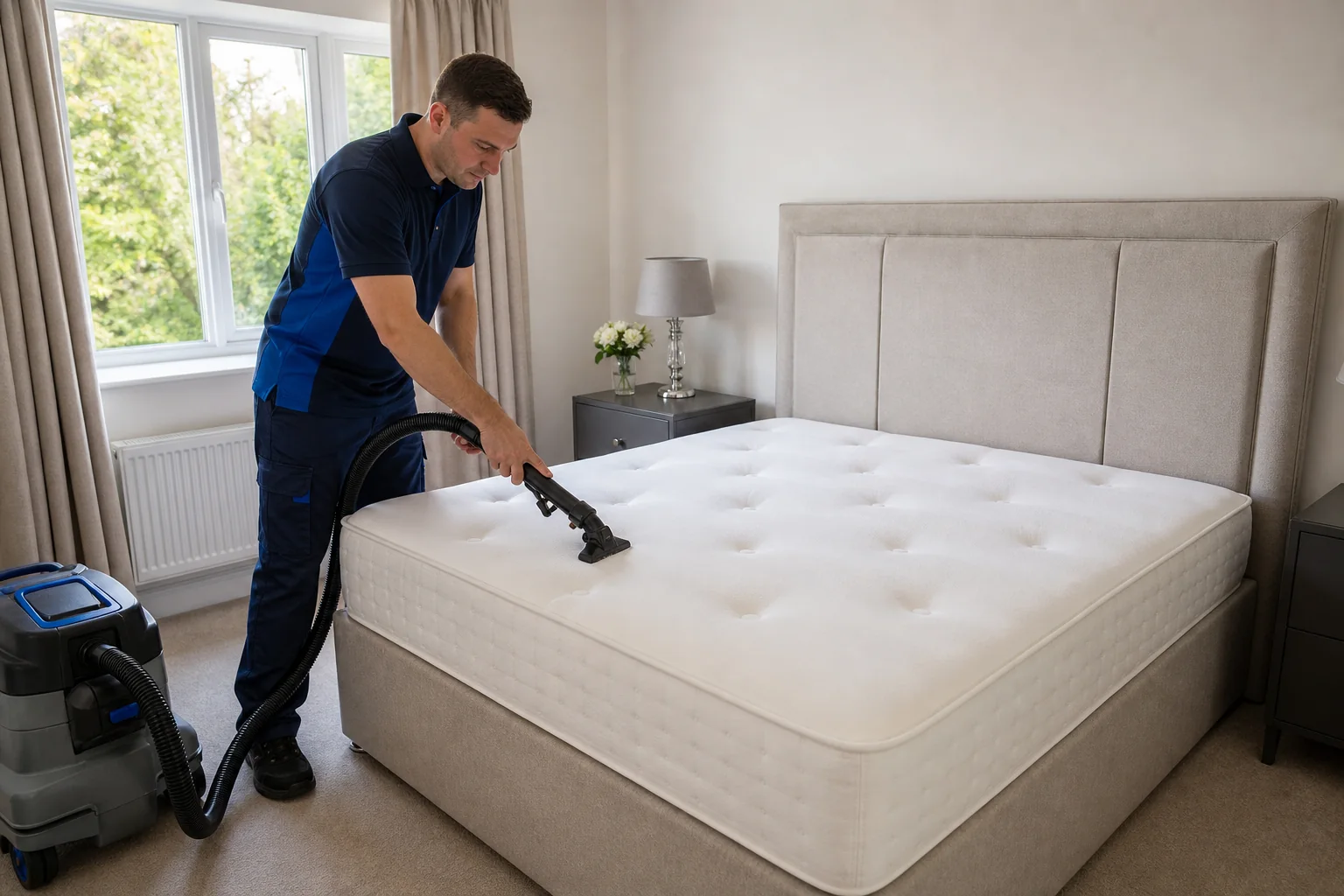
Preparing a mattress for professional cleaning means making its construction and history clear, then leaving enough time for safe drying. Remove ordinary bedding, identify the protector and topper as separate items, and gather the model's care instructions. Do not pre-wet stains or apply a new product to “help” the cleaner. A small amount of good information can be more useful than an extra home treatment that changes the mark.
When booking, give the mattress size and type if known, whether it is one-sided or designed to turn, and which faces or borders you want assessed. A bed base, topper and upholstered headboard are separate surfaces. Ask whether any of them are included and how the mattress will be supported during work. The mattress cleaning service can discuss the scope, while the price guide provides starting prices.
Gather the model and care guidance
Find the maker's label, purchase information or model name. Photograph care symbols and written instructions rather than relying on memory. Some mattress covers can be removed only for manufacture or service; a zip does not mean they may be machine washed. Foam, quilting and ticking have different moisture limits, and a mattress may have safety instructions about opening its cover. If guidance is missing, contact the manufacturer before attempting disassembly.
Tell the technician whether a protector was used and whether the mattress has been rotated, turned or folded. Some models must remain on a suitable base and should not be flipped. A heavy mattress should not be moved by one person simply to prepare a room. Ask the cleaner what access they need before shifting furniture.
Describe stains and earlier treatments
Record what spilled, roughly when, the amount of liquid and the products already applied. A drink that touched only the ticking differs from one that soaked through a topper and into foam. A brown edge that appeared after a previous clean may be material moving to a drying boundary. Photograph the mattress in daylight, including seams and the border, so the cleaner can compare before and after.
Do not guess if the source is unknown. A technician can work with uncertainty, but an inaccurate story can point them toward an unsuitable product. Mention unusual odours, persistent dampness or possible mould before the appointment; these may change whether routine surface cleaning is appropriate. A clean cover cannot establish that inner layers affected by a large spill are sound.
Separate what can be washed at home
Remove sheets, duvet, pillows and any removable protector. Follow each item's own care label for laundering. A thick topper may not be machine washable even if a thin protector is. Put clean layers aside and keep them off the bed until both they and the mattress are dry. The article on mattress cleaning frequency explains how a particular spill can justify assessment before the next planned routine clean.
Do not remove the mattress's own cover unless its maker explicitly allows it and gives refitting instructions. A foam core can be vulnerable when uncovered, and some models carry additional safety requirements. Tell the cleaner if a removable cover is already off the bed so they can assess the exposed construction safely.
Provide safe access around the bed
Clear small possessions from the bedside and the floor so the cleaner can reach the agreed surfaces. If the bed has under-bed drawers, move contents only where needed and check whether they were affected by an earlier spill. Point out electrical sockets, an adjustable bed mechanism, fragile flooring and a delicate headboard. Do not drag a heavy frame or lean a mattress insecurely against a wall.
Ask how the base and nearby carpet will be protected from moisture. A slatted, solid or upholstered support presents different drying and cleaning questions. The Why Mattress Construction Affects the Cleaning Method can help you identify those surfaces before the technician arrives. If the base is already damp, say so; cleaning only the mattress top will not resolve the whole problem.
Plan a realistic drying window
Arrange another place to sleep if the treatment may keep the bed out of use into the evening. Drying depends on construction, room humidity, airflow and the method used. Ask the technician when bedding may return and which seams, sides or underside to check. A waterproof protector should not be placed over a damp surface. Direct heat from a hairdryer or heater can affect covers and foam while leaving deeper material wet.
After the visit, follow the individual drying instructions, inspect the dry result in comparable light and record any returning mark. If a stain reappears, its timing can help identify whether old residue moved from below. Do not apply another retail product before asking the cleaner what happened. Use the contact page to share labels and photographs in advance so the on-site assessment can focus on the actual mattress.
A practical arrival-day sequence
Prepare the room before stripping the bed if moving furniture will be difficult with a bare mattress. Put clean bedding where it will stay dry, photograph the mattress and lay out labels and product details. Walk the technician through the mark and the base, then agree the treatment scope before they begin. If a topper or protector needs separate laundering, start it only under its label; do not assume the cleaner will wash it. This sequence prevents a damp sheet being put back over a treated surface simply because it was left on the floor.
If the bed has an adjustable base
Tell the company before the visit. Electrical controls and motors should remain away from liquid, and the mattress may have restrictions on bending or positioning. Consult both manuals rather than improvising. The cleaner may be able to work on accessible surfaces with the base in a safe position, or may need to change the plan. Do not use the adjustable mechanism to move a wet mattress unless the maker permits it. A separate upholstered headboard or padded base can need its own assessment.
If a large spill occurred just before the appointment, contact the company rather than assuming the original quote still applies. The mattress may need a different assessment, and the cleaner may advise against routine treatment if the inner layers are substantially wet. Remove affected bedding and protect the floor, but avoid flooding the mattress with water while waiting. Note whether the liquid reached a storage drawer, upholstered base or nearby carpet. The technician needs that wider picture. A surface stain can be the smallest visible part of a spill that has travelled down and sideways through several materials.