
Mattress Odour Treatment: Expectations and Limits
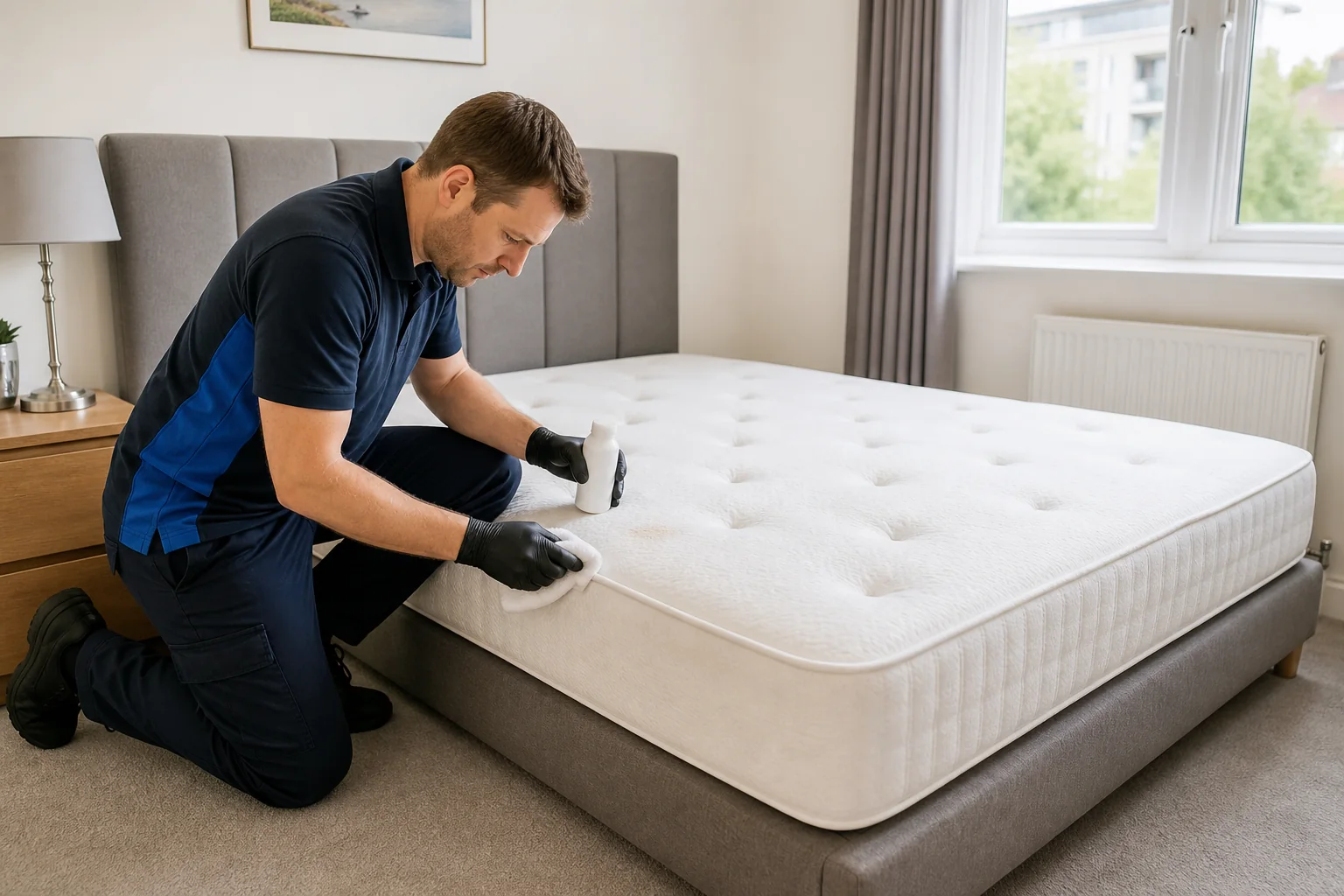
An odour from a mattress is a clue to a source, not a stain that one product will always remove. It may come from a recent drink, body moisture, a damp protector, a spill that reached foam, or the bed base or room itself. Professional cleaning can improve suitable surface contamination, but a deep source may remain beyond the reach of a routine treatment. Spraying fragrance over the bed can make the smell less obvious for a while without explaining why it developed.
Before booking, note when the odour is strongest. Is it noticeable when bedding is first removed, when the room has been closed, or only near one mattress edge? Has the mattress been wet, and was a protector in place? Check washable bedding and toppers separately under their labels. The answer may lie in a layer that can be laundered without wetting the mattress at all.
Locate the likely source
Strip the bed and inspect the protector, topper, ticking, border and accessible underside. Check the base, especially after a spill or if the room has persistent dampness. A wet upholstered divan or a solid platform can keep affecting a mattress placed back on it. Do not put your face against a suspicious area or open the mattress cover against the maker's instructions. Photographs and a clear timeline are enough to start a professional discussion.
The Why Mattress Construction Affects the Cleaning Method explains why the support may be part of the problem. If there is an active leak or condensation issue, address it before expecting cleaning to produce a lasting change. Repeatedly cleaning a mattress in a damp environment will not solve the source of water.
Different odours imply different limits
A surface drink spill treated promptly may be more accessible than an old liquid that soaked through to foam. A musty smell with persistent dampness needs particular caution; possible mould warrants suitable assessment rather than an ordinary deodorising promise. A chemical smell after repeated retail products may reflect residue, while a smell present only with bedding on may come from the bedding or protector. Avoid diagnosing solely by smell, since several sources can seem similar.
Tell the cleaner what was spilled and every product used. A scented spray, bicarbonate or strong disinfectant can complicate later treatment and may leave particles or residue. Some materials may be unsuitable for the mattress cover or its inner foam. Do not mix chemicals in the hope of overpowering a smell.
What a cleaning visit can include
A technician can inspect the model and care label, assess visible condition, remove suitable dry soil and propose a controlled surface treatment if the mattress permits it. They should explain which face and seams will be treated, how moisture is limited and what deeper material cannot be accessed. The mattress cleaning service can discuss these boundaries, but a phone quote cannot verify a foam core's condition.
A surface may look and smell improved while damp, then release odour again after it is used or after the room is closed. That return is useful evidence. Record how long the improvement lasted and where the smell is strongest. Another application of fragrance or water may not address the cause and could worsen drying.
Drying is part of odour management
Keep bedding and protectors off until treated materials are dry. Follow the technician's ventilation advice and the maker's instructions for turning or moving the mattress. A cover sealed under a waterproof protector while damp may develop a new smell. Check the accessible underside and base as well as the top before rebuilding the bed.
Drying depends on room humidity, construction and treatment method. The guide to How Long Does a Mattress Take to Dry After Cleaning? is relevant when indoor air is cold or humid. Do not use intense heat directly on foam or ticking; it can alter the surface without drying a deep layer. If dampness persists, ask for reassessment rather than waiting beneath bedding.
When treatment is unlikely to be enough
A large contaminated spill, persistent internal dampness, possible mould or an odour clearly arising from a thick foam core may make replacement the safer practical decision. Cleaning a cover does not prove that the unseen material is clean. A mattress with structural damage may also be poor value to treat. The guide to what a professional mattress-cleaning visit includes clarifies the limited scope of a routine surface service.
For a small surface mark on an otherwise dry, sound mattress, a professional may still be useful. Ask the technician what outcome is realistic and how they will judge it once the mattress is dry. A measured answer is better than a guarantee that an old smell will never return.
What to send for a quote
Use the contact page to share the mattress model, size, labels, photographs and a brief odour timeline. Mention the protector, base type and any previous treatment. The price guide provides starting figures, but the relevant decision is whether the source is within the reach of a safe treatment. Clarifying that before booking prevents a surface service from being mistaken for a deep restoration.
Separate a room smell from a mattress smell
If the room smells musty even after the mattress is moved or the bedding is washed, inspect ventilation, condensation and the base before blaming the ticking. Conversely, an odour that appears only when pressure is applied to one cushion area may point more strongly towards material within the mattress. Neither pattern is a laboratory diagnosis, but the observation directs the next inspection. Record the conditions under which the smell appears rather than repeatedly spraying fragrance. If there is an active leak or possible mould, resolve that condition before booking a cosmetic surface clean.
Ask what success will mean
An odour may be reduced, absent in normal use, or return only when the room becomes humid. Agree how and when to judge the outcome once the mattress is dry. Ask the cleaner to distinguish an improvement claim from a guarantee of permanent elimination. A useful follow-up report includes the smell's location, timing and any remaining dampness. That information can support a decision about further treatment, a base repair or replacement.
Be cautious with claims that a treatment has “killed all germs” or permanently removed an odour. A cleaner may describe the product and accessible surfaces treated, but unseen layers and future dampness limit what can be verified. Ask for the exact scope and whether the claim applies after drying, not just while fragrance is present. If the smell returns after the bed has been remade, remove and check bedding layers again before attributing it to the mattress. A systematic check can prevent paying for repeated surface cleaning when the actual source is a topper, base or room condition.