
Why Mattress Construction Affects the Cleaning Method
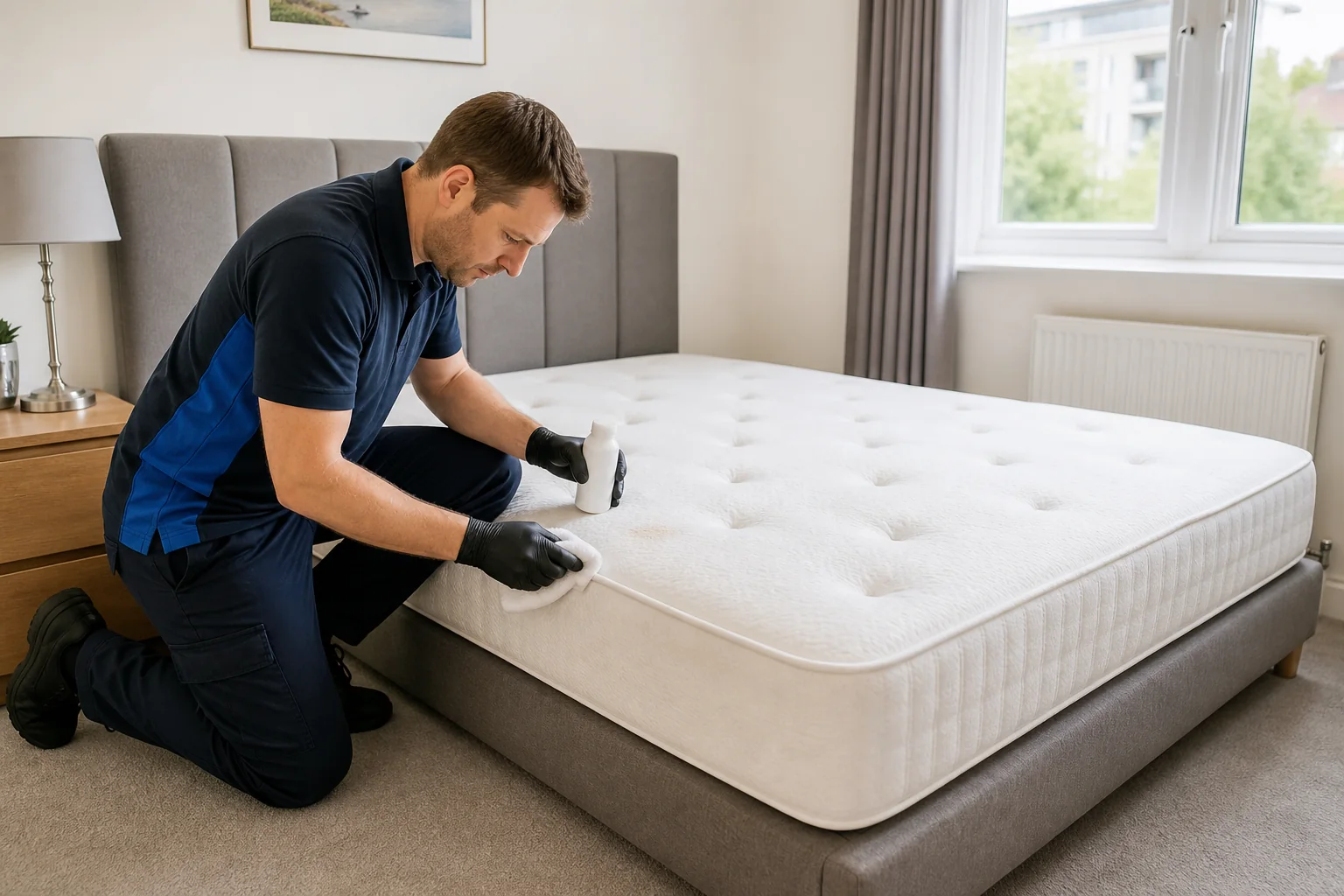
Mattress construction determines what a cleaner can safely treat and how the bed will dry. The visible ticking may sit above quilting, foam, fibre padding or a spring unit. Some mattresses are designed to be turned; others have a one-sided comfort layer. Two beds with the same white cover can therefore react differently to moisture. A method chosen only from the colour of a stain ignores the materials between the surface and the base.
Find the maker's instructions for the exact model before cleaning. Labels can specify how to care for a cover, whether it may be removed, which base supports the mattress and whether turning is allowed. A zip is not proof of a washable cover. If instructions are unavailable, a professional should use a cautious assessment rather than assume a generic mattress process is safe.
The visible ticking is not the whole bed
The top fabric may be quilted into padding. Stitches and tufts create recesses where dust or spill residue can collect, and they may retain moisture longer than a broad flat panel. A border may use a different fabric from the sleeping surface. Handles, labels and decorative piping can be weak points that should not be pulled or soaked during treatment.
A surface stain can pass through the ticking into a layer that normal cleaning cannot inspect directly. When liquid evaporates, dissolved material from below may move upward and leave a returning tide mark. The guide to Mattress Cleaning: What Does a Professional Visit Include? describes those details, while the Why Mattress Cleaning Needs Controlled Moisture explains why a dry edge can remain after a surface improves.
Foam layers need a cautious moisture plan
Foam can hold liquid within a thick layer and may be slow to dry internally. Memory foam and other comfort foams also vary in construction and maker instructions. A cover that feels dry does not prove the foam below is dry. Repeated wetting of a deep mark can enlarge the affected area and make a later assessment harder. A technician should explain what the proposed process reaches and what remains inaccessible.
The Can Memory Foam Mattresses Be Wet Cleaned? sets out the difference between cleaning a surface and attempting to treat a core. A large drink spill or contaminated liquid that entered the foam may warrant replacement or specialist advice rather than a routine surface service. A claim that surface extraction has sanitised every internal layer would overstate what can be shown.
Spring and hybrid mattresses have other interfaces
A sprung mattress may have fibre or foam padding above the spring unit. Its quilted top and side panels can absorb moisture differently, even if the spring itself is not exposed. A hybrid may combine several foams with springs and a complex cover. The cleaner should not rely on the broad label “spring mattress” to choose water volume or drying time. The exact model, visible condition and spill history still matter.
Do not cut open a cover to identify the inner layers. Use the manufacturer's specifications and ask the technician what they can reasonably assess from the outside. If a smell or wetness suggests deeper material is affected, the limitations of a non-invasive clean should be stated plainly.
Base and room conditions finish the picture
A mattress does not dry in isolation. Slats, a solid platform or an upholstered divan change airflow and may themselves be damp after a spill. The correct support is the one recommended for the mattress, not a universal rule about slat spacing. A wet base can rewet a cleaned underside. Ask how the base will be protected and checked before the bed is remade.
Room temperature, humidity and ventilation also affect drying. Avoid placing an intense heater against foam or ticking; it may change the surface without drying the interior. Keep sheets and waterproof protectors off until the technician's guidance is met. In colder months, plan enough time that the bed can remain unused if drying takes longer than hoped.
How the cleaner should choose the method
A professional should inspect the model, label, ticking, seams, borders, visible marks and previous products. They may use a controlled surface process for suitable soil and explain which sides are included. A small test can help estimate visual improvement, but it cannot verify every deep layer. The mattress cleaning service should connect its proposed method to this construction rather than sell one treatment to every bed.
For a quote, provide mattress size, model name, age if known and photographs through the contact page. Say whether a protector was in place and how much liquid entered during any spill. The price guide gives starting prices, but an ordinary surface clean and a deeply soaked mattress are different decisions.
Judge outcome within those limits
Inspect the dry surface in comparable light, check accessible seams and underside, and note any recurring mark. Some colour differences may be permanent. If odour or dampness continues, do not assume another application will solve a hidden source. Construction sets both the opportunity for improvement and the boundary of what cleaning can honestly claim.
A hybrid-model example
A hybrid mattress may combine a quilted top, several foam layers and springs. A small surface mark near the border can seem easy to reach, yet the edge may include a dense foam wall and different fabric from the central sleeping panel. A cleaner should not infer that the same amount of moisture will dry equally across both. If the mark reaches a stitched handle, product can collect around the attachment. The model specifications, visible design and careful test inform a limited plan. If an earlier spill reached the underside, inspect the base separately rather than concentrating only on the top mark.
Construction also shapes the quote
The size of a mattress is not the sole measure of work. A complex border, multiple treated faces or a delicate cover can require more assessment than a simple accessible surface. Ask what is included and what would change after inspection. This avoids paying for a routine clean when the real issue is an inner layer the process cannot reach. Record the explanation for future maintenance decisions.
Some model instructions distinguish between surface cleaning the cover and cleaning a removable protector supplied with the bed. Read both labels rather than treating them as one. A manufacturer may also specify how much space or ventilation the base must provide. If the mattress has been placed on a different frame, that support may affect drying and warranty guidance. The cleaner can inspect visible conditions, but the maker remains the authoritative source for the exact model's intended use. Keep these documents with the service record so future spills do not require another guess about construction.