
Why Rug Backing and Construction Matter
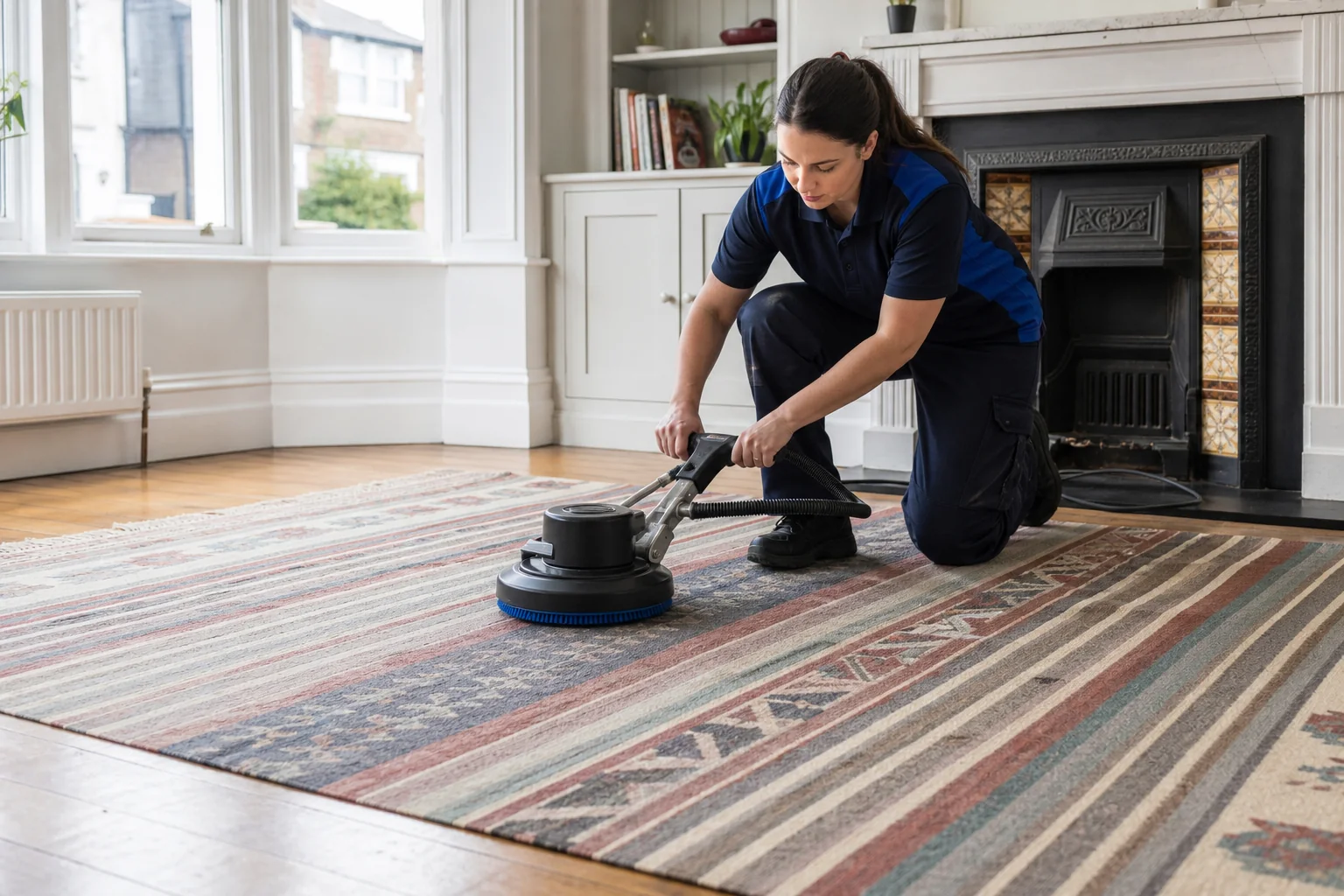
The visible pile is only one part of a rug. Its backing or woven foundation holds the fibres, gives the piece shape and affects how liquid passes through and dries. A cleaning method that suits the face yarn may damage an adhesive, move dye through a foundation or trap moisture against the floor. Inspecting both sides is therefore necessary before treating a rug, particularly when it is old, valuable or has already developed a curled edge.
Photograph the front and underside in daylight and look for loose threads, powdery residue, cracking, stains and previous repairs. Do not peel a backing away to investigate it. If you are unsure whether the rug is hand-knotted, tufted or machine woven, say so when seeking advice. The cleaner can assess construction without assuming the pile fibre tells the whole story.
Woven foundations and fringes
On many hand-knotted rugs, the foundation threads run through the body and continue as fringe. Damage at the edge can therefore threaten the structure, not just its decorative appearance. Cotton, wool and other foundation materials can react differently from the face pile. A large spill may carry colour or residue into those threads and leave a line that is visible after the pile dries.
Strong brushing or pulling at weak fringe can break foundation threads. A cleaner should inspect old repairs, overlocking and loose knots before using equipment near an edge. The guide to professional fringe inspection explains why the fringe requires its own assessment.
Latex and adhesive backings
Many tufted rugs use latex or another adhesive to hold yarns and attach a secondary backing. As these materials age they may become brittle, powdery or detached. Cleaning cannot reverse failed adhesive. Moisture or mechanical stress can reveal weakness that was already present, and a rug may shed backing particles when lifted. Tell the cleaner if the underside leaves dust on the floor or makes a crackling sound.
The Delicate Rug Cleaning: Risks and Practical Limits considers what a deteriorated backing means for treatment. A low-cost rug with extensive failure may be better replaced than repeatedly cleaned. A cleaner should not promise that a washed pile will restore a backing that no longer holds it securely.
Floor coverings beneath the rug
An underlay or non-slip pad is a separate material and may absorb a spill. The floor underneath can be affected even if the rug top looks dry. Timber and laminate are especially vulnerable to trapped moisture, while some backing products can react with floor finishes over time. Lift a manageable rug according to the maker's guidance and check both surfaces after a leak or large spill. Do not drag or fold a heavy rug by yourself.
If in-home cleaning is proposed, ask how the rug and floor will be protected and dried. The In-Home Rug Cleaning: When Is It Appropriate? explains the practical risk. Placing a cleaned rug back over a damp pad can reintroduce odour or marking even if the pile was treated well.
Construction changes the treatment route
A sound modern synthetic rug may suit controlled in-home treatment after testing. A delicate woven rug with unstable dyes may need a specialist workshop method. A brittle backed rug may not tolerate either. The cleaner should inspect fibre, colours, backing, fringe, wear and previous products before deciding how much moisture or agitation is appropriate. A small dye test does not settle an adhesive problem, and a sound backing does not prove all dyes are stable.
The rug cleaning service should explain what is known and what risks remain. If a rug is valuable or antique, ask about specialist expertise and documentation before any treatment. A decision not to clean can preserve an irreplaceable piece better than an unsuitable routine process.
What to do after a spill
Blot fresh liquid from the pile with clean white absorbent cloths without grinding it in. If the spill passed through, protect and dry the floor and pad separately. Do not pour water through the rug to rinse it while it lies on timber. Photograph the underside after it is safe to lift. A stain or odour held in backing may require a different scope from a surface spot clean.
For a quote, send dimensions, front and back photographs, label and spill history through the contact page. Ask what the method reaches, how the underside will dry and whether a repair is needed first. The right plan begins with the support structure that makes the rug a rug.
A failing latex-backed rug
Suppose the rug looks attractive from above but leaves pale powder on the floor whenever it is lifted. That powder may indicate aged backing or adhesive failure, not loose household dust. A wet clean could loosen more material, while a stronger vacuum might accelerate shedding. Show the cleaner the underside and floor debris before booking. Ask whether treatment is likely to extend the rug's useful life. In some cases replacement protects the floor and avoids paying for a clean that cannot restore the bond holding the pile.
A hand-knotted rug with edge damage
The fringe may be part of the foundation, and a torn edge can spread with handling. A specialist may recommend stabilising it before transport or washing. Do not trim loose foundation threads to make the edge look tidy. Photograph both faces and mark the damaged area for the cleaner. If a spill also reached the foundation, the repair and cleaning plan should be coordinated; washing first without considering structural strength can increase damage.
Backing also influences how a stain should be judged. A dark patch in the face pile may be removable soil, while a stain visible on both faces indicates that liquid travelled through. If an odour persists on the underside, a surface clean may be insufficient. Ask the cleaner to show you what they observed on the backing before work begins. If the rug cannot be lifted safely in the room, plan assistance rather than judging from the top alone. A photograph of the underside gives a useful baseline for checking whether a future spill has reached the foundation or floor.
When a rug is returned after cleaning, repeat that underside photograph if it can be done safely. It documents what changed and whether the backing remains sound. Keep the floor uncovered until any moisture beneath it has been addressed.