
Delicate Rug Cleaning: Risks and Practical Limits
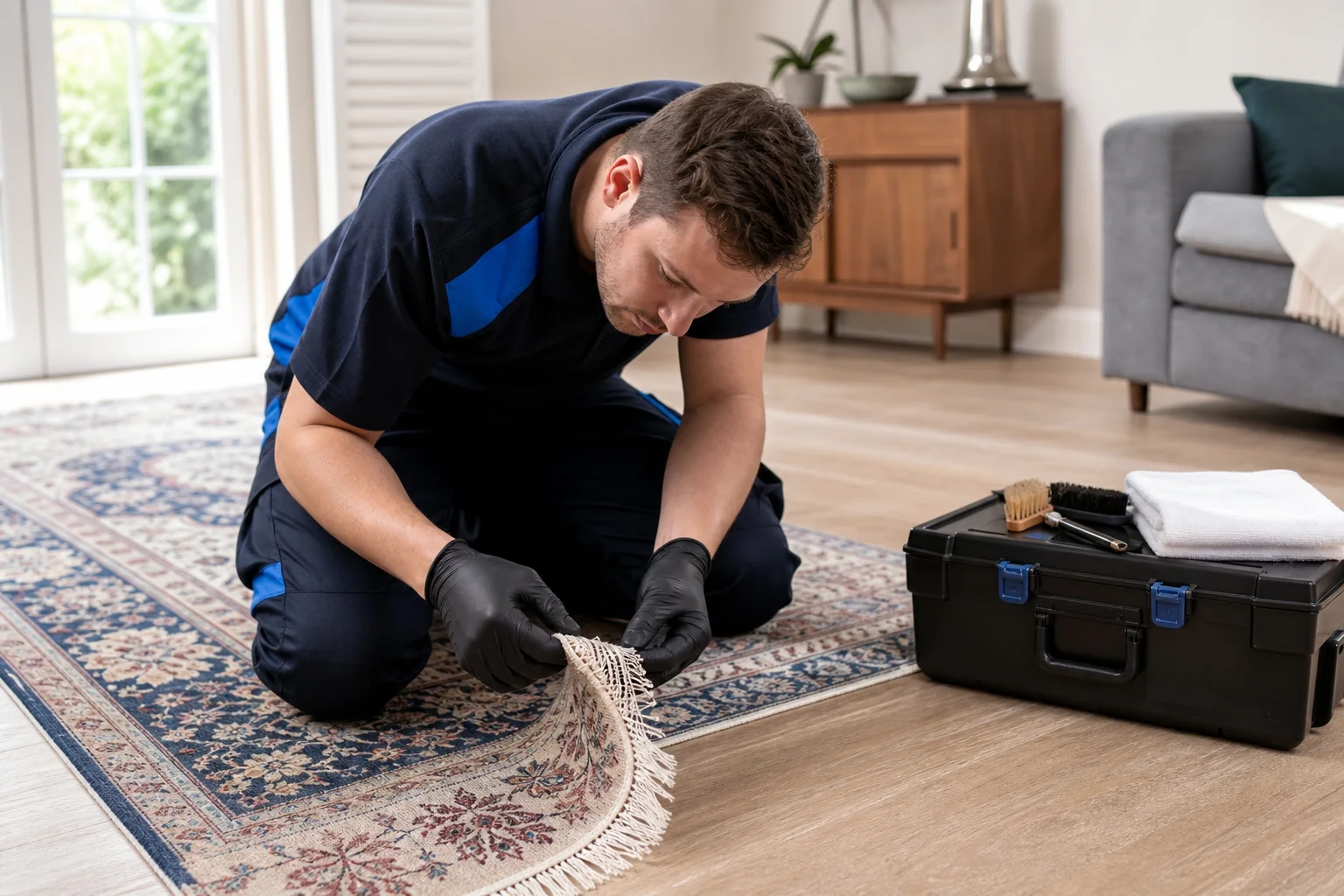
Direct answer: Start with inspection rather than a promised result. Material, construction, condition, previous products, access and drying conditions determine the safe practical approach. A professional cleaner should explain the method, price basis and limitations before work proceeds.
What this means in practice
Delicate Rug Cleaning: Risks and Practical Limits is best considered as a condition-and-material question, not a shortcut to one universal product. A trained cleaner looks at the complete item: face fibre, backing or filling, seams, colour stability, wear, earlier treatments and the route equipment must take into the property. Those checks protect the item and make the quote more useful.
Customers can help by describing what happened, when it happened and what has already been applied. Photographs can help at quotation stage, but they do not replace an on-site check. Lighting can hide colour change, while residues and construction are not always visible in a picture.
How a professional approaches the job
The first stage is inspection and testing. The technician identifies care guidance where available, checks inconspicuous areas and agrees realistic priorities. Loose soil is removed where appropriate before a targeted pre-treatment is applied. Product strength, agitation and dwell time should be controlled rather than increased without limit.
Cleaning then uses a method suited to the material. For rug cleaning, that may involve fibre, backing, fringe and colour-fastness checks followed by a suitable in-home or specialist treatment. Recovery passes or controlled application help manage moisture. A final check records remaining marks, permanent wear and the expected drying conditions.
Practical steps for the customer
- Check the label and condition. Photograph care labels and any existing damage before moving cushions or bedding.
- Stop experimenting. Do not mix stain removers, bleach, washing-up liquid or fragranced products on the item.
- Make access clear. Remove small possessions and explain stairs, lifts, concierge rules and legal loading options.
- Describe the whole job. Give sizes, quantities, fabric details and the location of marks so the quote is based on useful information.
- Plan for drying. Arrange ventilation and keep children, pets and normal foot traffic away until the technician confirms safe reuse.
Warnings and realistic limitations
Cleaning removes soil; it does not reverse wear, sun fading, dye loss, pile distortion, weakened backing, split seams or damage caused by earlier chemicals. Stain treatment is a controlled attempt, not a guarantee. Delicate or unstable material may require a lower-moisture method, specialist workshop treatment or a recommendation not to proceed.
Do not use a strong smell as proof that an item is clean. Fragrance can mask an unresolved source, and over-wetting can move contamination further into padding or backing. Medical, sanitising and allergen-removal promises should also be treated cautiously unless the company can support the precise claim and method.
Aftercare and drying
Follow the technician’s advice because drying varies with the item. Improve airflow without placing intense heat directly onto the surface. Leave sofa cushions positioned for air movement, keep mattresses uncovered, avoid replacing rugs on a damp floor and limit traffic over carpet. Contact the company promptly if you notice an unexpected colour, odour or texture change.
Once dry, vacuum suitable carpet and fabric gently to settle the pile and remove loosened particles. Note the cleaning date and any limitations the cleaner identified. That record makes future maintenance and quotation discussions more accurate.
Booking and price questions
Ask what is included, which conditions change the price, whether a minimum call-out applies and how parking or congestion costs are handled. A quote may change after inspection if the description was incomplete or the material needs a different method. The cleaner should explain that before additional work begins.
Useful next steps are to review Rug Cleaning, approved price guide, Greater London coverage. These pages explain the main service, approved guide prices and Greater London coverage without linking this article to hundreds of local pages.
Questions worth asking before you confirm
Ask the company to explain the proposed method in plain language and what testing will happen on arrival. Check whether the quote covers pre-vacuuming, routine pre-treatment, cleaning, recovery passes and aftercare, and which specialist treatments are separate. If the item has a care label, send a clear photograph but remember that a label is only one part of the assessment. Condition, construction and previous cleaning history still matter.
Confirm who will provide parking instructions, how long access is needed and what the household should avoid during drying. For flats and managed buildings, check lift, concierge and loading rules in advance. Keep the written quote and note any assumptions about dimensions, number of seats or rooms, stains and odours. Clear information reduces last-minute changes while leaving the technician free to stop if testing reveals a genuine risk.
Frequently asked questions
Can the result be guaranteed?
No. Cleaning and suitable stain treatment can improve condition, but permanent damage, old residues and unstable dyes limit results.
Should I try a household product first?
Blot a fresh spill with a clean white cloth, but avoid untested products or scrubbing. Tell the cleaner exactly what has been used.
How should I compare quotes?
Compare the described scope, method, access assumptions and exclusions rather than price alone. Confirm the final basis before work starts.