
Mattress Cleaning: What Does a Professional Visit Include?
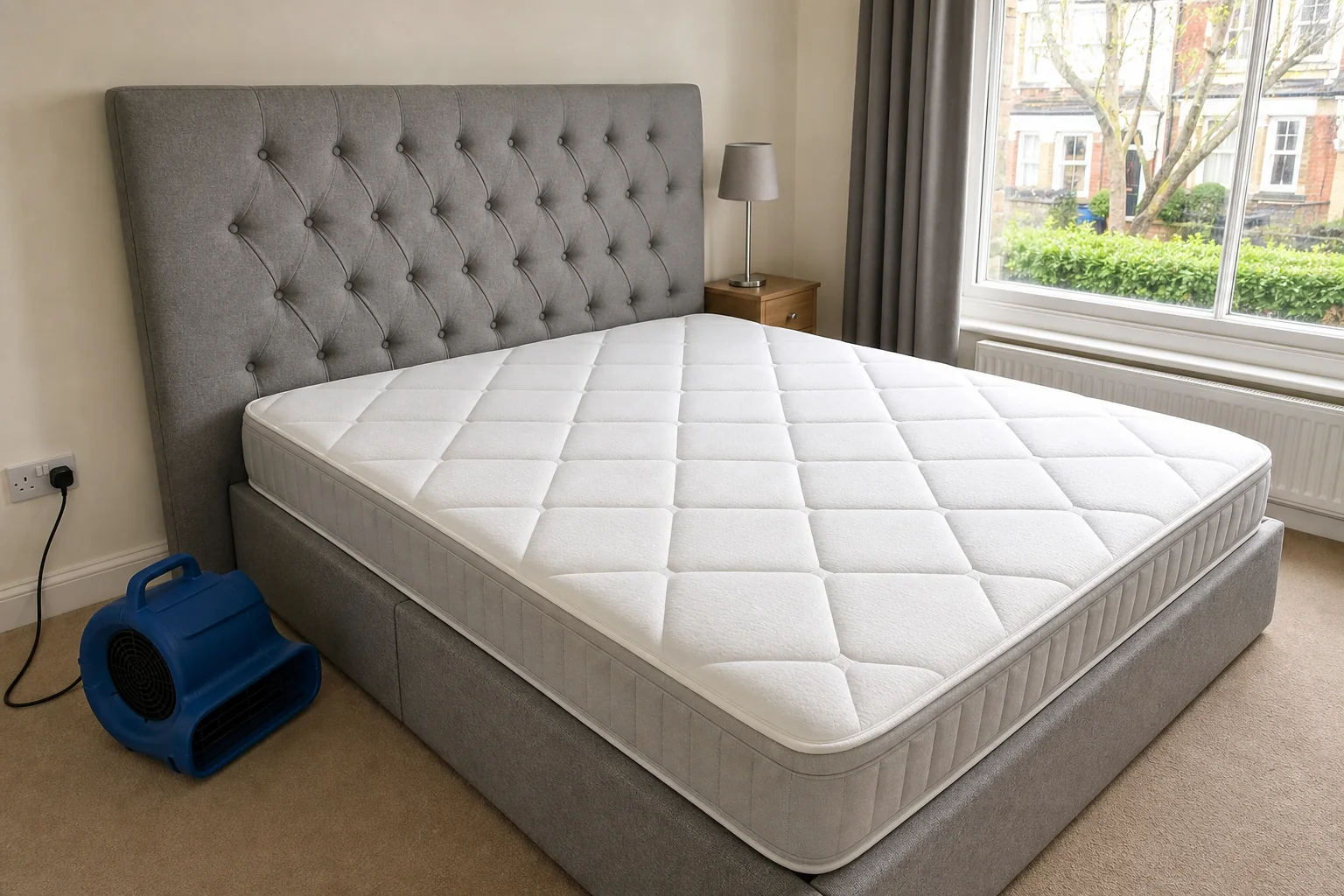
A professional mattress cleaning visit should begin with questions about the mattress, not with immediate spraying. The technician needs to know the model and care instructions, whether the cover is removable, what stains or odours have occurred and whether liquid has reached the inner layers. A routine service may clean accessible fabric surfaces and seams; it cannot prove that an entire core has been cleaned or dried. The exact scope should be agreed before work starts.
Ask which faces and sides are included in the quotation. Some mattresses are designed to be turned, others are not; a heavy or flexible mattress may be unsafe to move without help. A topper, protector, bed base and upholstered headboard are separate items with separate materials. They should not be assumed to be included because they share the bed.
The pre-clean inspection
The cleaner should identify the type and visible construction, read the manufacturer's instructions and inspect the ticking, seams, handles, tufts and borders. They should note stains, dampness, tears and any previous products. A mattress with a small dry surface mark differs from one soaked by a drink or leak. If there is possible mould or persistent wetness, the first question may be whether cleaning is appropriate at all.
Photographs taken before work give a useful record. A white ticking can make old yellowing or tide marks obvious; some marks may reflect age or permanent discolouration rather than removable soil. The cleaner should say which areas are likely to improve and which may remain. The guide to Why Mattress Cleaning Needs Controlled Moisture explains why a brown edge can reappear after the visible surface is treated.
Dry soil and accessible detail
Depending on the model and condition, the technician may remove dry dust and loose particles from the broad surface and accessible seams before any wet treatment. Stitched borders and tufts can hold grit and need a gentle tool. Aggressive probing or brushing can break threads, disturb a quilted top or push debris further in. The guide to Why Mattress Construction Affects the Cleaning Method shows why those details deserve care.
The mattress should be supported safely during work. If the bed base is upholstered or valuable, ask how it will be protected from drips. A wet base can later rewet the mattress. The cleaner may treat one accessible face while the mattress remains on its support, or make another arrangement if the model permits it. Do not assume a mattress can be folded or leaned against a wall without risk.
Surface treatment and its limits
A suitable process may include targeted treatment of marks and a controlled clean of the ticking. Product selection, moisture and recovery should follow the maker's guidance and the technician's assessment. A visible improvement while the fabric is damp is not the final result. Old residue can move towards a drying edge, and a stain that has changed the colour may remain after removable soil is gone.
Foam and padding beneath the cover are difficult to inspect and dry. A surface service cannot be described as fully cleaning deep inner layers or eliminating all allergens or microbes throughout the mattress. If a large contaminated spill has penetrated, replacement or specialist assessment may be more sensible than repeated wetting. The mattress cleaning service should explain precisely what the proposed method reaches.
Drying advice is part of the service
Ask how the room should be ventilated, when bedding can be replaced and how to check the side or underside that is accessible. Drying varies with construction, room temperature and humidity, amount of moisture used and airflow around the base. A thick foam layer can retain moisture longer than a thin ticking. A fixed promise made before inspection is therefore unreliable.
Keep the bed unused while affected areas are damp. Do not place a waterproof protector over wet ticking or use an intense heater directly against the mattress. The guide to How Long Does a Mattress Take to Dry After Cleaning? explains why indoor conditions affect the practical plan. Follow the technician and maker rather than a generic clock.
Questions before the technician leaves
Ask what was treated, what was deliberately left untreated and why. Ask which marks may return, what signs of deeper moisture were found and when to assess the result. If a stain reappears, a photograph and the timing of its return help decide whether further work is worthwhile. Another wet treatment is not automatically the best answer.
Record the service date and keep any instructions for future maintenance. Wash a removable protector only under its own label, and check that all layers are dry before remaking the bed. If the base was affected by a spill, address it separately. For an initial quote, use the contact page to send mattress size, model, photographs and spill history; the price guide gives starting points.
The practical outcome
A good visit should leave you knowing which surfaces were cleaned, what improvement is realistic and how to dry the mattress safely. It should not imply that a clean-looking top proves the unseen core is free from every consequence of an old spill. Clear scope and honest limitations make the service useful.
A visit involving an old spill
Consider a mattress with a dry brown ring from a drink spilled months ago. The technician should ask how much liquid was involved, whether it reached the underside and which products were applied later. They may test a small surface area to judge whether the ticking improves. Even a successful test cannot show that residue in padding has been removed. A broader wet treatment could draw more material towards the edge, making the final dry appearance less even. The cleaner should describe that risk before work begins and explain when the mark should be reviewed. If the mattress has a separate topper or protector, inspect those layers too; the visible ring may not tell the full story.
Mattress cleaning is often booked because the bed looks yellow rather than because of one spill. In that situation, ask the cleaner to compare contact areas with sheltered fabric and to explain how much of the difference may be permanent age-related change. A broad clean may improve general soil yet leave individual old stains. That is a useful result if it was the agreed goal, but disappointing if the customer expected a uniformly white mattress. Clear photographs, a stated scope and a dry-result review make that distinction fair. Do not judge the top while it is still damp or hidden under freshly washed bedding.