
How Often Should a Mattress Be Professionally Cleaned?
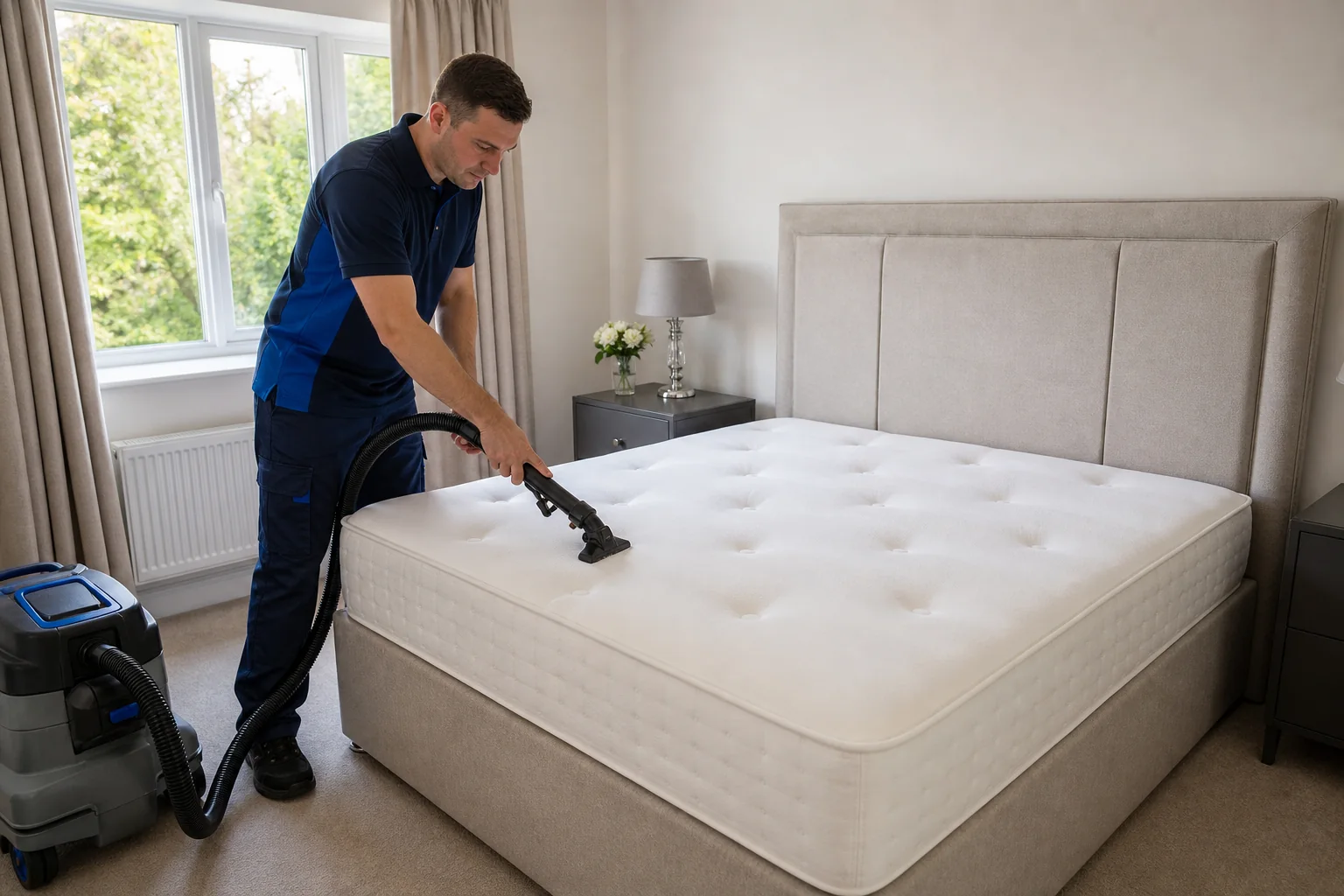
There is no evidence-based universal date on which every mattress must be professionally cleaned. A mattress used nightly, one in an occasional guest room and one protected by a washable barrier face different conditions. The maker's care instructions should guide routine maintenance, and a specific spill can justify assessment long before any planned service. A professional clean may improve accessible surface soil and some marks, but its value depends on what is present and what the mattress construction permits.
Start with a simple distinction: routine care versus an incident. Regular laundering of sheets and a suitable protector, gentle surface care allowed by the maker, and keeping the bed dry can reduce the amount of soil reaching the ticking. A large drink spill, recurring damp smell or unusual stain needs its own response. Booking a calendar clean without describing that history can lead to the wrong expectations.
Use and protection change the interval
Consider how the mattress is used and whether a protector was in place. A washable protector can take much of the ordinary contact soil, provided it is cared for according to its label. A topper adds another layer with its own instructions. Neither guarantees that a spill stopped before reaching the mattress. Check each layer when an accident occurs rather than assuming that the protector did its job.
A guest mattress may look clean but have spent months in a poorly ventilated room. A heavily used mattress may have visible contact marks yet remain structurally sound. Appearance is one clue, not a complete measure of what is inside. The guide to How to Prepare a Mattress for Professional Cleaning explains why each layer should be assessed and washed or cleaned separately.
Signs worth investigating now
A fresh spill, a returning tide mark, persistent odour, damp feel or visible mould needs attention based on its cause. Professional surface cleaning may improve a localised dry mark, but it cannot establish that deep foam or padding is clean and dry. If a mattress was substantially soaked or contaminated, replacement or specialist assessment may be more appropriate. Do not wait for an annual appointment while an active moisture source remains.
Also consider the age and condition of the mattress. A torn cover, sagging support or damaged base is not fixed by cleaning. A yellow cast can include permanent discolouration; repeated treatment may not make it uniform. If the main problem is comfort or structure, follow the manufacturer's support guidance or seek replacement advice rather than ordering another surface clean.
What routine home care can do
Follow the model's instructions for ventilation, rotation or turning. Some mattresses should not be flipped, and moving a heavy one without help can cause injury or damage. Wash bedding and any removable protector by their own labels. If the maker permits vacuuming, use a gentle suitable attachment around seams without tearing the ticking. Avoid soaking the surface with fragranced sprays or disinfectants to create a feeling of freshness.
Give the bed a chance to ventilate during normal household routines, subject to the manufacturer's guidance. Check the underside and base where safely accessible, particularly after a spill. A mattress on a base that remains damp can develop an ongoing problem that surface cleaning alone will not resolve. The Why Mattress Construction Affects the Cleaning Method describes this connection.
When a professional visit is useful
If accessible fabric has built-up soil or a suitable stain, a technician can assess the ticking and propose a controlled treatment. They should ask about the model, past spills, products used and whether the core may be affected. The cleaning method and drying plan must respect the layers beneath the cover. The mattress cleaning service can explain what its surface process reaches and where its limits lie.
The interval after a successful clean should be discussed in light of actual use and protection. A rigid schedule cannot account for a new accident next week or a guest bed that sees almost no use. Keep a record of the service, remaining marks and drying advice, then review the mattress condition periodically. That is more useful than treating a clean as a time-limited certificate.
Plan around drying, not only appointment time
Choose a time when the bed can stay unused until treated areas are dry. Drying depends on room conditions, mattress construction and how much moisture the method introduced. Do not remake a damp bed under a waterproof protector; that can trap moisture against the ticking. Ask how to check the surface, border and accessible underside before use.
If a mark returns as the mattress dries, photograph it and note the time. It may reflect deeper residue moving towards an edge rather than a failure to scrub hard enough. Repeating treatment can add moisture without resolving the source. An honest professional should discuss whether another attempt is justified or whether the mattress's condition calls for another decision.
For advice or a quote, send the size, model, care label and photographs through the contact page. The price guide gives starting prices. Ask what faces and sides are included, and whether a topper or base is a separate service. A clear scope lets you decide whether cleaning is worthwhile now.
A guest bed and a family bed
A rarely used guest mattress with a washable protector may have little reason for a scheduled wet clean. A child's mattress with repeated drink spills may need an assessment now, even if it was cleaned recently. Neither example supports a fixed annual rule. The relevant facts are what reached the ticking, whether the inner material stayed dry, and what the maker permits. If a protector is worn or no longer fits, replacing it may prevent more future soil than shortening the cleaning interval. Keep both mattresses ventilated and supported according to their own manufacturers, rather than assuming that one household schedule fits every bed.
Avoid treating professional cleaning as a medical or allergen-control guarantee. Bedding hygiene, room ventilation and the mattress maker's routine care have their own roles. If a household member has a health concern, seek advice from an appropriate clinician rather than assuming a surface clean can change the medical situation. A cleaning company can describe the surfaces and soil it can treat; it cannot verify every particle inside a thick mattress. This distinction helps you decide whether the service is for appearance, an accessible mark or a specific incident, and whether another type of intervention is needed.