
Why Rug Edges Curl After Cleaning
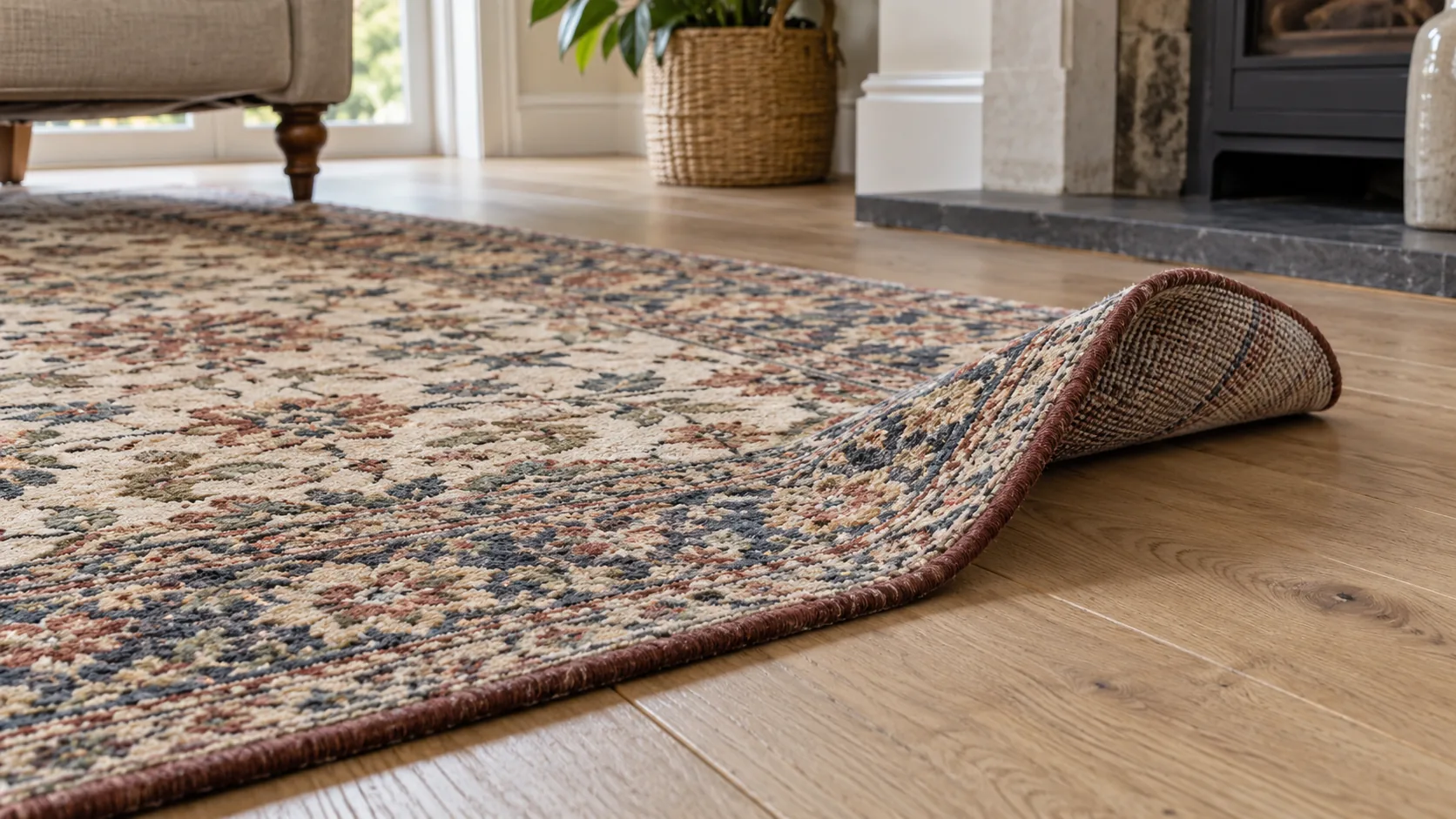
A rug that lay flat before cleaning may have one corner lifting when it comes back. The timing makes cleaning a reasonable question, but it does not reveal a single cause. Moisture can change how parts of a rug dry, an edge can have old tension or damage that becomes more visible when the pile is cleaned, and a thin rug may react to the way it has been rolled or stored. The useful first step is to find out whether the lift is a temporary set, a drying problem or a change in the structure.
Do not try to flatten a damp rug under heavy furniture. That can trap moisture, mark the fibres and hide a developing problem. A raised edge is also a trip hazard, particularly in a hallway or near a doorway. Keep the area clear while you assess it, and contact the cleaner promptly if the change appeared after a recent service.
Describe the shape, not just the word “curl”
Look along all four sides while the rug lies on a level, dry floor. Does one corner roll upward, does a whole long edge lift, or does the body ripple in waves? An isolated corner may point to a local construction or storage issue. A wavy edge or several ridges can suggest uneven tension through a wider section. If the entire rug has changed from a rectangle to a skewed shape, that is a more serious dimensional concern than a small curl at one tip.
Take photographs from directly above and from floor level. Include a ruler or another plain reference near the raised point without pressing it down. Photograph the reverse and binding if the rug can be turned without pulling on a weak fringe. Record when the rug was cleaned, when it was returned to the floor, whether it felt damp, and whether the curl has become better or worse. Those observations give a specialist more to work with than a single close-up image.
Check the floor too. A raised board, uneven underlay or curled non-slip pad can make an otherwise flat rug appear distorted. Lift the rug carefully and look for moisture or staining beneath it. If the floor is damp, keep the rug off it while both surfaces dry and seek advice before replacing it. Do not assume that a dry-feeling pile means its backing or foundation is dry.
Why different parts can dry at different rates
Rugs are made from several components: face yarn, foundation or primary backing, edge binding and sometimes adhesive or a secondary backing. Those parts may absorb and release moisture differently. If one area remains wet while another contracts as it dries, tension can pull the surface out of plane. WoolSafe’s technical discussion of rug drying notes that slow or uneven drying can create rippling, curling edges and even a change in overall shape. It is a risk, not a predictable outcome for every rug.
The amount of moisture is only part of the story. Airflow around the rug, its thickness, room humidity and whether it lay flat or was hung during drying may all affect how evenly it dried. A rolled rug can also acquire a temporary memory of its storage position. The cleaner should be able to explain how the rug was handled and whether the chosen process was appropriate for its construction.
If you notice a musty smell, a cool damp underside or a colour change near the edge, treat the situation as more than a cosmetic curl. Keep the rug away from the floor and ask for a prompt assessment. Additional heat or water applied at home may worsen uneven drying or encourage dye movement. A hairdryer concentrated on one corner is especially unlikely to dry the entire backing evenly.
Before treating a curled edge, check whether colour has also crossed into a pale border. Our rug dye migration guide covers that separate warning sign. You can describe both the shape and any colour change through the contact page when asking about an inspection.
Construction and earlier wear matter
A flatweave may bend and relax differently from a thick pile rug. A hand-woven rug can carry uneven tension from its making or past repairs. A tufted rug may rely on adhesives and backing materials whose condition changes with age. Bound or overlocked edges may respond differently from an integral fringe. Those distinctions are reasons for inspecting the specific item before promising a remedy.
Prior damage is easy to miss while a rug is dusty. An edge that has been folded under furniture, repeatedly caught by a vacuum head or exposed to a damp entrance may already be weakened. Cleaning may make the rug’s outline clearer, allowing a pre-existing irregularity to stand out. That possibility should be discussed honestly, but it should not be used to dismiss a new shape change without examining the before and after condition.
Compare any pre-clean photographs in the same orientation. A rug may have been turned around or placed over a different floor seam, changing the way a slight curl appears. If no photographs exist, ask the cleaner what condition notes or images were taken. An assessment can still be made, although certainty about the exact starting shape may be limited.
Safe actions while waiting for an assessment
Keep people from catching a foot on the lifted edge. If possible, move the rug out of a busy route without dragging it across the floor. Allow air to circulate and avoid placing plastic sheeting directly over a damp backing. Do not stretch the corner by hand, soak it, iron it or tape it to the floor. These improvised fixes can damage yarns, leave adhesive on the rug or pull colour onto the floor.
Do not use furniture to force a sharply curled or damp edge down. If the rug is dry and the problem is slight, a suitable rug pad might improve how it sits, but it should be considered only after the cause has been checked. A pad cannot correct a shrinking foundation, failed backing or persistent moisture. On a valuable or fragile rug, ask a rug specialist before trying any pressure treatment.
Contact the cleaner with your photographs and the original date of service. Ask whether the rug was fully dry before return, whether any edge weakness or distortion was noted beforehand, and what inspection they can arrange. A useful reply should address the particular rug and offer a way to examine it. If the rug has been cleaned off site, the handling and drying record may also help.
What a specialist may recommend
The answer depends on the construction and severity. A small curl caused by rolling may relax once the rug is dry and laid correctly. A controlled reconditioning process may be considered by a qualified rug specialist for some rugs. Structural problems such as failed edge binding, uneven foundation shrinkage or degraded adhesive may require repair or may limit what can be achieved. Avoid any service that promises to make every rug perfectly flat without first seeing its backing and edges.
Ask what change is expected, how it will be measured and whether treatment could affect colour or texture. For a rug with substantial financial or sentimental value, obtain a written assessment before further work. Our rug cleaning service can inspect suitability for cleaning and discuss next steps, but repair may need a separate specialist.
After any corrective work, compare the rug on the same level floor and with the same pad, if one is used. Check that the underside is dry before replacing it over timber, laminate or another moisture-sensitive surface. Review the edge again after normal use, as a slight bend that returns may indicate that the underlying tension has not been resolved.
The best outcome begins with a precise description: where the rug lifts, whether it is fully dry, and how its shape compares with the original. That evidence helps distinguish a temporary curl from a more durable change and prevents a rushed household fix from adding new damage.
Frequently asked questions
Will a curled edge flatten by itself?
A mild temporary change may settle, but a damaged backing or binding may not.
Should I weigh down a damp edge?
Avoid trapping moisture or stressing the edge; seek advice on the actual construction.