
Rug Dye Migration: Warning Signs Before Cleaning
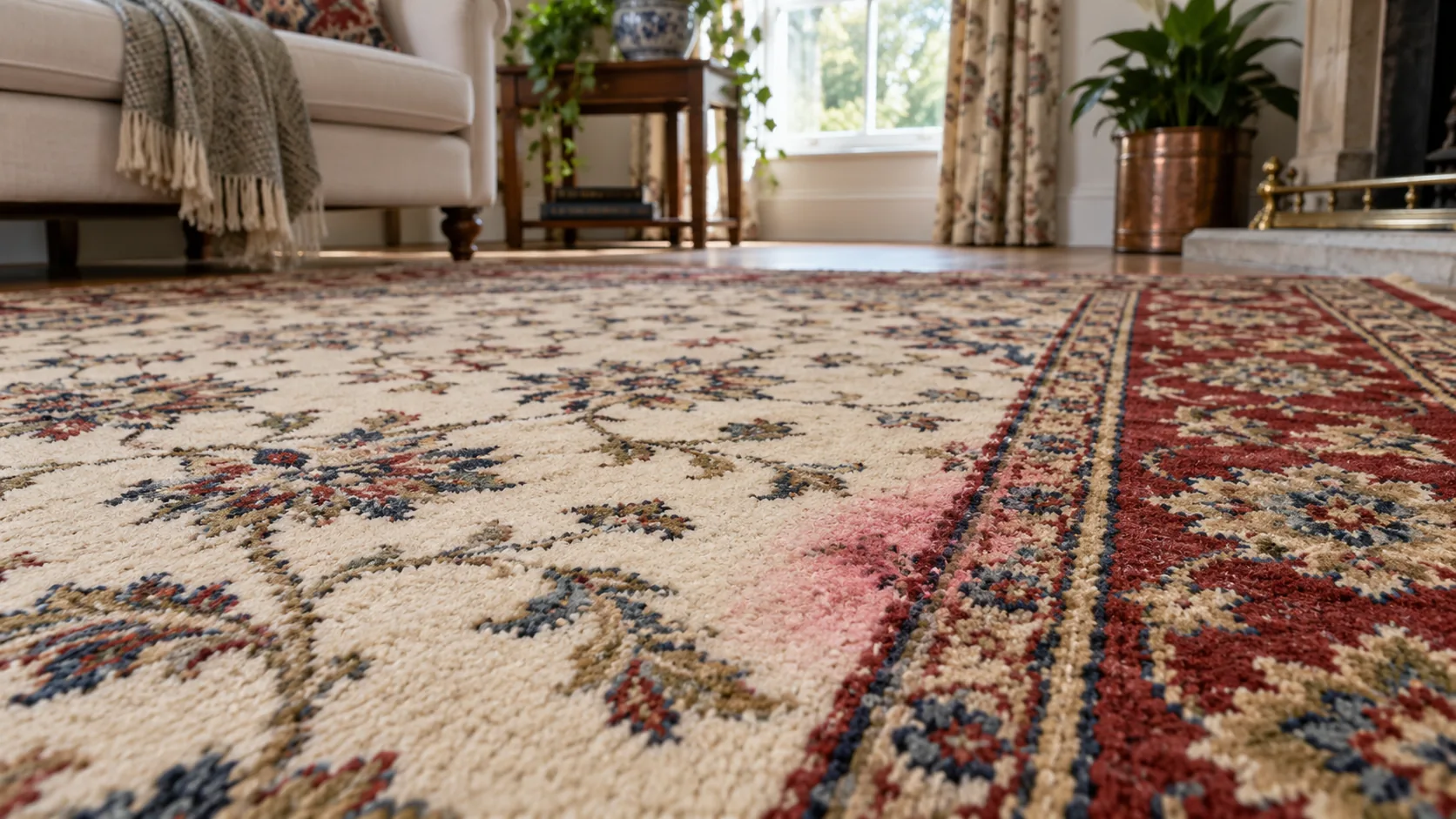
A pale section of a rug may look perfectly clean until you notice a faint pink cast beside its red border. That colour could have come from the border, but the cause is not always obvious from appearance alone. A past spill, damp storage, an unsuitable spot product or an earlier clean may have moved dye. Sometimes what looks like a new bleed is a variation that has been present since the rug was made. Before another wet treatment, the sensible question is whether the rug’s colours are stable under the method being proposed.
Dye migration means colour has moved from one yarn or area to another. A cleaner needs to consider the particular rug, not just its stated fibre. Two rugs both described as wool can differ in dyes, backing, age, construction and previous treatments. Nor does a rug that survived one clean necessarily react the same way after years of wear or a fresh stain-removal attempt. The warning signs below help you raise the right questions while leaving testing and method selection to someone with the necessary expertise.
Direct answer: Colour spreading from a rug border into pale yarn can be dye migration. Stop wetting the rug, document the boundary and ask for fibre and dye testing before any further cleaning.
Map the colour before making it wet
Look at the pattern in good daylight from more than one angle. Colour transfer often follows a boundary: a soft red fringe beside a red border, a blue haze on a cream field, or tinted pale yarn immediately downhill from a dark motif where liquid may have travelled. An isolated coloured splash with no nearby matching dye could be a separate spill instead. The position is evidence, not a diagnosis.
Compare similar motifs across the rug. If every pale shape has the same slight tint, it may be an intentional design feature or old, widespread change. If only the area near a recent spill has a halo, record when it appeared. Check both the front and reverse if the rug can be lifted safely. A colour change that reaches the reverse can indicate that liquid travelled through the structure; a faint surface mark may have a different history. Avoid dragging a heavy rug or pulling a weak edge to perform the check.
Photograph the whole rug and several close details beside a neutral reference such as a plain white card. Keep the images unfiltered and record the lighting. These photographs provide a useful starting condition for an assessor and a fair comparison after cleaning. Automatic camera colour correction can mislead, so they should never be treated as laboratory proof of colour movement.
A safe inspection sequence
- Photograph each changed colour and boundary.
- Check the reverse without pulling a fragile rug.
- Avoid wet rubbing or home bleaching.
Moisture, product and time all matter
Dye stability is not a single yes-or-no property independent of cleaning. The amount of moisture, the chemistry of the solution, contact time and drying conditions can affect a particular colour. WoolSafe’s technical discussion of wool dyes explains why unsuitable alkaline chemistry can encourage bleeding in some cases. That does not mean every wool rug will bleed or that one product has the same effect on all yarns. The Carpet and Rug Institute includes colour-fastness testing in its product evaluation framework, which reinforces the need to test before applying a process to a whole item.
Previous household treatments are relevant. A strong stain remover might have altered a small section or left residue that behaves differently on the next clean. Washing-up liquid, bleach and laundry products should not be used as exploratory tests on a valuable rug. WoolSafe warns that general household detergents can cause colour bleeding or damage to pile and backing. Adding more water to flush a spill can also carry unstable dye across a pale area and leave the rug wet for longer.
If a fresh spill has occurred, blot the liquid gently with a clean white absorbent cloth. Press and lift rather than scrub across colour boundaries. Stop if the cloth picks up the rug’s dye rather than just the spill. Keep the area ventilated and seek specialist advice promptly, especially if the rug is expensive, antique, hand woven or has an uncertain fibre. Do not use heat to force drying or put the damp rug back over an unprotected floor.
A colour change at the tassels may have a different source from dye moving across the rug body; the guide to rug fringe discolouration helps separate those observations. If you are seeking a quote, the price guide is a starting point, while unstable colour needs an individual assessment.
Signs a cleaner should inspect closely
A few features deserve a careful conversation before cleaning. A pale fringe tinted with the colour of the adjoining border is one. Another is a light field with a blurred outline where a motif should have a crisp edge. Look for a mark that grew after a previous spot treatment or a small test area with uneven lightening. A damp smell, stiff residue or discoloured underside may suggest an earlier moisture event even if the top looks dry today.
Weak construction can increase the consequences of a mistake. Loose ends, holes, damaged backing or an unstable fringe may limit how the rug can be handled and dried. A cleaner may recommend workshop treatment where the rug can be examined and controlled more closely, or decide that the risk of cleaning is too high. The fact that a rug is described as “professional clean only” is a reason to seek an appropriate specialist, not a promise that every professional method is safe.
Check the label, receipt or maker’s care instructions if available. Those details can identify a fibre blend, backing or prohibition on wet treatment. Labels are not always present, and an old label may not reflect repairs or later chemical use. Give the cleaner the history you know: approximate age, last cleaning, past spills, any colour movement and every product applied. An honest history may matter more than a guess about whether the rug is wool or synthetic.
What a limited test can and cannot establish
A professional may test colour transfer at several inconspicuous points with the intended product and controlled moisture. Different colours should be considered separately; one stable blue yarn does not prove an adjacent red yarn is stable. The cleaner may also examine the backing and edge because a rug can resist colour bleed while still being vulnerable to distortion or weakened adhesive. The proposed process should change if a test reveals movement.
A small test is a risk reduction tool, not a guarantee. It cannot reproduce every difference in moisture exposure across a large rug or reveal the entire history of each dyed yarn. Ask what the test showed, whether any colour transferred and how drying will be managed. Ask what the cleaner will do if colour starts to move during the job. The answer should be practical and specific, rather than a blanket claim that “all dyes are safe”.
It is reasonable to decline cleaning if the proposed benefit is modest compared with the risk to a valued rug. Dry soil removal and careful maintenance might be possible while further specialist advice is sought. If colour has already moved, correcting it may involve specialist dye work rather than another general clean. Such work should be discussed separately, with limits and costs made clear.
Planning a realistic result
Before booking, agree which areas most need attention and which existing colour changes will remain. Take condition photographs and keep the quote. Ask whether the rug will be cleaned in place or taken away, how it will be supported while wet, and when it can be returned safely to the floor. Our rug cleaning service can assess construction and suitability, but a high-risk rug may need referral to a dedicated specialist.
After treatment, judge the rug only once it has dried fully in suitable light. Check the pale fields, dark borders, fringe and reverse against the original photographs. If a new halo appears, contact the cleaner before applying another product. Record what happened for future care, since a repeated problem may lead to a different maintenance plan.
The key warning is a relationship between colour and moisture: a tinted pale area beside a strong colour, a history of transfer on a white cloth, or a change after an earlier wet treatment. None proves that cleaning is impossible. Each is a reason to stop guessing and arrange a process based on examination and testing.