
When Is a Stained Mattress Better Replaced?
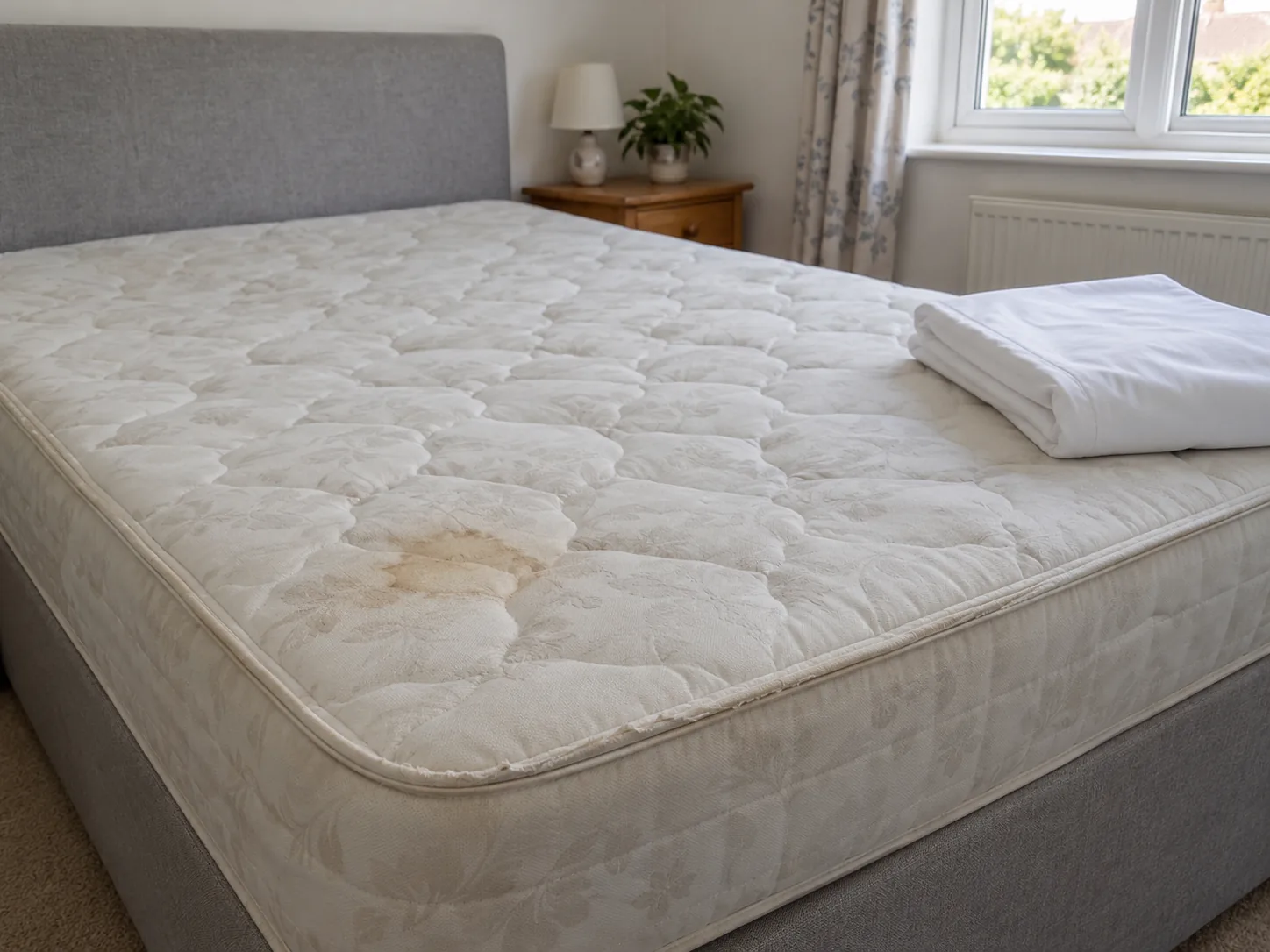
Direct answer: A dry, supportive mattress with a limited cosmetic stain may be worth cleaning. Replacement deserves stronger consideration after deep saturation, persistent dampness, visible mould, serious contamination or structural failure that cleaning cannot repair.
A mark on a mattress does not automatically make it unusable. An old coffee ring on an otherwise dry, supportive bed is different from a mattress that was soaked through, smells damp or has visible mould. Cleaning may improve surface soil and some stains. It cannot repair broken support, reverse every colour change or prove that inaccessible layers are free of contamination. The decision to clean or replace should follow the whole condition of the bed.
This is a practical decision guide, not a fixed age rule. Mattress construction, maker instructions, the type and amount of liquid involved, and whether the bed can be dried and inspected all matter. If there is a serious contamination or flood event, seek appropriate professional advice rather than treating it as a routine stain appointment.
Start with what happened, not just what is visible
Write down the source of the mark. Was it a small drink spill blotted quickly, gradual body moisture, a pet accident, a leak from a roof or contaminated floodwater? Did the liquid reach the underside, bed base or floor? A small shallow stain may be mostly an appearance issue. A large spill can affect padding or foam far beyond the coloured outline on the ticking.
Check whether the mattress is dry now. Look and feel at the top, border and underside you can safely access. A persistent cool damp patch, new musty odour or mark that reappears after cleaning is reason to investigate further. Do not rely on a dry sheet or a dry-looking top as proof that the interior is dry. The structure can hold moisture in layers that are not visible without dismantling.
Consider the time since the event and what was done. Was the mattress left covered while wet? Were strong products poured into it? Could it be ventilated? Photos and a timeline help a cleaner assess whether a surface treatment is likely to achieve the result you need. Do not cut into the mattress to inspect it; ask the maker or a suitable specialist if inner condition is uncertain.
Signs that cleaning may be worthwhile
A dry mattress with sound seams, good support and a limited surface mark can often be assessed for cleaning. If the cover is removable and washable according to the maker, laundering it may be a useful first step. A fixed ticking may permit professional surface treatment. Neither choice guarantees that an old brown stain will disappear, but a clean, dry mattress can remain useful even with some cosmetic discolouration.
Ask what bothers you most. If the concern is a faint visual mark under a clean protector, you may decide that treatment cost is not justified. If the surface feels soiled or has a smell with an identifiable, shallow cause, a professional assessment may offer a sensible plan. A good quote should distinguish likely soil removal from the uncertain fate of a permanent colour change.
Check the manufacturer’s care guidance and warranty terms if the mattress is relatively new. A defect in support or stitching is a different issue from a stain. Keep photographs and proof of purchase. Do not let cleaning obscure evidence of a possible product fault before you have spoken to the seller.
Signs that replacement deserves serious consideration
Replacement becomes more compelling when the mattress is structurally unsound: broken springs, deep sagging, torn covers or exposed materials can make cleaning a poor use of money. If the interior was heavily soaked and cannot be adequately cleaned and dried, a clean-looking surface is not enough. A continuing damp or musty smell after the source of moisture has been addressed warrants caution.
Visible mould is not a stain to chase with a household spray. Porous materials can be difficult to clean fully when mould is growing within them. Public health guidance emphasises removing the source of moisture and assessing whether wet, mouldy porous items can be salvaged. A mattress with mould growth or contaminated floodwater exposure may need to be discarded; seek local professional advice on the specific situation. Do not sleep on a mattress you believe remains wet or mouldy while waiting for a cosmetic clean.
A major spill involving sewage or another unsafe contaminant is outside routine mattress cleaning. Tell any service provider exactly what happened. A technician may decline treatment because the inner layers cannot be reliably restored. That is an appropriate outcome when the limits of access and drying make a clean unsafe to promise.
Compare the cost and scope honestly
The cheapest quote is not useful if it covers only the top fabric while the reason for replacement lies below. Ask whether a proposed service can treat the affected layer, what improvement is likely, how drying will be checked and what remains outside the scope. Our mattress cleaning service can assess visible condition and explain where surface cleaning may help. It cannot manufacture new support or certify an inaccessible core by appearance alone.
If the mattress contains foam, the guide to surface cleaning and foam layers helps identify what a treatment can reach. Compare the published starting prices with the likely benefit of cleaning before paying to treat a bed you already plan to replace.
If a separate topper or protector took the spill while the mattress stayed dry, replacing or washing that removable layer may be much simpler. Examine them separately. Conversely, a badly affected bed base may need attention even if the mattress top appears acceptable. A damp wooden board or upholstered base can undermine the result of any mattress work.
Factor in the value and age of the mattress without using a single calendar rule. A relatively new high-quality bed with a small mark may justify professional care. An old mattress that is uncomfortable and deeply stained may not. Ask whether the clean would change your willingness to keep using it. If the answer is no because of structural or contamination concerns, replacement is likely the more direct decision.
Make the next mattress easier to protect
Use a protector suitable for the mattress and household, and wash it according to its own label. Check it after every significant spill because liquid can run over an edge or pass through a damaged barrier. Ensure the mattress and protector are completely dry before making the bed. A ventilated base, where the maker requires one, can help prevent trapped moisture.
Keep a record of the incident and any cleaning attempted, especially if the mattress remains in use. If a stain returns or an odour develops, that history will help a professional reassess the situation. The question is not whether a mattress looks perfectly white. It is whether it is dry, sound and suitable to keep using after the actual event that caused the stain.
If you choose replacement, inspect the bed base and nearby wall before installing the new mattress. A leak, condensation or a damp upholstered base can affect the replacement too. Resolve the moisture source first, clean or replace the base as appropriate, and follow the new mattress maker’s support and ventilation instructions. That makes the decision more than a cosmetic exchange of one stained surface for another.