
Rug Fringe Discolouration: Dirt, Dye or Damage?
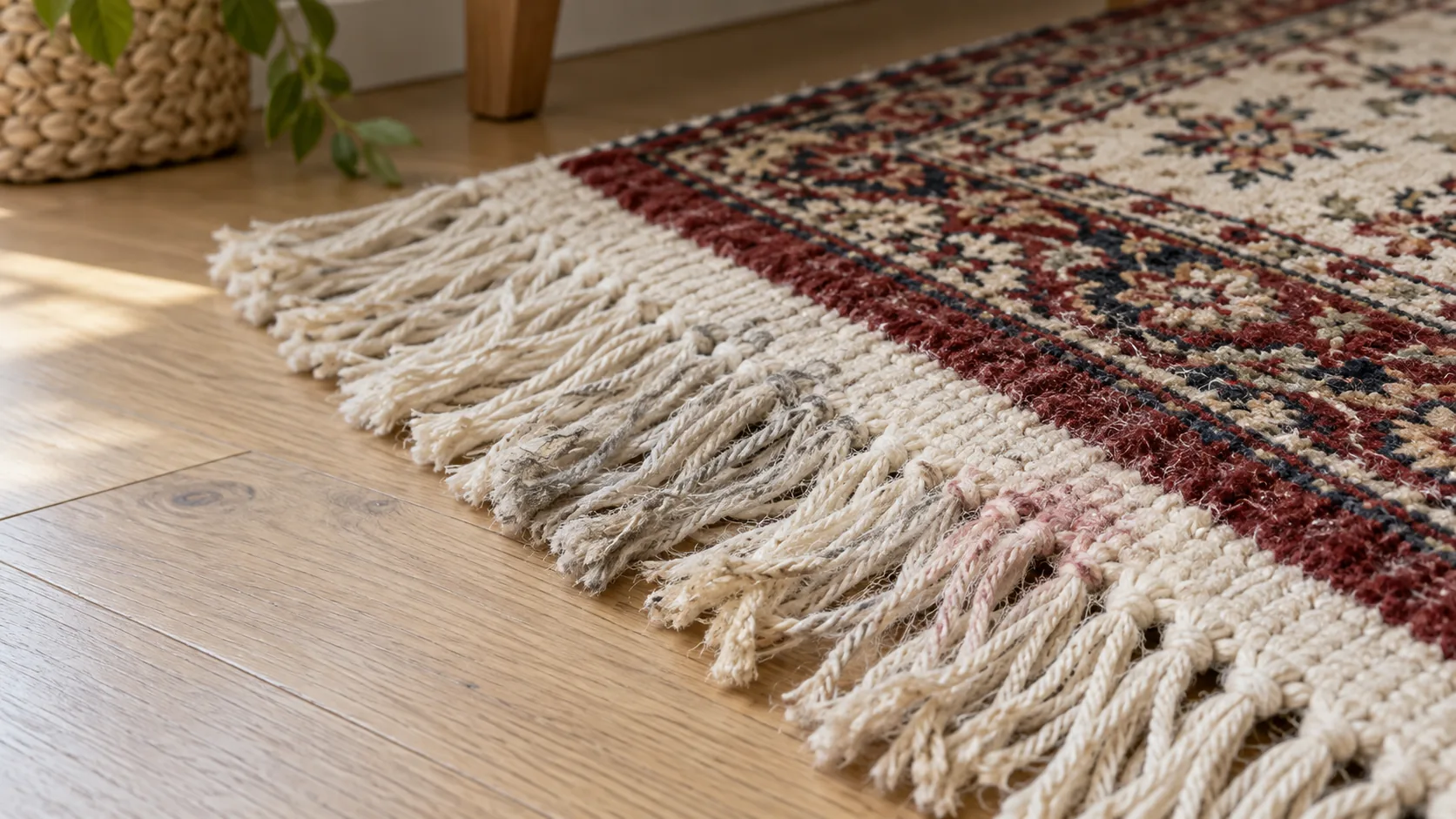
Direct answer: A dark rug fringe may hold ordinary soil, transferred dye or permanent fibre change. Inspect its colour, strength and position before applying water or a whitening product.
A fringe that looks darker than the rest of a rug is easy to call dirty. That may be true, especially on an edge that people walk across. Yet a fringe can also change colour because dye has moved from the patterned rug, because a previous product left a residue, or because the fringe fibres themselves have aged. These causes call for different decisions. Stronger cleaning is not always the answer, and a clean fringe cannot always be returned to its original shade.
The first useful step is to describe exactly what has changed. Is the colour a grey band at the tips, a yellow cast along the whole edge, or a red or blue tint where the fringe meets the rug? Has it appeared gradually or directly after a spill or cleaning? Those details are more useful to a specialist than the general description “stained fringe”.
First checks that protect the fringe
- Compare both ends and the reverse.
- Photograph the colour boundary in daylight.
- Keep weak or colour-tinted strands dry until assessed.
Begin at the join between rug and fringe
On many woven rugs, the fringe is part of the structure rather than a decorative strip sewn on afterwards. The visible strands may continue from foundation yarns that hold the rug together. On other rugs, an applied fringe or binding has been added to the edge. It is not safe to assume that all fringes can be scrubbed, trimmed or detached in the same way. Check for loose knots, unravelled threads, an uneven edge and old repairs before touching the material.
Look at the location of the discolouration. A grey, dusty section at an exposed doorway suggests a different history from a pink line immediately below a red border. If only the tips are dark, repeated floor contact may be involved. If the colour rises from the patterned area into the fringe, dye movement is a possibility. None of these observations proves the cause, but each helps narrow the questions an assessor should ask.
It also matters whether both ends look alike. A rug that spends one end close to a radiator, sunny window, damp wall or frequently used route may age unevenly. A photograph of both ends in the same daylight makes the comparison easier. Photograph the front, reverse and any care label too. Lighting and camera processing can change apparent colour, so a photograph should support an inspection, not replace one.
Dirt usually has a pattern of use
Loose dust and grit collect at edges, especially where the fringe lies flat on a hard floor. Foot traffic can press those particles into the yarn and make pale cotton or wool appear grey. A darkened tip may also reflect repeated contact with a floor finish or the underside of shoes. If the rug has been left under furniture, compare a sheltered fringe section with the exposed one. A difference may show where ordinary soil has accumulated, although age and light exposure could also contribute.
For a sound rug, gentle dry removal may be an appropriate first maintenance step. Use the rug maker’s instructions if you have them. Avoid a rotating brush or beater bar on loose strands, which can catch and pull them. The Carpet and Rug Institute advises gentle suction and care as the vacuum approaches a fringe. Stop if threads lift or the edge begins to distort. Vacuuming can remove loose matter; it will not reverse a dye stain or rebuild worn yarn.
Do not rub an isolated dark patch with washing-up liquid to see whether it lightens. Household detergent can leave a sticky residue, complicate later cleaning and, on some materials, disturb colours. Repeated wetting at the edge may carry soil or dye into an adjacent pale area. A professional may be able to remove attached soil with a controlled method, but that judgement depends on the rug’s construction and colour stability.
Coloured fringes may indicate dye movement
A fringe that has taken on a hue from the rug’s border deserves particular care. Dye can migrate when a colour is not stable under the moisture, chemistry or duration of a treatment. A spill, earlier cleaning, damp storage or an unsuitable product may have contributed. The exact event is not always identifiable after the fringe has dried. Some rugs also contain deliberate variations in yarn colour, so the specialist should compare both ends and the reverse before declaring a new bleed.
Look for a soft halo or narrow coloured track where the border meets the pale fringe. Note whether the hue matches a nearby red, blue or other strong-coloured section. If you suspect active migration, keep the rug dry and avoid trying to brighten the fringe with bleach or peroxide. An oxidising product may alter the fringe while leaving the transferred dye, or affect other fibres and finishes. Saturating the fringe in an attempt to rinse it can draw more colour out of the rug.
Colour-fastness testing must be done with the specific rug and proposed process in mind. WoolSafe warns that fine rugs can have unstable dyes, backings and fringes, and recommends professional assessment for a valuable or delicate rug. A successful inconspicuous test reduces uncertainty but does not guarantee that every coloured section will behave identically. Tell the cleaner if the rug has previously bled, been spot treated or stayed damp for an extended period.
Yellowing in a wool rug fringe should be considered alongside the material and any earlier wetting. Our guide to browning in wool carpet explains a related, though not identical, moisture problem in wool flooring. For an assessment of this rug, use the contact page to describe its fibre, fringe and cleaning history.
Yellowing and damage call for a different conversation
Yellow or brown discolouration can have several sources, including old residues, environmental exposure and changes within the fibre. A fringe may have been treated with a whitening product before sale or by a previous cleaner; an initially bright appearance can make later ageing more noticeable. Without knowing the fibre, finishing history and treatment, it would be misleading to promise that a yellow cast is washable soil. An inspection can establish what improvement is plausible and where a small controlled test is worthwhile.
Damage is easier to see when you look past the colour. Are the ends frayed or short compared with a protected section? Do strands break with very light handling? Are knots missing where the fringe enters the body of the rug? Colour improvement would not fix those structural problems. Continuing to scrub or pull at a weak fringe may lose more yarn. A rug repair specialist may need to stabilise the edge before cleaning, and a severely compromised rug may require a different plan altogether.
If a fringe is tinted on only one side after a spill, the underside matters. Liquid can pass through the edge and pick up colour or dirt from the floor below. On a wooden floor, protecting the floor from moisture is also part of the job. Lift a rug only if it is safe to handle, and do not replace it over a damp surface while arranging advice.
What to ask before authorising cleaning
Give the cleaner clear photographs and the rug’s approximate size, age if known, fibre information and any care instructions. Describe when the change appeared and list products already applied. Ask whether the fringe is integral or attached, what colour tests are proposed, and whether the edge is sound enough for treatment. If the rug has a high financial or personal value, ask whether workshop assessment by a rug specialist is preferable to cleaning it in place.
The quote should distinguish soil removal from colour correction and structural repair. Each has a different aim and level of uncertainty. A discoloured fringe might improve after safe cleaning, while a dye bleed or aged fibre may remain visible. Photographs taken before work and a written note of the expected limits make that distinction clear. Our rug cleaning service can assess suitability and explain the proposed scope before treatment.
After cleaning, check the fringe once it is fully dry and under similar light to the original photographs. Damp fibres can look darker, while combing can temporarily change the way light falls on the strands. If a new tint, odour or distortion appears, contact the cleaner promptly and share the original photographs. Avoid a second household treatment while the cause is uncertain.
The practical goal is an honest diagnosis: identify removable soil, recognise possible colour movement, and protect a weak edge from further damage. Once those questions are answered, you can decide whether careful cleaning, specialist restoration or simply preserving the rug as it is offers the best result.
Frequently asked questions
Can a yellow rug fringe be whitened?
Sometimes soil can be removed, but ageing, old treatments or fibre change may leave colour behind. Testing comes before any promise.
Should I cut off a damaged fringe?
No. On many rugs the fringe is part of the foundation, and cutting it may allow the edge to unravel.