
Wool Carpet Browning: Causes and Sensible Next Steps
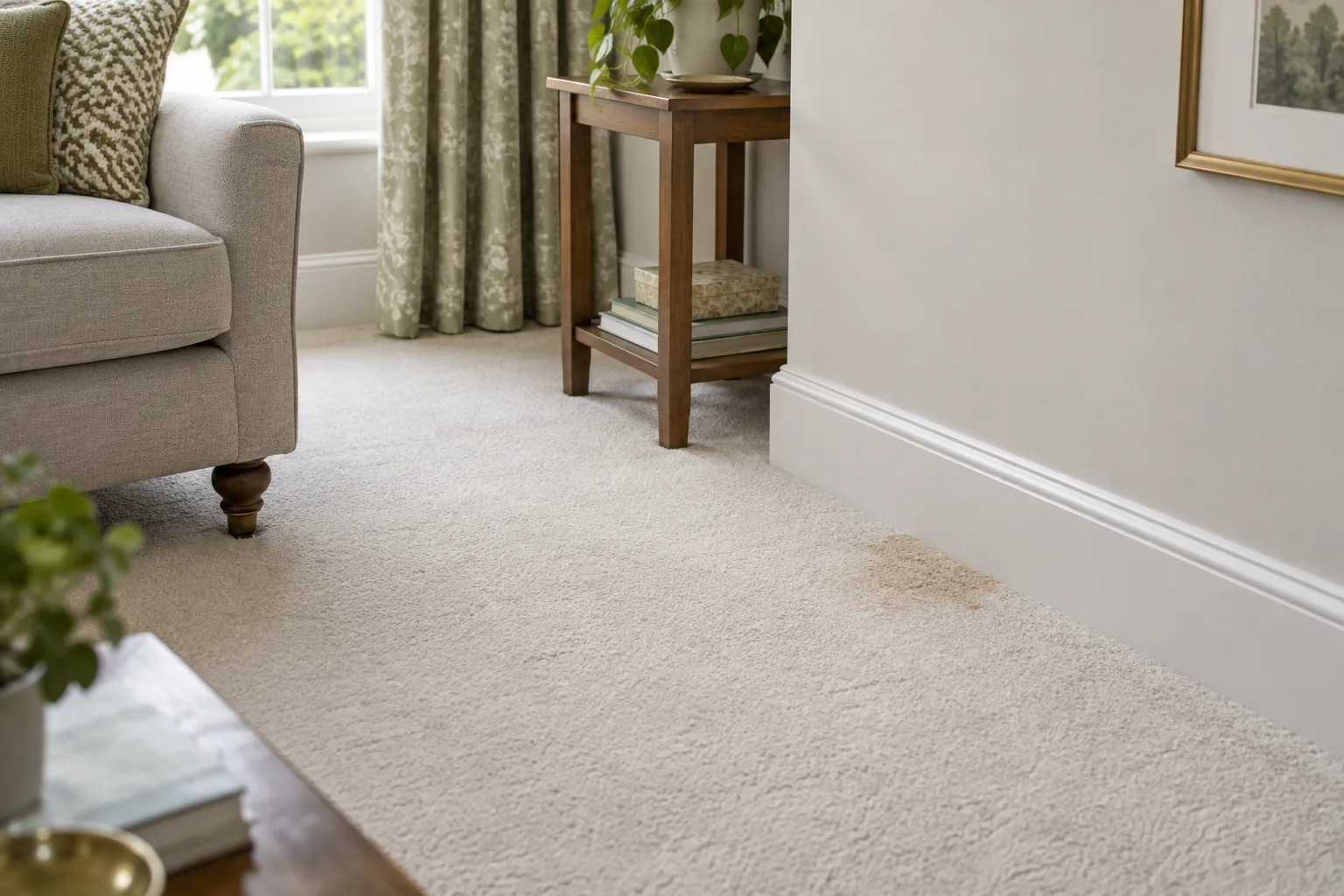
Direct answer: Brown marks on wool carpet can have several causes. Record when they appeared and seek an assessment before adding moisture or chemicals.
A brown or yellow patch on a pale wool carpet can be worrying, especially if it appears after a spill or a clean. It is tempting to reach for bleach or a stronger stain remover, but colour change has more than one cause. Soil may be present, colour may have migrated from a backing, or the wool itself may have changed after contact with an unsuitable chemical. Those possibilities call for different assessments.
The useful first move is to record where the mark is, when it appeared and what has touched the carpet. Avoid another wet treatment until a cleaner has considered the fibre, backing and prior products. A stain response that is sensible for a robust synthetic carpet may be unsuitable for wool.
Start with the history, not the colour alone
Was there a fresh spill, pet accident or leak? Did the carpet receive a cleaning product before the brown mark appeared? Does the patch sit at a seam or edge, where backing material may be close to the face? Has the room been very humid or slow to dry? Note these details. They are more informative than simply describing the mark as “rust coloured”.
Take a wide photograph showing its position in the room and a close photograph under natural light. Record whether the patch feels damp, sticky or different in texture. Do not keep rubbing it to see if colour transfers; vigorous action can disturb wool yarn. If a cleaner has just visited, contact the company promptly while the method, drying advice and timeline are easy to recall.
An older discolouration may have several layers of history. A faded cream carpet can show a relatively darker protected patch under furniture, while a heavily used edge can hold dry soil. WoolSafe notes that very pale wool can change in appearance with exposure to light, and that a contrast under furniture is not necessarily newly formed yellowing. The observation does not rule out browning elsewhere; it simply cautions against diagnosing from colour alone.
Backing material can move towards the surface
For a carpet known to contain jute, the jute-backed carpet guide explains the moisture questions to ask before another treatment.
Some wool carpets contain jute or other plant-based material in their construction. When such backing becomes wet, coloured compounds or residues can migrate as moisture moves towards the surface during drying. The result may be a brownish mark on the face yarn. WoolSafe has documented cellulosic browning following a household treatment that wetted a carpet backing. That example shows why a cleaner asks about earlier spot products, even when they were applied weeks before a professional visit.
This mechanism is not universal. A carpet may have wool pile but synthetic backing; a brown patch may have a completely different source. Someone needs to inspect its construction and the distribution of the mark. A patch appearing at the edge of an old wet area has a different pattern from a line beside metal furniture or a broad traffic route.
If backing migration is suspected, pouring water through the pile to “rinse it out” may move more colour and make drying slower. A controlled specialist treatment might improve some cases, but should be tested with the risks explained. Do not assume that a second ordinary clean will correct a problem that arose from excessive wetting.
Chemistry matters for wool
Wool is a protein fibre, and unsuitable high-alkalinity chemicals can change its colour and handle. WoolSafe’s maintenance guidance warns that high alkalinity can contribute to colour bleeding, jute staining in light carpets and, in severe cases, yellowing and weakening of wool. That is a reason to use products suitable for the actual carpet, not a reason for a homeowner to try to rebalance it with vinegar or another acid.
Bleach is particularly risky: it may remove dye or damage the fibre rather than remove an underlying stain. Washing-up liquid and laundry products can also leave residues or contain additives that affect appearance. If you have already used something, retain the bottle or photograph the label. A technician can then assess the likely effect and avoid mixing incompatible treatments.
A professional should test colour stability where appropriate and consider the whole construction before applying a treatment. Even a product sold as “safe for wool” must be used according to its instructions, and a carpet with a delicate backing or previous chemical damage may behave unexpectedly. The result of a small test cannot guarantee complete restoration across an older, larger patch.
What the pattern can suggest
A brown ring around a previously damp spot can be consistent with residue moving to the drying edge. A mark near a metal furniture foot may point towards rust or another transferred colour. A broad greying in a hallway can be ordinary accumulated soil mixed with wear. A patch that looks darker from one direction and lighter from the other may involve pile shading rather than a deposited colour. Each clue helps narrow questions; none is a diagnosis without inspection.
Compare the area with a protected section of carpet if you can do so without moving heavy furniture. Note whether the pile is still springy or has become flattened. Soil removal may improve a dirty area while leaving an underlying colour or texture difference. This is why a quotation should not promise that every brown-looking mark will vanish just because the carpet can be cleaned.
If there is a current leak or the underlay is wet, deal with that as a moisture problem first. Drying a surface patch while the floor below remains damp is not a complete response. Describe the extent of wetness accurately when contacting a cleaner or a water-damage specialist.
Practical steps for the customer
- Photograph the pattern and note its history.
- Check for local dampness and a possible source.
- Stop repeated home treatments.
- Ask for fibre, backing and colour assessment.
A proportionate next step
Stop adding products, photograph the mark and gather the carpet details. Ask the retailer for the fibre and backing specification if you have a product name. Tell the cleaner when the discolouration appeared, what was spilled and what was used. Ask for an inspection that distinguishes removable soil from migrated or chemically altered colour. Our carpet cleaning service should be planned around the carpet’s actual condition and a frank account of what can be achieved.
If a treatment is proposed, ask which area will be tested, what improvement is realistic and whether the process carries a risk of wider colour change. A specialist may recommend limited treatment, a different method or no further wet work. If the fibre or backing is already weakened, accepting a remaining cosmetic mark may be preferable to damaging a larger area.
After any approved treatment, follow drying advice and check the colour once the carpet is fully dry under steady lighting. Keep the before and after photographs. A patch that reappears after drying may need reassessment of the source rather than repetition of the same treatment. The goal is an informed decision about that particular carpet, not a universal recipe for “brown wool stains”.