
Mattress Toppers and Protectors: Clean Separately or Together?
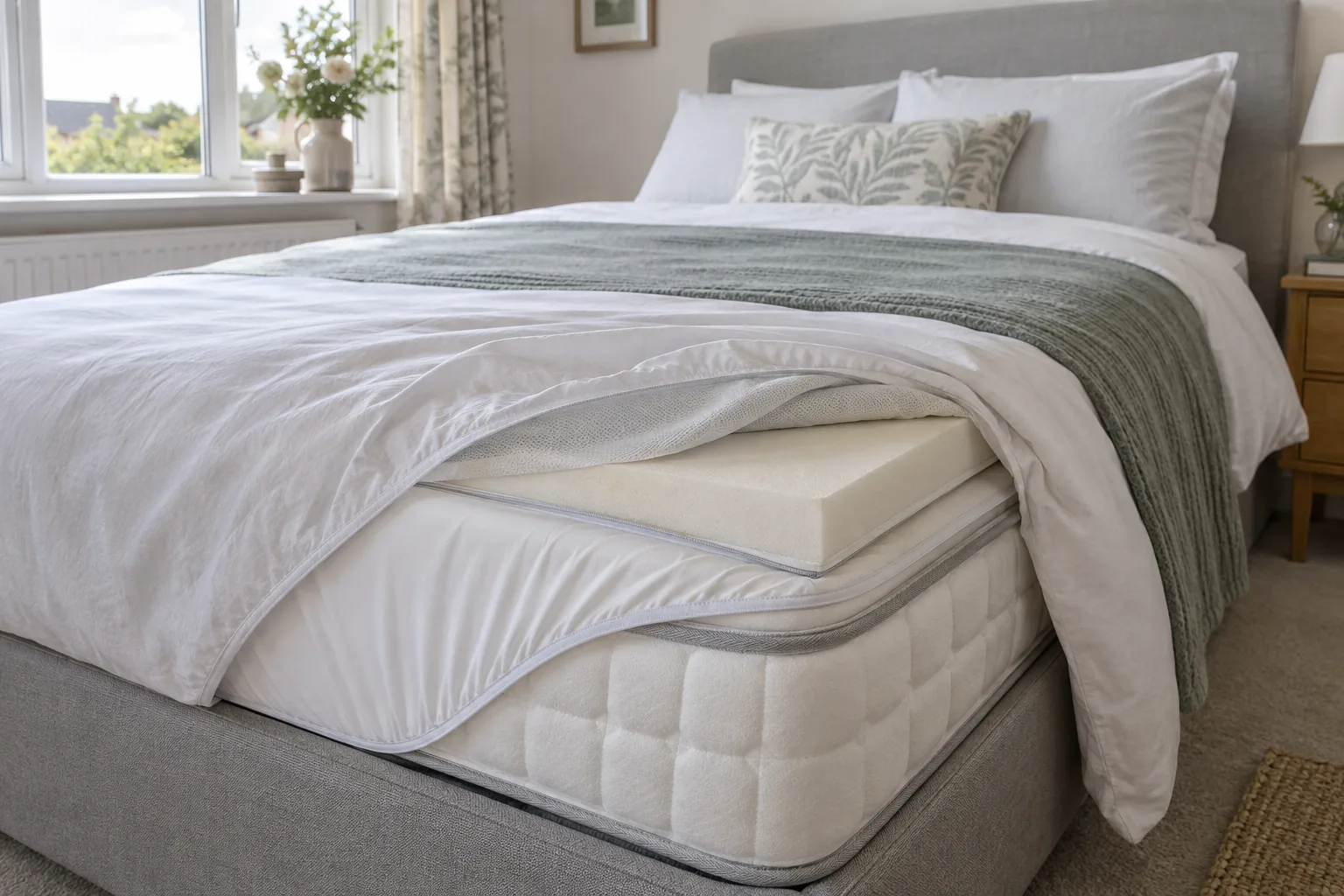
A bed can have a fitted sheet, a thin protector, a thick topper, the mattress’s own cover and the mattress core. When something spills, these layers can look like one unit. They are not one cleaning task. A protector may be designed for regular laundering, while the foam inside a topper may require entirely different care. Washing the wrong layer together with the others can damage it or hide moisture still held below.
Separate the layers conceptually before you move them. Identify what each item is, check its own label and work out how far the spill travelled. The goal is to wash removable materials where permitted, keep materials that must stay dry out of the machine, and avoid remaking the bed over a damp component.
Name each layer from top to bottom
A mattress protector is usually a relatively thin layer under the sheet, often held by elastic corners or a fitted skirt. Some have a waterproof backing; others are quilted or breathable without a complete liquid barrier. A topper is thicker and changes the feel of the bed. It may contain foam, latex, fibre or other materials inside a cover. The mattress itself may have a removable outer cover or a fixed ticking. Each part needs its own instructions.
If an item has a zip, check its label before opening it. A zipped topper cover may be washable while its foam core is not. A zip on a mattress ticking may not mean the cover is intended for home removal. A waterproof protector can also have a backing that needs a specific drying method; high heat might damage the barrier. Keep the labels with the right items as you strip the bed.
Photograph the arrangement if it is complex. Notice which way a topper faces and how its straps attach. A one-sided product may not be designed to be flipped. If the manufacturer gives orientation markings, preserve them. This makes refitting easier after everything is clean and fully dry.
Follow the path of a spill
Remove the sheet first and check its underside. Then inspect the protector’s top and bottom, the topper cover and the mattress surface. A waterproof protector can help, but do not assume it blocked every drop: a large spill may run over an edge or through a seam. A protector also loses effectiveness if it is damaged or fitted incorrectly. If the mattress is dry and the mark stopped at the protector, laundering the protector and sheet may be all that is needed.
If the topper is damp, check whether its inner layer was reached. A washable cover can be removed according to its label, but cleaning that cover alone does not dry or clean a wet foam core. If the mattress surface is damp too, it needs separate assessment. Do not stack damp layers on the floor while you work. Spread washable pieces as their labels direct, and keep the bed uncovered for airflow.
Record what spilled. Clear water, a sweet drink and a potentially contaminated liquid create different decisions. A large unknown spill that soaked through to the mattress is not merely a laundry problem. The inner bed materials may not be reachable by a surface cleaner.
Deal with each bed layer
- Remove sheets, protector and topper one layer at a time.
- Inspect the underside of each layer and identify where the liquid stopped.
- Follow the individual care label for every cover or insert.
- Refit only when every layer and the bed base are dry.
What can be laundered?
Many thin protectors are made for machine washing, but the permitted temperature and drying method vary by product. Follow the individual label, especially for a waterproof backing. Do not assume the hottest cycle is safest. Wash a protector separately if its instructions require it or if its size would overload the drum with other bedding. Ensure it is thoroughly dry before refitting, including the elastic edges and backing.
The guide to foam mattress layers explains why a washable outer cover does not make a foam core washable. If liquid reached the core, give the model and spill history through the contact page before arranging a mattress clean.
A topper cover may also be removable and washable. The product page may show a washable cover over a foam pad. That does not mean the entire pad belongs in a machine. A thick foam, latex or layered core may be damaged by washing and may take too long to dry. A fibre-filled topper could have different instructions again. Check both the outer and inner labels rather than transferring care advice from one topper to another.
The mattress cover is a third item. Some are removable; some are fixed; some covers that unzip are not washable. Follow the manufacturer’s exact instructions, including any refitting direction. Do not remove a cover merely because a zip is visible. If a large cover is technically washable but exceeds your machine’s capacity, seek a suitable professional laundry option rather than squeezing it in.
When to involve a cleaner
If a stain or moisture reached the mattress or an unapproved topper core, ask for an assessment before applying more liquid. A cleaner should identify the material and explain the scope of treatment. They may be able to clean a cover or surface while advising that a deeply wet core cannot be reliably restored. Our mattress cleaning service can assess the mattress surface and care instructions, but the possible treatment of a separate topper depends on its own construction.
Ask whether the quote includes the protector and topper or only the mattress. The most economical plan may be to launder an approved protector at home, replace an inexpensive damaged pad, and treat only the mattress surface professionally. Conversely, a costly topper with a specialised cover may warrant the maker’s advice before any work. The word “mattress clean” should not obscure which components are included.
Do not describe a washed protector as proof that the mattress beneath is clean. Equally, do not pay to clean a mattress if the spill was fully contained in removable bedding and the mattress shows no issue. The inspection of each layer guides the decision.
Rebuild the bed only when every layer is dry
Check the protector backing, topper cover, inner topper and mattress separately. A dry top surface can hide a damp underside. Follow the maker’s drying instructions and allow airflow around bulky pieces. Avoid direct high heat unless a label explicitly permits it. If a component retains an odour, damp feel or visible damage, stop before putting it back into the bed stack.
Once everything is dry, refit layers in their intended order and orientation. A protector gives you a removable first line of care for future spills, but it should be inspected after an incident rather than assumed to be perfect. Keeping the care instructions for each layer in one place makes the next decision much easier and can prevent a washable cover from being confused with an unwashable core.
If the protector no longer lies flat or its waterproof backing is cracked, check the maker’s advice on replacement before relying on it again. A folded or damaged barrier can allow a future spill to reach the topper at an edge. Inspect the elastic fittings as well: a pad that slips at night may leave the most used part of the mattress exposed, even when the fabric itself is intact.
Frequently asked questions
Is a foam topper the same as a mattress protector?
No. A topper adds a thicker comfort layer; a protector is usually a thinner barrier. Their care instructions can differ.
Can a protector be washed on the hottest cycle?
Only if its own label allows that temperature. A waterproof backing may have specific heat restrictions.