
A Drink Has Spilled on a Mattress: First Steps
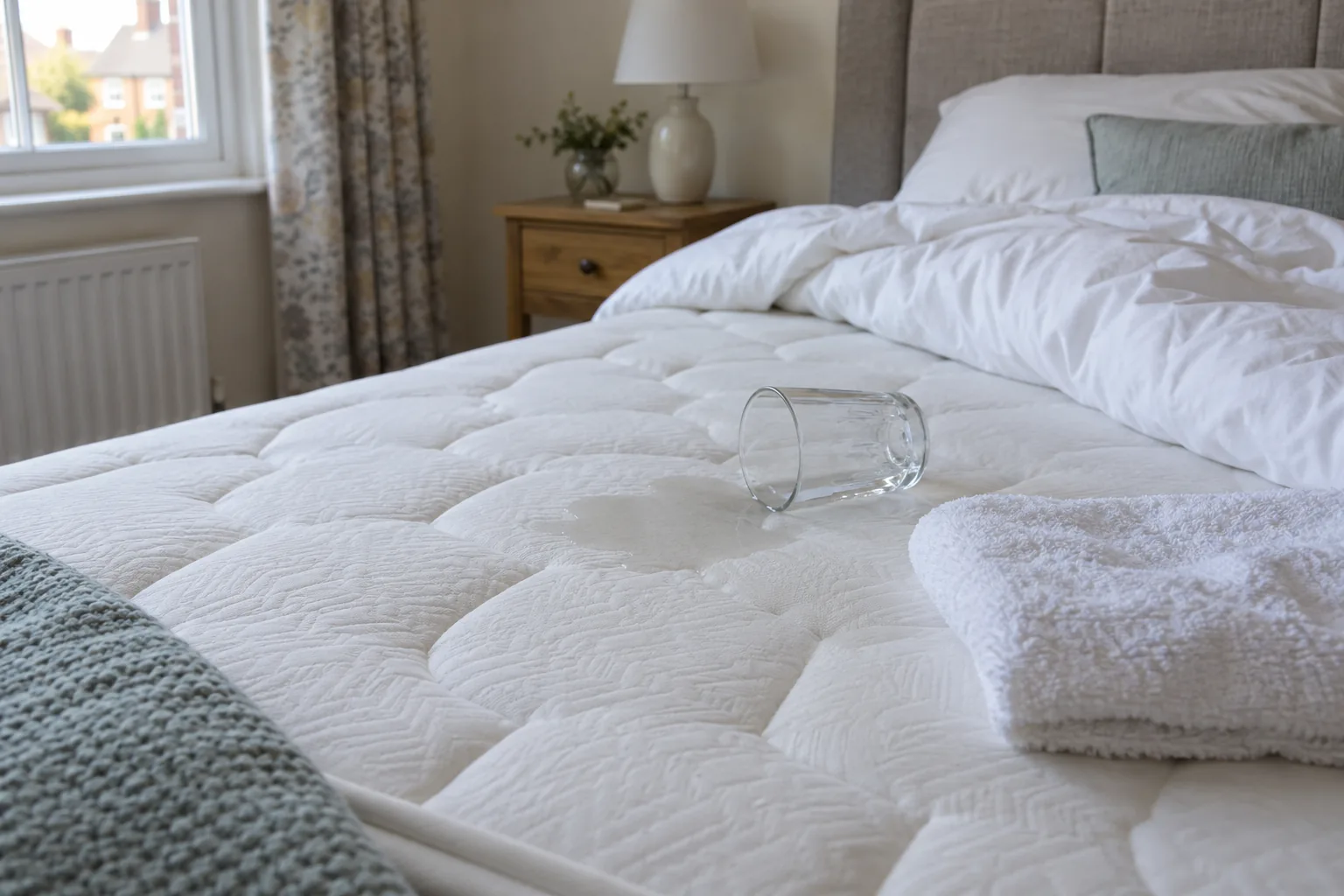
A glass tips over in bed and liquid spreads across the sheet. The first few minutes are about limiting how far it travels, not finding the strongest stain remover. A mattress is layered and difficult to dry inside. Fast, gentle blotting and a check of every bedding layer can make the difference between a washable protector and a deeply wet bed.
This guide covers an ordinary drink spill. If the liquid is very hot, contains something hazardous, or an electrical item or socket has become wet, deal with that immediate safety issue first. Large contaminated spills need a different response from a small glass of water or juice. The maker’s care instructions still govern any cleaning of the mattress itself.
Stop the spread and strip the bed
Remove the glass and any remaining liquid source. Lift bedding away carefully so it does not drip onto clean parts of the mattress or floor. Take off the sheet, then the protector or topper one layer at a time. Check the underside of each before moving on. A protector may have caught the spill completely, or liquid may have run around its edge. Knowing where it stopped prevents unnecessary wet treatment of a dry mattress.
Use clean white absorbent cloths or towels to blot the wet mattress surface. Press and lift repeatedly, replacing cloths as they become wet. Work from the outside of the spill towards its centre so you do not spread the liquid across a wider area. Avoid hard rubbing or pushing down with your full weight; that can force more liquid into the ticking and padding. If a towel becomes coloured by the mattress dye, stop and seek advice.
Check the side and underside you can reach without lifting a heavy mattress alone. A spill near the edge can reach the border, bed base or carpet. Blot those materials separately according to their own care needs. If a timber base is wet, do not cover it with a dry-looking mattress until it has been assessed and dried.
Identify the drink before treating the mark
Plain water can still carry old soil to a visible drying edge. Coffee, tea, wine, fruit juice and milky drinks add different colour, sugars, proteins or fats. A clear fizzy drink may leave a sticky residue even if it has little visible colour. Note what it was, roughly how much spilled and how long it sat before blotting. Take a photo if a mark is already visible.
Do not reach automatically for bleach, vinegar, washing-up liquid or a household carpet machine. A mattress cover may have dyes or finishes that react to them, and any extra water increases the drying burden. A product that makes the stain pale while damp may leave a ring as it dries. If the maker gives specific spot-cleaning guidance for this model, follow it exactly. If the label is unclear, ask the manufacturer or a cleaner before adding liquid.
If the drink was heavily coloured, a residual mark may remain despite quick blotting. That is frustrating but less serious than soaking the core to chase the final trace of colour. A surface stain can sometimes be assessed later; hidden moisture is harder to undo.
Separate washable bedding from the mattress
Sheets and a labelled washable protector can be laundered according to their own care instructions. Check whether the protector has a waterproof backing and whether its label restricts heat. Do not assume the same cycle is suitable for a thick topper or the mattress’s outer cover. A topper may have a washable shell over foam that must stay dry; a mattress zip may not mean its cover can be removed.
If you are unsure whether a topper or protector can go in the wash, the guide to cleaning those layers separately explains the label checks. For a larger spill that reached the mattress, use the contact page to describe the liquid and approximate amount.
Keep wet bedding from sitting in a pile against the mattress. Move it to an appropriate laundry area so it does not rewet the bed. If a protector did its job and the mattress is entirely dry, concentrate on cleaning the removable items. There is no benefit in applying a wet cleaner to an unaffected mattress merely because a drink spilled somewhere above it.
If the topper core or mattress surface became wet, leave those layers uncovered with suitable airflow. Avoid putting a waterproof protector back over them until they are thoroughly dry. A heater or hairdryer aimed at one spot can damage materials without drying the interior evenly. Use the maker’s guidance for the product and the room’s normal ventilation.
Decide whether the mattress itself needs help
A small shallow spill that was blotted immediately may need observation and, if permitted, limited surface care. A larger spill that reached foam, quilting channels or the underside deserves professional advice. Persistent dampness, an odour, a returning mark or uncertainty about how much liquid entered are useful reasons to call. Tell the cleaner about the drink, amount, timing, protector and anything already applied.
Our mattress cleaning service can assess the visible condition and discuss what treatment can reach. A surface process may improve the stain but cannot certify that a heavily soaked interior has been restored. For a mattress whose maker prohibits wetting the core, the cleaner must respect that limit. In some cases, replacing a badly saturated topper or mattress is the more sensible result of the assessment.
Ask how drying will be checked and when bedding can safely return. A fixed promise of a few hours is unreliable without knowing the mattress construction, room conditions and amount of liquid involved. If the bed must be used that night, arrange an alternative if it is not fully dry. Sleeping on a wet mattress to keep the schedule is not a good solution.
Watch for a returning ring
After drying, inspect the area in daylight. A faint boundary may appear where dissolved material moved to the drying edge. Do not repeatedly wet it without understanding the cause. Record whether the mark grows, whether the area feels dry and whether any odour develops. A cleaner can use that history to distinguish a surface residue from a deeper problem.
Once the mattress is completely dry, refit clean bedding and a suitable protector. Check a waterproof protector after every future spill because liquid can bypass it at an edge or through damage. The immediate priority is containment, layer-by-layer inspection and drying. Stain appearance can be discussed after the mattress is safe to use again.
If the glass broke as it fell, deal with the shards before handling bedding. Keep bare feet and hands away from the wet area until the broken pieces are removed safely. Tiny fragments can hide in a sheet fold or a quilted seam. Do not rub the mattress with a towel across visible glass, and do not use the bed again until the surface has been checked carefully. The spill and the breakage are separate tasks that both need attention.