
Controlled Moisture in Sofa and Upholstery Cleaning
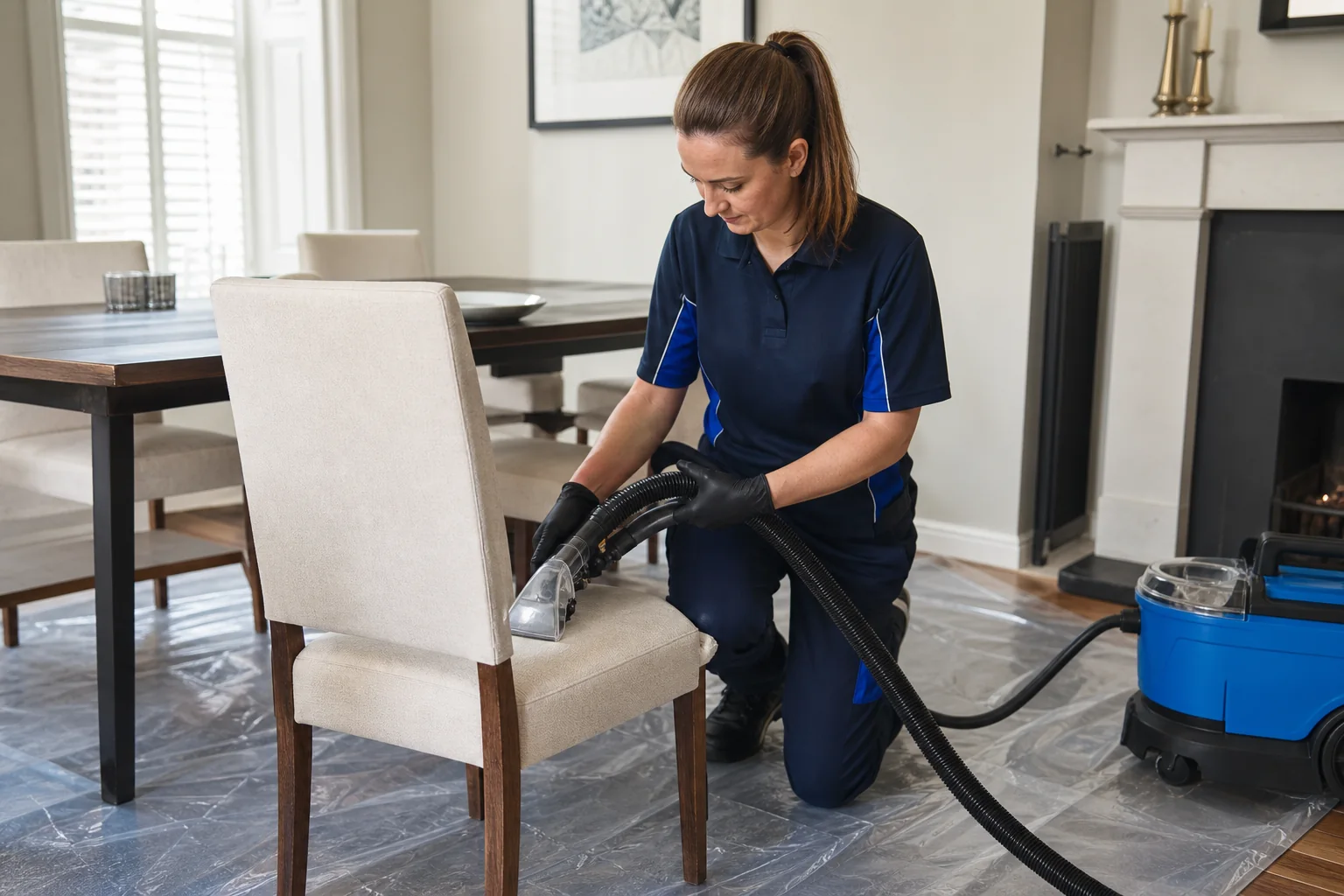
Controlled moisture means applying no more liquid than a particular upholstery item can safely tolerate, then managing its removal and drying. It does not mean that every sofa should receive the same small amount of water. Some materials may permit a carefully managed wet process; others may need a different method or specialist advice. The face fabric, backing, dyes, seams, cushion filling and room conditions all influence that choice.
The risk is easy to underestimate because a cover can feel dry on top while foam or loose fibre beneath remains damp. A wet seat may also draw old soil towards its drying edge and reveal a ring the next day. The cleaner should explain how the proposed process limits these effects rather than merely describing a machine as powerful or “steam based”.
Inspect before adding liquid
Read the maker's care guidance for the exact sofa and check for removable covers, contrast trims, weak seams, old rings and earlier cleaning products. A technician should test colour stability where appropriate. A photograph can show the overall condition but cannot establish how backing or filling will respond. If the construction is uncertain, caution is part of the method.
Ask what has caused the visible problem. General dust, body oil, a sugary spill and dye transfer are not interchangeable. A dark patch may be surface wear rather than removable soil. Repeatedly wetting an abrasion will not restore yarn. A fabric identification guide can help you gather the label and material details before a professional visit.
Application is only one part of control
A professional may apply a pre-treatment to a specific soiled area, allow an appropriate contact period and then clean or recover it with a method suited to the fabric. Product concentration, temperature, agitation and application volume all matter. More product can leave residue; more water can carry stain material into the filling. A wider panel may need even treatment to avoid a pale island, but only when testing supports that approach.
The cleaner should protect seams and piping that hold liquid differently from the main panel. A dark trim may release dye onto a light fabric. Buttons or deep tufts can retain moisture. The guide to Why Upholstery Colour-Fastness Testing Matters describes why those details deserve individual attention even on a sofa with a robust-looking seat.
Recovery and drying complete the process
Liquid applied to upholstery needs an exit route. Depending on the material, a technician may use controlled extraction or another process designed to remove loosened soil and residue. A small amount of liquid left in the wrong place can be more troublesome than a larger amount properly managed. It is therefore misleading to judge a process only by how wet the cover initially appears.
Drying depends on airflow, humidity, temperature, fabric and cushion construction. Loose cushions may be positioned to expose more sides if the maker and technician permit it; a fixed seat may have less airflow beneath the cover. The guide to How Long Does a Sofa Take to Dry After Cleaning? explains why foam, fibre and feather need different expectations. A fixed promise that every sofa is ready in the same number of hours would ignore these differences.
When too much moisture causes a returning mark
An old spill or cleaning residue can remain in a lower layer after the surface looks improved. As moisture evaporates, dissolved material may travel upwards or towards an outer boundary. A line can appear after the cleaner leaves. That does not identify the material by itself; it may be soil, product residue or something from beneath the cover. Rewetting the line repeatedly can simply move it.
Tell the cleaner if a ring has returned after earlier treatment and how long it took. Photograph it only after the fabric dries. If there is a persistent odour or a cushion core that still feels damp, the problem may extend beyond cosmetic surface cleaning. A clean cover cannot certify that all inner padding is dry or free from a spill.
What customers can do after the visit
Keep the sofa unused until the technician says it is ready. Improve normal room airflow, but avoid placing an intense heater or hairdryer against the upholstery. Do not replace a heavy throw or waterproof cover over a damp seat. Check the cushion edges, seams and underside where accessible as well as the broad face. Report unexpected dampness or colour change promptly.
Compare before and after photographs in similar light only once the fabric is dry. Some piles change apparent shade as they are groomed, while wear and faded dye remain after soil removal. If a mark remains, ask whether it is removable residue, a permanent colour change or an issue requiring a different specialist. This is a better decision than assuming more moisture will improve it.
The question to ask before booking
Ask: “How will you choose and control moisture for this sofa, and what drying guidance will you give?” A useful answer refers to the actual fabric, filling, previous treatments and test results. The sofa cleaning service can assess those factors; send photographs and label details through the contact page so the initial conversation begins with the right information.
A returning ring is useful evidence
Suppose a sofa arm looks even immediately after a controlled clean, but a brown outline appears the following morning. Note the drying conditions and photograph the dry shape. The return may indicate residue or old soil moving from below; it may also expose a permanent colour difference. The right response is to examine the pattern and cushion construction, not automatically wet the outline again. If the inner arm padding holds material, a second surface pass may offer little. The technician should explain whether another limited test is justified or whether the remaining difference is a treatment limit.
Controlled moisture also affects the surrounding room. Protect timber legs, nearby flooring and electrical fittings from drips. A reclining sofa may have motors or controls beneath a fabric seat; point these out before equipment is used. If the fabric is attached to a delicate timber arm, the technician may need to avoid letting solution sit at the joint. These details do not change whether the sofa is “fabric”, but they change what a safe cleaning process looks like. Agree who will move small items and whether access to the outside back is possible before treatment begins.