
How to Identify Upholstery Fabric Types
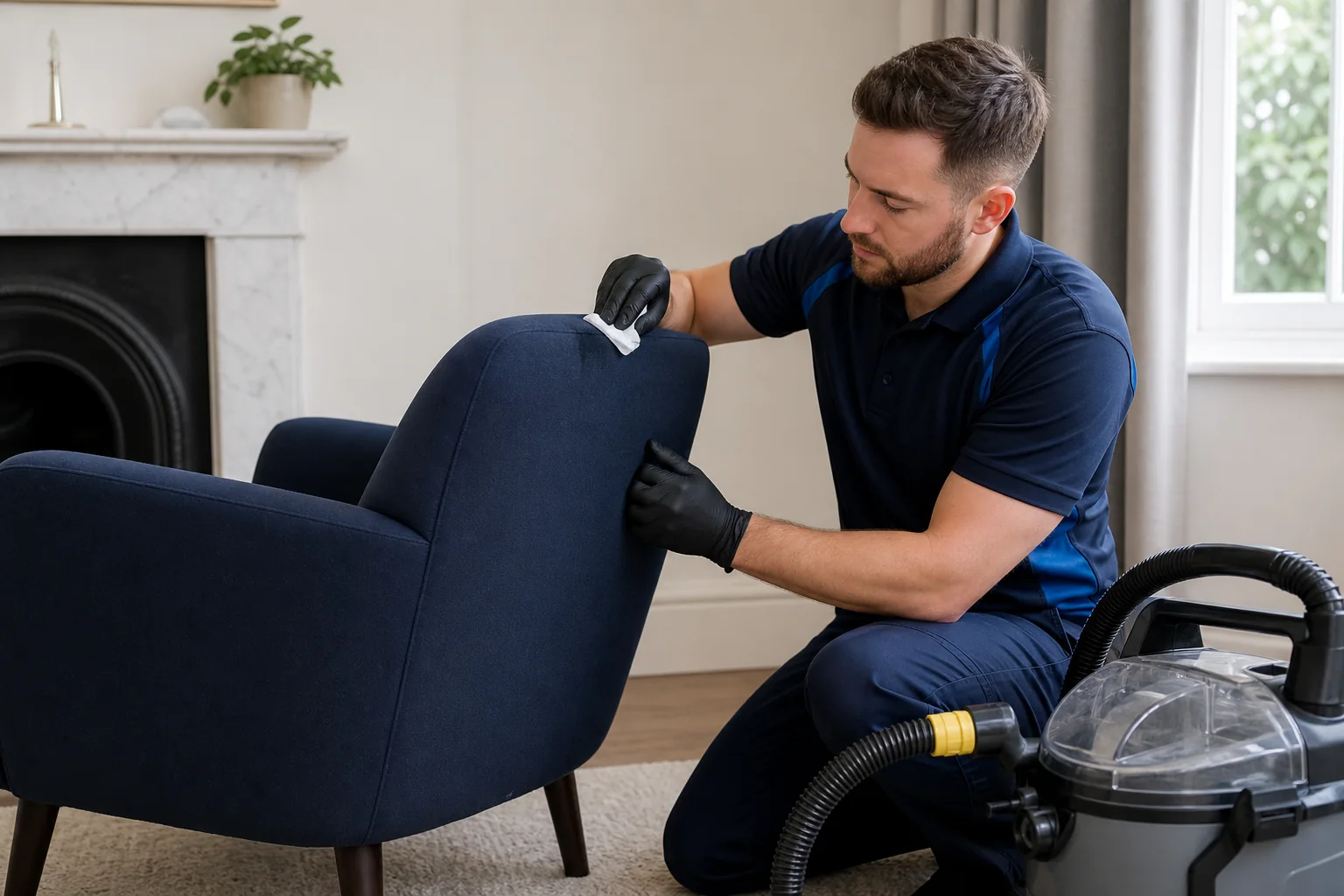
Knowing whether a sofa is “fabric” is only the beginning of a cleaning decision. The face may be polyester, cotton, wool, linen, viscose or a blend; a velvet pile may use several of those fibres. Backing, finish, dyes, seams and filling can matter as much as the face yarn. A visual guess cannot reliably identify the full construction, so begin with the manufacturer's label and instructions for the exact piece before choosing a product or method.
If the label is missing, gather the model name, purchase record and any care booklet. The maker may be able to provide care instructions. Avoid trying a burn test or pulling fibres from a valued sofa; that can cause damage and still leave the backing and finish unknown. A professional cleaner can inspect and test appropriate areas, but should acknowledge uncertainty rather than claim to know the exact fibre by sight alone.
Read the label carefully
A label may name the face fabric's fibre content and give cleaning instructions. These are different pieces of information. A cover that contains polyester can still have delicate trims or a backing that limits wet cleaning. A zip may be for assembly or replacement rather than machine laundering. Look for separate information on loose cushions, removable covers and decorative pillows, since they may not share one care method.
Keep a clear photograph of all sides of the label and the sofa model. Do not rely on a code found in an online article without confirming that it applies to your furniture and country. Where the instructions appear to conflict, ask the manufacturer or a competent cleaner before acting. The risk of shrinking or distorting a cover can outweigh the value of removing a small cosmetic mark.
Look at structure, not just colour
A flat woven upholstery fabric shows crossing yarns; a pile fabric has raised surface fibres that can lean and reflect light differently. Velvet, chenille and other textured finishes may appear darker when brushed in one direction. That appearance change is not necessarily soil. A leather-look surface can be coated textile rather than leather, and the care approach will depend on its actual construction.
Inspect piping, buttons and panels separately. A dark contrast trim may use a different fabric or dye from the main seat. Weak seams, frayed edges and old repairs matter because cleaning tools can stress them. The guide to Why Upholstery Colour-Fastness Testing Matters explains why one piece of furniture may contain several cleaning problems at once.
Why familiar fibre names still leave questions
Cotton and linen can have different finishes and blends; some are prone to visible wet boundaries or shrinkage. Wool needs attention to chemistry, heat and agitation. Synthetic fibres can be more tolerant in some constructions, but unstable dyes, adhesives or foam filling may still impose limits. Viscose and rayon may be especially sensitive to moisture and agitation depending on the fabric. None of these broad descriptions is a licence to ignore the sofa's label.
A pale sofa can also hide whether its colour comes from a stable dye, a surface print or a finish that has aged. A hidden test may show a useful reaction to a proposed method, but it cannot prove that every exposed panel will respond identically. The upholstery colour-fastness guide explains how a technician uses tests as evidence rather than a guarantee.
What to do when a spill happens before identification
For a fresh liquid spill, blot gently with clean white absorbent cloths and remove loose food without rubbing. Avoid soaking the unknown fabric, applying heat or mixing household products. If the spill is large, tell a cleaner that the cushion filling may also be wet. A dry-looking surface does not establish that the inner layer is dry or clean.
Photograph the mark, keep the label and write down what touched it. A coloured drink, oil and dye from clothing require different questions. If a retail product has already been used, record its name and concentration. That history can be more valuable than a guess that the sofa is “microfibre” or “cotton-like”.
What a professional can assess
A technician can inspect weave or pile, seams, trims, backing where accessible, previous wear and the care instructions. They may test colour stability and a proposed cleaning process in a discreet place. They should then explain whether a controlled wet method, a lower-moisture process, specialist treatment or no work is sensible. Exact laboratory fibre identification is rarely part of an ordinary domestic cleaning visit, so the method should be cautious where the material remains uncertain.
The upholstery cleaning service can discuss the actual item. Use the contact page to send the label, whole-sofa photographs and close-ups of the mark before the appointment. Ask the cleaner what information is known, what is inferred and what they will test before treating a large panel.
Keep the identification useful for later care
Once you have confirmed the maker's instructions, save them with photographs of the label. Note any limits the cleaner finds, such as unstable piping or a filling that dries slowly. This record helps with future spills and makes a later quote more accurate. Routine vacuuming or brushing should follow the same instructions; a method safe for one fabric can abrade another.
The practical conclusion is to identify as much of the complete upholstery as you can, then choose a method based on that evidence. A fibre name is a clue, not a complete cleaning plan.
When the label has disappeared
If the sofa's care label is missing, photograph the whole piece, seams, underside where visible and any brand badge. Search the purchase paperwork for a model number or fabric name, then contact the maker or retailer. Do not assume a retail product marked “safe for upholstery” solves the uncertainty. A cleaner may still offer a conservative test and method, but should say what remains unknown. On a sentimental or expensive piece, the cost of specialist identification may be preferable to a broad trial clean. Keep any new care guidance with the furniture record for the next spill.
If a fabric contains a blend, the percentage list may still conceal a surface finish that controls appearance. A brushed pile can reflect light differently after gentle contact, and a printed design can lose colour without the yarn itself changing. Photograph an intact sheltered area to give the cleaner a comparison. If the upholstery is old, earlier sunlight and spot cleaning may have made exposed sections less stable than the label suggests. The label is the best starting evidence, but its instructions must be considered with current condition. A test result should be reviewed once dry before a broad panel is treated.