
Chewing Gum on Carpet: What Not to Pull
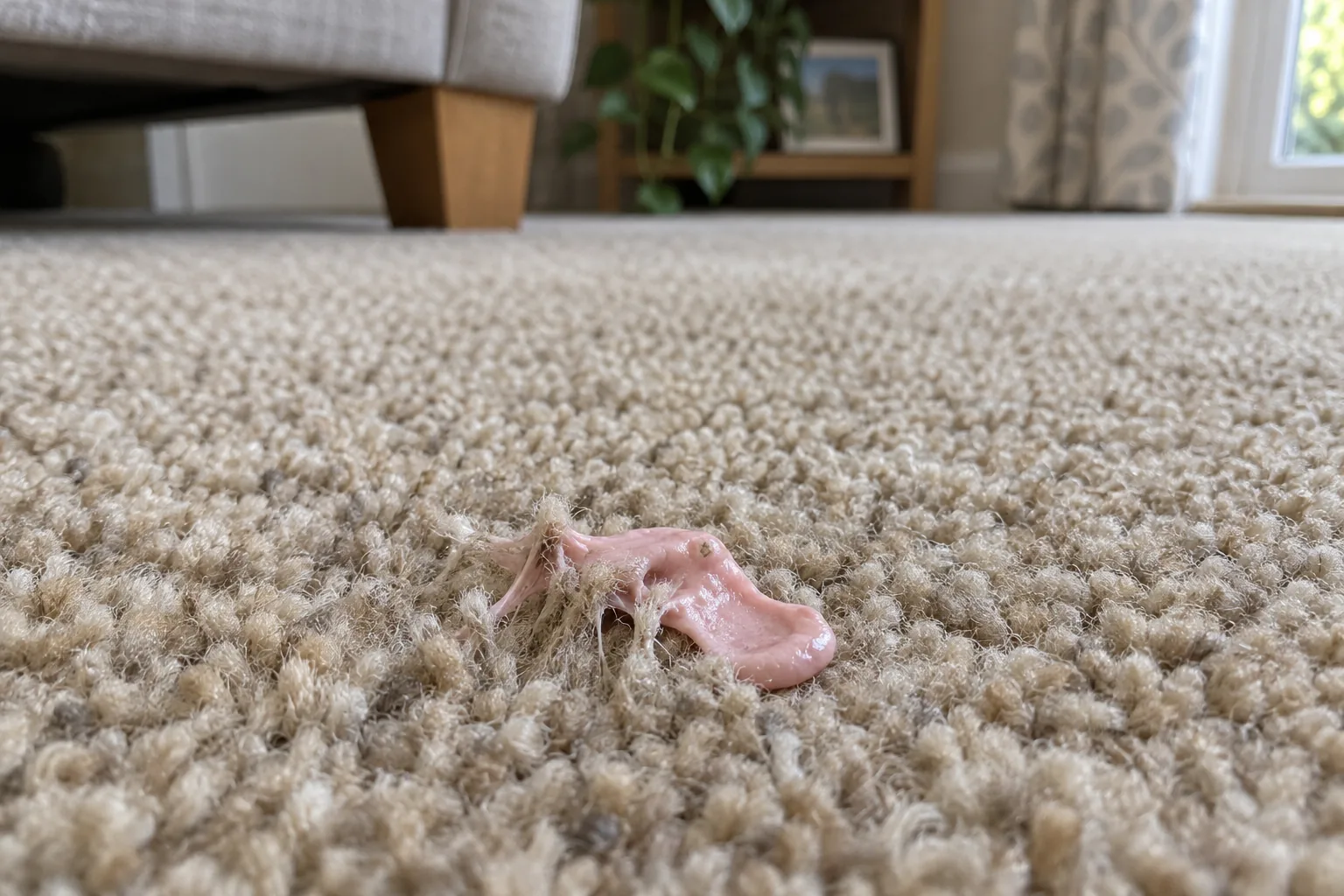
Direct answer: Gum can pull carpet yarn out when tugged. Keep pressure off the area and avoid blades or untested solvents; use a method suited to the carpet.
Chewing gum on carpet looks like a small problem until it grips several tufts. A hard pull may bring yarn with it, while rubbing can spread the gum into a wider patch. The sensible first response is to keep people from treading on it, identify the carpet and remove only what will come away without force. Any remaining tacky material may need a method chosen for that fibre and backing.
Manufacturers and carpet-care organisations describe freezing and controlled spot treatments for gum. Those methods have limits, and a fitted carpet with loose loops or a delicate backing needs more caution than a sound, dense sample in a demonstration. The goal is to preserve the pile, not simply make the gum disappear at any cost.
Prevent pressure before treatment
On loop-pile carpet, the snag-prevention guide explains why one pulled strand may affect neighbouring loops.
Keep shoes, chair castors and vacuum heads off the area. Stepping on gum presses it further into the pile and may spread it to surrounding yarn. If the gum sits near a doorway or on a stair, make the route safe while you decide what to do. Note whether it is fresh and soft or old and hardened, and take a close photograph before trying to lift it.
Look at the carpet construction. In loop pile, a strand caught in gum may continue through nearby loops; pulling it can create a run. In a long cut pile, gum can cling along the length of several yarns. An older patch may contain grit and body oils as well as gum. Do not trim carpet fibres close to the backing to remove a small piece; the bare patch can be more obvious than the original mark.
If loose gum is resting on top, lift only the part that releases without drawing yarn. Use clean hands or a blunt edge gently and stop when there is resistance. Do not rub with a rough cloth, brush or knife. Scraping across the pile can fuzz or cut it, even if the gum begins to break up. Avoid applying sticky tape, which can pull loose fibres and leave adhesive behind.
Why freezing is sometimes suggested
Cooling gum can make it less flexible and allow it to break into small pieces. Shaw Floors describes a freezing method for gum on carpet, followed by gentle removal of frozen chips and further treatment if colour or residue remains. WoolSafe also lists a freeze-type gum remover among options for wool carpet. These sources support freezing as a possible method, not proof that every carpet can be cleaned by pressing wet ice directly into the pile.
Direct ice introduces moisture, which may matter for delicate fibres, unstable dyes or a natural backing. If the product is known and the manufacturer’s instructions allow it, follow those instructions carefully. If you are unsure, ask a cleaner rather than soaking or chilling the area at random. Do not hold a freezing aerosol close to fibres without the product’s guidance; extreme cold and propellants have their own handling risks.
Even when the surface gum becomes brittle, parts may remain stuck lower in the pile. Pulling harder at that stage defeats the purpose of making it easier to separate. Work in small pieces if the material comes away readily; stop at the first sign that yarn is being stretched. The remaining residue is a separate assessment.
Solvents and oily marks need care
Some gum methods use a solvent after the solid material has been reduced. A solvent can also affect carpet dye, finish or backing, and it should not be poured directly into the pile. Shaw’s gum guidance warns against applying solvent directly to the carpet because of backing damage. The Carpet and Rug Institute similarly cautions that solvent reaching some latex-bonded backings can weaken the bond. More liquid is not necessarily more effective.
Do not experiment with cooking oil, peanut butter, nail-polish remover or petrol to loosen gum. These can introduce a larger oily stain, colour change, smell or safety issue. A small adhesive patch may then become two separate problems. If you have already used a product, keep its name and tell the technician. A cleaner may need to address residue before wider cleaning.
The dark shadow left after the gum is removed might be embedded soil, a colour from the gum, product residue or a change in pile direction. Look at it when fully dry and under steady lighting. Do not assume that the remaining mark calls for scraping. A professional can test a limited area and explain whether the issue is removable material or damaged texture.
When a cleaner should take over
Ask for help if the gum grips several tufts, sits in loop pile, is near an open seam, remains tacky after safe lifting, or is on an expensive or delicate carpet. Send a photograph that shows both the spot and surrounding room. Tell the company which fibre and backing you know about, whether the gum is fresh, and exactly what you have already done. They can advise whether a targeted visit or treatment alongside a planned clean makes sense.
Our carpet cleaning service may include assessment of specific spots, but do not assume an ordinary whole-room pass will release gum without separate preparation. Ask what result is realistic, what risks a solvent or freezing step carries and whether an old discoloured shadow may remain. Good advice may be to leave a tiny remnant rather than damage a vulnerable yarn.
If a child or pet has carried gum into several places, map the affected spots before equipment is set up. That allows the cleaner to avoid catching a piece with a vacuum head or spreading it during pretreatment. A photograph after treatment, taken once dry, helps you judge improvement fairly.
Keep the result in proportion
For a small spot on a sturdy carpet, careful hardening and removal may work well. For a delicate loop or a mark that has been pressed in for days, a perfect result is less certain. The carpet’s appearance depends on intact yarn as well as the absence of gum. Avoid trading a small sticky spot for a line of missing loops.
Dispose of loose fragments so they cannot be trodden into another part of the room. Once the area is fully dry and no residue remains, resume normal vacuuming with a head suitable for the carpet. If the pile has been pulled out or cut, cleaning will not rebuild it; a repair specialist or fitter may advise whether a local repair is practical.
The short rule is to resist the pull. Protect the pile, use only a method compatible with the actual carpet and stop if the gum holds the yarn. That preserves the most options for a professional and limits a small accident to a small area.
Frequently asked questions
Can freezing remove gum?
Cooling sometimes helps, but the construction and depth of gum matter.
What if an oily shadow remains?
Tell the cleaner about any product already used.