
How to Protect Loop-Pile Carpet from Snags
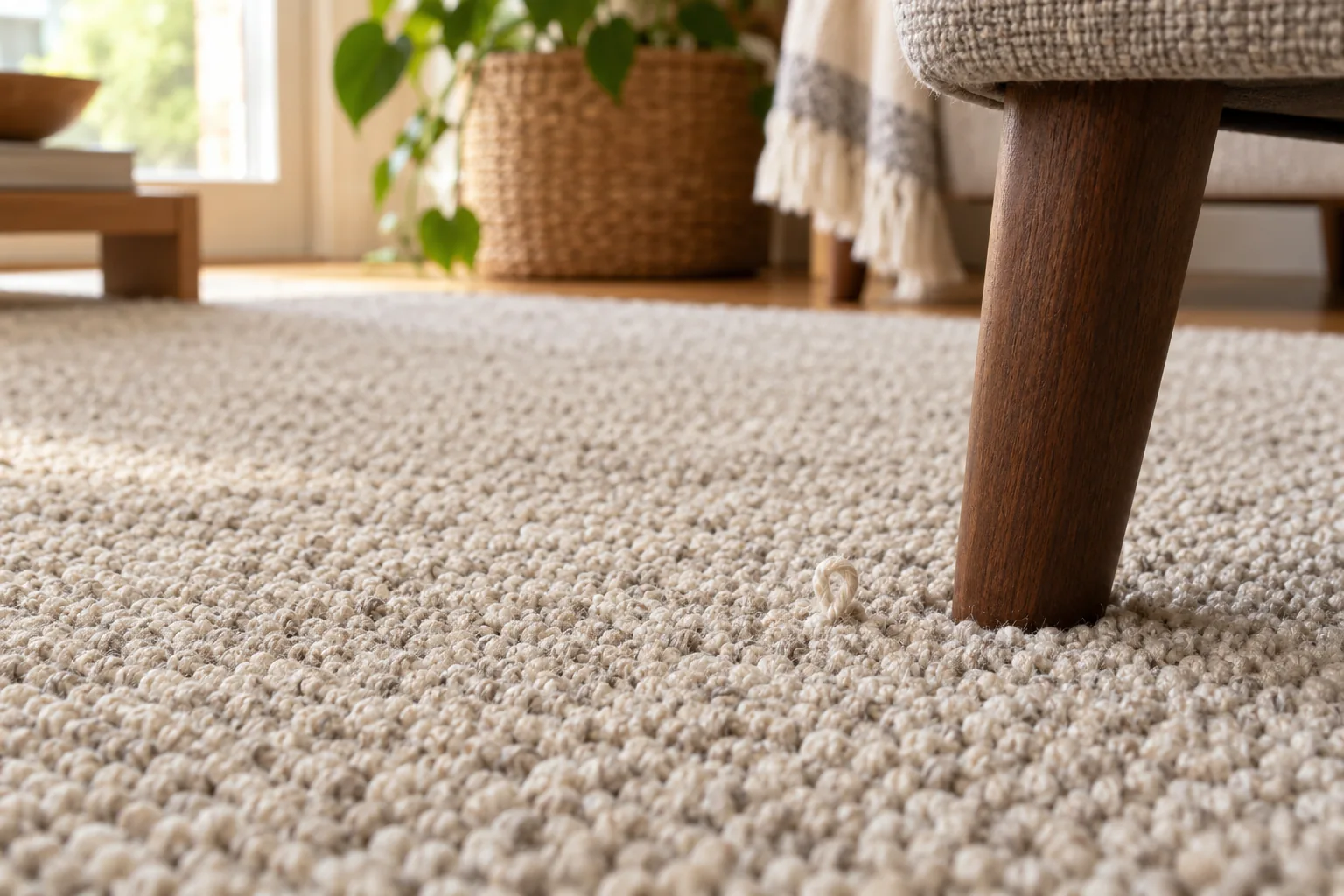
Direct answer: A pulled loop can travel if it catches again. Protect the area, follow the maker’s cleaning guidance and seek repair advice for an open or growing snag.
Loop-pile carpet has an appealing, even texture, but a single raised loop can catch on a shoe, pet claw or furniture foot. The instinct is often to pull the yarn taut or cut straight across it. That may turn a small local defect into a line of missing loops. A better response starts with protecting the area from further contact and finding out whether the yarn has merely risen or the construction has begun to unravel.
Cleaning is useful for removing soil from sound carpet. It does not rebuild a broken loop or repair an opened seam. Knowing that limit helps you choose appropriate day-to-day care and recognise when a carpet fitter or specialist repairer is more useful than another cleaning treatment.
Why a snag can travel
In a loop-pile construction the yarn forms visible loops at the surface rather than cut ends. In some carpets, the yarn path can continue through neighbouring tufts. If a raised loop is pulled, more yarn may be drawn out of the backing and the problem may extend along a row. Not every snag will run, because constructions differ, but the possibility is enough to make pulling a poor experiment.
Look at the area without tugging it. Is there one loop standing above its neighbours, a short loose end, or an obvious line where several loops are missing? A single raised tuft may be handled differently from a seam edge that is opening. If you cannot tell, take a close photograph with a ruler beside the mark and ask the carpet supplier or a repairer for advice. Keep shoes and vacuum heads away from it in the meantime.
The Carpet and Rug Institute advises clipping an isolated sprouting tuft with scissors rather than pulling it. That guidance should not be stretched into a promise that all loop-pile damage is a do-it-yourself trim. A running loop, a repeated snag or a damaged join may need a repair that secures the yarn and protects the backing. Cutting across several linked loops without understanding the construction may make the surface worse.
Common things that catch the pile
Pets’ claws can hook a loop during play or scratching. The Carpet and Rug Institute notes this as a particular concern for loop-pile carpets in homes with pets. Maintaining claws appropriately and giving pets a suitable scratching place may reduce the chance of a catch, but no carpet is guaranteed snag-proof. If an animal returns to the same spot, protect it until the behaviour and the carpet damage can be addressed.
Furniture is another source. A rough chair glide, exposed screw, splintered wooden foot or dragged storage box can catch yarn. Check the underside of frequently moved items. Fit suitable smooth protectors where appropriate, and lift furniture that you can move safely rather than scraping it across the carpet. Ask for help with heavy items; protecting the carpet is not worth a back injury. A castor designed for hard flooring may also behave differently on carpet, so check the chair manufacturer’s guidance before swapping parts.
Footwear and household tools can create smaller catches. A loose buckle, sharp heel edge or vacuum attachment with a damaged underside may pick up a loop. Examine the vacuum head for burrs and follow the carpet maker’s recommended setting. Some loop-pile carpets need a different brush or suction setting from a robust cut pile. A beater bar set too low may create unnecessary drag. Do not assume the most aggressive setting gives the deepest clean.
Practical steps for the customer
- Keep shoes and vacuum brushes from catching the loop.
- Do not pull the yarn or cut it flush without advice.
- Check the maker’s vacuum guidance.
- Show a growing snag to a fitter before cleaning.
Clean gently around an existing snag
If the area also looks darker or flatter, check the difference between soil and pile flattening before assuming the snag is the only reason it looks worn.
Before vacuuming, identify the raised loop and prevent the vacuum head from catching it. You may be able to clean the surrounding area with a suitable attachment while avoiding direct contact with the defect. If the snag is in a busy route or is beginning to run, arrange a repair assessment first. There is little value in removing dust today if the process pulls another length of yarn out tomorrow.
For an ordinary spill elsewhere on the carpet, blot with a clean absorbent cloth rather than scrubbing the loops sideways. Scrubbing can fuzz the yarn or catch an already weak tuft. Use only products and methods suitable for the fibre and backing, and test as the manufacturer directs. Saturating a small spot can spread residue into the backing without reaching the cause of the mark. If you have used a product, tell the professional cleaner exactly what it was.
During professional cleaning, point out every snag or ravelled edge before work starts. The technician can decide whether to avoid a tool or agitation method at that point, and whether repair should come first. Our carpet cleaning service should be planned around the material’s condition; cleaning a sound surface and repairing a damaged construction are different jobs. Ask for an honest explanation of what can safely be cleaned around the defect.
Pay special attention to joins and stairs
A snag beside a seam needs more caution than one in open carpet. Seams join cut edges and can be vulnerable if they were not sealed or have become worn. The Carpet and Rug Institute says seam edges should be sealed during installation to prevent ravel. If loops at a join are lifting, stop pulling at them and ask a fitter whether the seam is sound. Cleaning cannot recreate missing edge sealing or close a gap that has developed.
Stair carpets see repeated pressure at nosings and turns. A snag there can catch footwear and may also signal looseness in the fitting. Keep the stair safe while arranging inspection, particularly if the carpet has moved or an edge is exposed. Do not pin a lifted section in place as an improvised fix. A secure installation matters more than hiding a small visible defect.
Likewise, check thresholds where carpet meets hard flooring. Metal trims, door movement and changes in height can rub or trap loops. If the damage repeats at the same boundary, repair the cause of the catch as well as the yarn. Otherwise a neat repair may be damaged again. A fitter can advise whether the trim or transition needs adjustment.
Build a low-risk maintenance routine
Vacuum regularly enough that grit is not ground into the loops. Use a machine and head suited to the carpet and work in controlled passes, without pressing the head hard into the pile. Empty or maintain the vacuum so that poor suction does not tempt you to repeat harsh passes. Periodically inspect the most exposed routes: near dining chairs, beds, doors and pet resting spots. Spotting a raised loop early is easier than dealing with a long pulled row.
Keep an eye on furniture feet after a move or a change of room layout. A plastic glide can crack, leaving a sharp edge that was not there when the furniture was first placed. For a new carpet, retain the manufacturer’s care instructions and ask the retailer what vacuum tools and professional cleaning methods are suitable for that specific product. “Loop-pile” describes the surface form, not a universal fibre or backing, so one carpet’s safe method is not automatically safe for another.
If a loop is already raised, record it, protect it from another catch and ask whether simple clipping or a secured repair is appropriate. The right choice depends on how much yarn has moved and where the problem sits. Cleaning can maintain the intact pile around it, but the visible line left by broken or missing loops will need repair or replacement, not a stronger detergent.
Frequently asked questions
Can a cleaner fix a snag?
Cleaning removes suitable soil; a structural snag may need repair.
Is a rotating brush suitable?
It depends on the carpet guidance and whether the brush catches the loop.