
Carpet Seams and Edges: What Cleaning Can Reveal
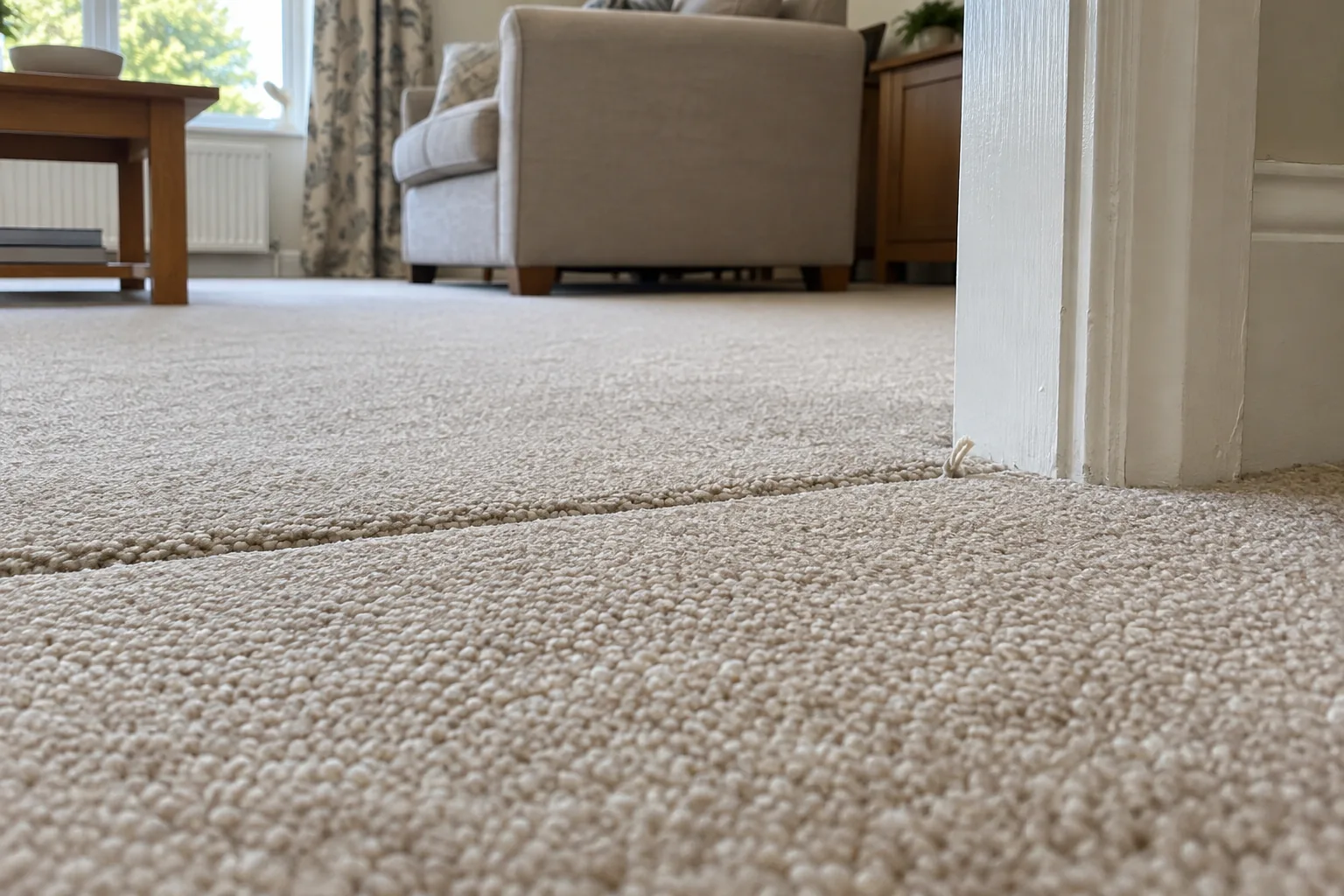
The line where two carpet pieces meet is easy to overlook until the surrounding pile is freshly cleaned. A seam may then look brighter, more raised or less even than you remembered. At a doorway, a loose edge may become obvious once the soil has gone. Sometimes cleaning has simply changed the contrast; sometimes the join was already weakened; occasionally the work or moisture may have affected a vulnerable area. The appearance alone cannot settle which explanation is right.
An inspection before cleaning protects the carpet and gives everyone a fair starting point. It also helps distinguish a normal visible join from an opening seam that needs fitting work. A cleaning company can remove suitable soil, but it should not promise that a detergent or extra pass will rebuild a seam or secure a loose edge.
A visible join is not automatically a failed join
Seams are a practical part of fitting carpet across a room wider than the available roll, or around an awkward shape. Even a well-made seam may be visible in particular light. The Carpet and Rug Institute says no seam is completely invisible and notes that its placement relative to natural light affects how readily it can be seen. A joined area can also reflect light differently because the pile at each edge sits at a slightly different angle.
Look for a line that has always been there and remains closed, with both carpet pieces lying flat. That is different from a gap with exposed backing, loose yarns, or an edge that moves under gentle foot traffic. Do not peel the seam apart to inspect the tape beneath it. A photograph from across the room and another close to the join can show the difference without stressing the material.
Cleaning may lift general soil that had made the surface look more uniform. It may also groom the pile and temporarily change how the seam reflects light. Assess it once the carpet has dried and the pile has settled, ideally under similar lighting to the before photograph. A brighter visible line is not the same as newly opened construction.
Check the places that take the most strain
Before treatment, follow each obvious join with your eyes. Pay particular attention to doorways, turns in a corridor, a route used by a wheeled chair, and places where furniture has been dragged. Look for frayed yarn, missing loops, a peaked or raised line, or a gap between the pieces. If the carpet meets a threshold strip, check whether the edge is still secured and whether the strip has a sharp or loose section.
Avoid probing the seam with a finger or tool. A ravelled edge can worsen when pulled. Instead, note the location and show the cleaner. The technician can decide whether the area needs a gentler approach or should be referred to a fitter first. In a home with several rooms to clean, a damaged doorway may be the first place equipment crosses, so mentioning it before hoses and tools are moved through the property is especially useful.
At stairs, a loose edge can create a safety problem independent of appearance. If carpet is lifting from a nosing or exposing a gripper, restrict use where practical and arrange a fitting assessment. Routine cleaning should wait if it would disturb an unsafe section. A cleaner is entitled to avoid an area that cannot be treated without risking further damage.
Why some edges begin to ravel
An edge with raised loops also needs the care described in the loop-pile snag guide; pulling the yarn can enlarge a small defect before the seam is assessed.
Cut edges at a seam need to be prepared and secured during fitting. The Carpet and Rug Institute’s residential installation guidance says seam edges should be sealed to help prevent edge ravel and delamination. An older join can also be affected by repeated traffic, a failed tape bond, water exposure or damage from furniture. The precise cause requires looking at the actual construction and history; a photograph of loose fibres cannot establish it by itself.
In loop-pile carpet, a snag at the join can sometimes draw out more yarn if pulled. In cut pile, a loose edge may expose backing or shed tufts. In either case, do not trim a line of yarns flush without advice, and do not run household glue into the opening. An unsuitable adhesive can stiffen the pile and complicate a proper repair. A carpet fitter can assess whether resealing, rejoining, a new threshold or another repair is viable.
Seam peaking is another separate issue. The joined line may sit slightly higher than the adjoining carpet because of tension and construction, even though it remains secure. It can become easier to see after cleaning, especially in low angled light. A fitter can distinguish a stable raised join from a join that is separating. Cleaning alone should not be used as a test of the seam’s strength.
What to agree before cleaning starts
Tell the company about any open seam or loose edge when requesting a quote, not only when the technician arrives. Include wide and close photographs and say whether the problem is new or long-standing. Ask whether cleaning can proceed safely around it, whether the area should be excluded, and whether a fitter should repair it first. These are more useful questions than asking for a guaranteed invisible seam after treatment.
On arrival, walk the room with the technician. Confirm which joins were already visible, where the carpet is weak and what results you expect from soil removal. A concise written note or dated photograph can prevent an argument based on conflicting memories later. It also gives the cleaner a chance to choose suitable tool movement, moisture control and drying advice for the actual condition.
Our carpet cleaning service addresses soil in the carpet. If a seam needs refitting, the practical sequence may be to arrange that work first, then clean when the fitter says it is ready. In another room with a sound but merely visible seam, cleaning may proceed with no special repair. The decision depends on condition, not just the presence of a line.
If a seam looks different afterwards
Give the carpet time to dry under the agreed aftercare instructions. Then compare photographs taken from the same positions. Is the line more visible but still closed and firm? Is there a new gap, loose yarn or exposed backing? Has a threshold moved? Contact the cleaner promptly with specific observations. They can review the pre-clean record and inspect the result. If a physical join has opened, a fitter may also need to assess the repair.
Do not scrub the seam to blend a colour difference. More moisture and sideways pressure can worsen a weak edge. Avoid placing heavy furniture directly across an open join to hide it. If the seam creates a trip risk, make the area safe while arranging assessment. The aim is to establish what has changed and protect what remains, not to make the line disappear for a photograph.
The most realistic expectation is that a sound seam stays sound through appropriate cleaning, while its visibility may change with light, pile and soil removal. A weakened seam needs a repair decision. Recording it before work and checking it again once dry gives that decision a sensible basis.
Frequently asked questions
Does a visible seam mean cleaning damaged it?
No. Construction, light, pile direction and earlier wear can affect its appearance.
Can cleaning repair a frayed edge?
No. A fitter should assess loose construction.