
Carpet Delamination: Signs to Spot Before Cleaning
Direct answer: Delamination means layers of carpet backing have separated. Wrinkles, loose backing or a crunchy feel deserve assessment before cleaning.
The surface of a carpet can look ready for a routine clean while the layers beneath it are no longer holding together. This separation is called delamination. It may appear as a loose, soft-feeling area, a change at a seam or backing that pulls apart at an exposed edge. If the construction is weak, adding moisture and mechanical movement without assessment may make the damage worse.
Delamination is a condition to flag before a cleaner starts, not something to diagnose confidently from the middle of a room. Many other problems can make carpet ripple or feel uneven. A careful inspection helps decide whether cleaning is suitable, whether a lower-moisture approach is possible, or whether the carpet needs fitting or replacement advice first.
What the term actually describes
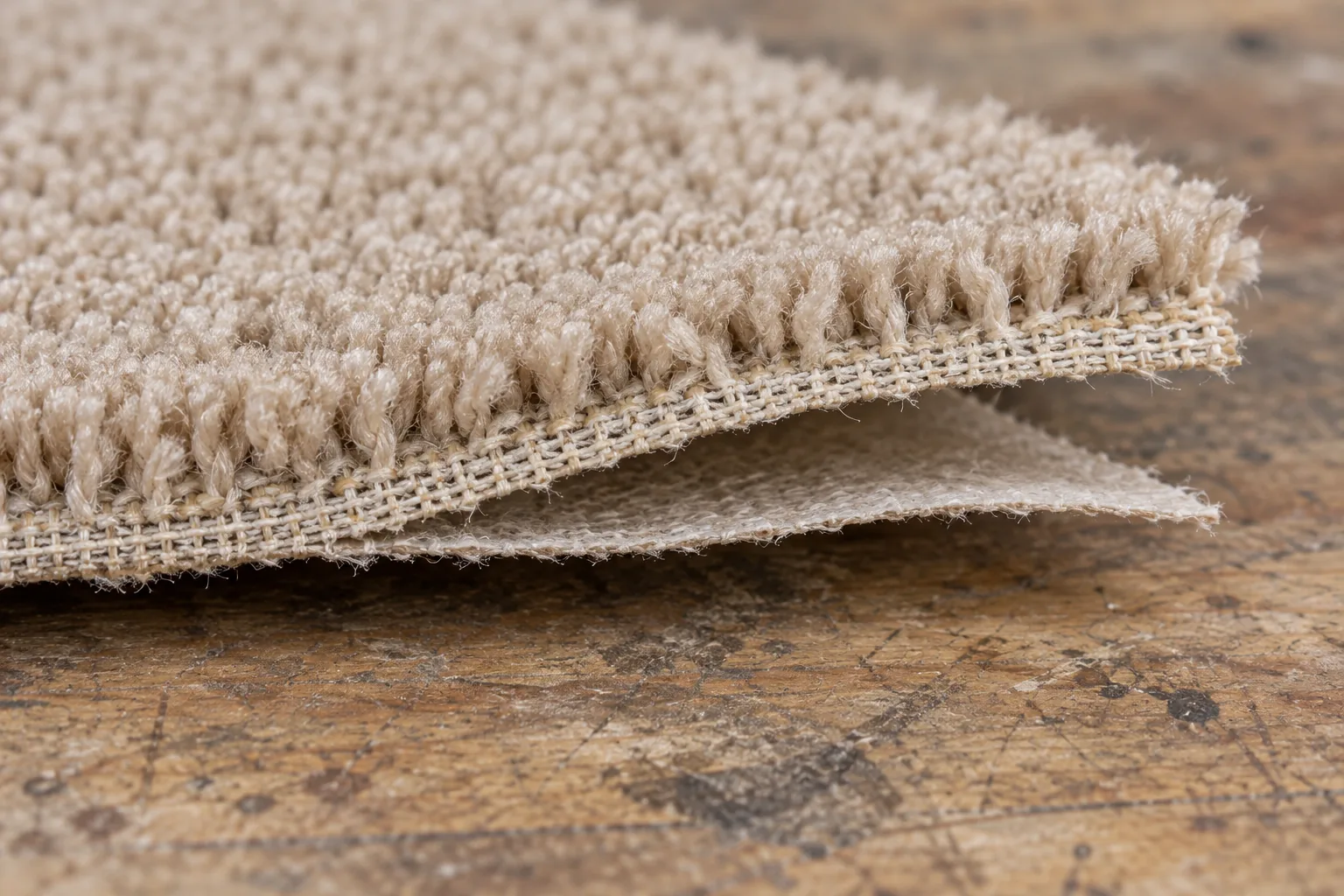
Many tufted carpets have a primary backing that holds the yarn and a secondary backing attached beneath it. The Carpet and Rug Institute defines delamination as separation of those two backing layers. It is a structural issue: the carpet face and backing are no longer behaving as one stable piece. Washing the face fibres cannot restore the bond between backing layers.
That definition also prevents confusion. A loose stretch-in carpet may form a wave because it needs restretching, while its backing remains sound. A worn underlay beneath the carpet can make the floor feel uneven without the carpet itself delaminating. A seam can open because of a failed join. The symptoms overlap, so someone needs to inspect the exposed edge, seam or affected area to identify which material has failed.
Do not peel up fitted carpet solely to check a theory. A gripper strip can be sharp, and lifting a sound edge may damage the installation. If an edge is already exposed, photograph it without pulling the layers farther apart. If the carpet is in a rented property, report the issue to the responsible person before attempting a repair.
Clues you may notice safely
An opening join can look like backing failure from a distance. The guide to carpet seams and edges explains what to record at that boundary before the underlying cause is diagnosed.
An existing loose edge is the best place to look without disturbing the fitting. Are the backing layers visibly separating? Does a piece of backing seem detached from the layer that holds the pile? Is there powdery or crumbly material near the edge? Those signs warrant an assessment, although they do not tell you why the bond failed. Different backings age in different ways and can be affected by earlier moisture or chemicals.
Across the main floor, a soft bubble that moves differently from the surrounding carpet may be a clue. A change in shape around a seam, a persistent wrinkle, or a gap that grows under light traffic may also point to a structural problem. These observations are not proof of delamination. Record when the condition first appeared and whether there was a leak, repeated spot cleaning, pet contamination, heavy furniture movement or a previous fitting repair.
Smell alone is not a reliable test. A musty or chemical odour might come from underlay, a spill, the room environment or another source. Similarly, a dirty-looking patch is a surface appearance, not evidence about backing adhesion. The most useful report to a cleaner is specific: “The carpet lifts at this doorway and I can see two layers separating,” rather than “The carpet is damaged.”
Practical steps for the customer
- Look for buckling or movement at an edge.
- Record leaks and previous wetting.
- Avoid pulling up fitted carpet yourself.
- Ask a fitter whether cleaning is suitable.
Why moisture history matters
The Carpet and Rug Institute notes that persistent moisture from pet urine can weaken the bond between carpet layers and that seams can be particularly vulnerable. Its spot-cleaning guidance also warns against allowing solvent to reach latex used to bond primary and secondary backings. These examples show why the history of products and moisture matters. They do not mean every damp carpet delaminates or that one ordinary clean is automatically unsafe.
Tell the technician about leaks, flooding, repeated wet spot treatments and products applied directly to the carpet. Mention any area that stayed wet longer than expected. If a plumbing or appliance leak is still active, deal with that source first. A carpet that has been saturated through to the underlay or floor needs an assessment beyond an ordinary cleaning quote; surface extraction alone may leave the hidden problem unresolved.
The amount of moisture a professional method uses should suit the fibre, backing and condition. A technician may reduce wetting, avoid agitation at a weak seam, or decline the job. “Low moisture” is not a magic cure for backing separation; even limited treatment can disturb a carpet that has lost structural strength. It is better to document an unsuitable area than to pursue a clean that makes repair harder.
The conversation before a booking
Send the cleaner photographs of the whole affected room, any exposed edge and the carpet label or purchase information if available. Explain where the carpet feels loose, when the change began and what treatments or spills occurred. Ask whether an on-site inspection is needed before a firm method or price can be agreed. Photographs can help the company prepare but cannot show the bond inside an intact section of backing.
At the appointment, ask the technician to point out the condition and explain which areas they can safely treat. A simple room plan or dated photographs can record any pre-existing open seams, bubbles and worn backing. If the carpet is already fragile, discuss whether cleaning a separate sound area is worthwhile while leaving the damaged section untouched. Our carpet cleaning service should be proposed only after the material and its condition have been considered.
Do not ask a cleaner to guarantee that a loose carpet will lie flat once it dries. Drying changes appearance, but it does not reattach failed backing. Likewise, a fitter should assess whether restretching is possible before anyone pulls a carpet whose backing may separate further. A proper repair decision depends on the size and location of the damage, the installation type and the remaining strength of the material.
When cleaning should wait
Pause routine wet cleaning if the backing layers are visibly apart, if the carpet is lifting at a seam or threshold, if there is current moisture beneath it, or if walking across a bubble causes substantial movement. Make any trip hazard safe and seek a fitting or flooring assessment. If contamination has reached underlay or subfloor, identify the source and decide whether those layers can be retained. A cleaner may be part of the wider response, but the job is no longer simply removing soil from the pile.
If a small defect is found after cleaning has been booked, tell the company before the visit. Rescheduling may be inconvenient, yet it leaves room for a careful choice of method or a repair first. If an inspection concludes that the backing is sound and the issue is only a loose stretch-in fitting, a fitter may be able to address that distinct problem. The important point is to act on the actual construction rather than apply more liquid to whatever looks uneven.
Delamination can be local or extensive, and an older carpet may have several overlapping problems. A clear record, honest uncertainty and an appropriate specialist opinion lead to better decisions than a claim that cleaning will make every layer sound again.