
Can Mattress Cleaning Improve Sweat Marks?
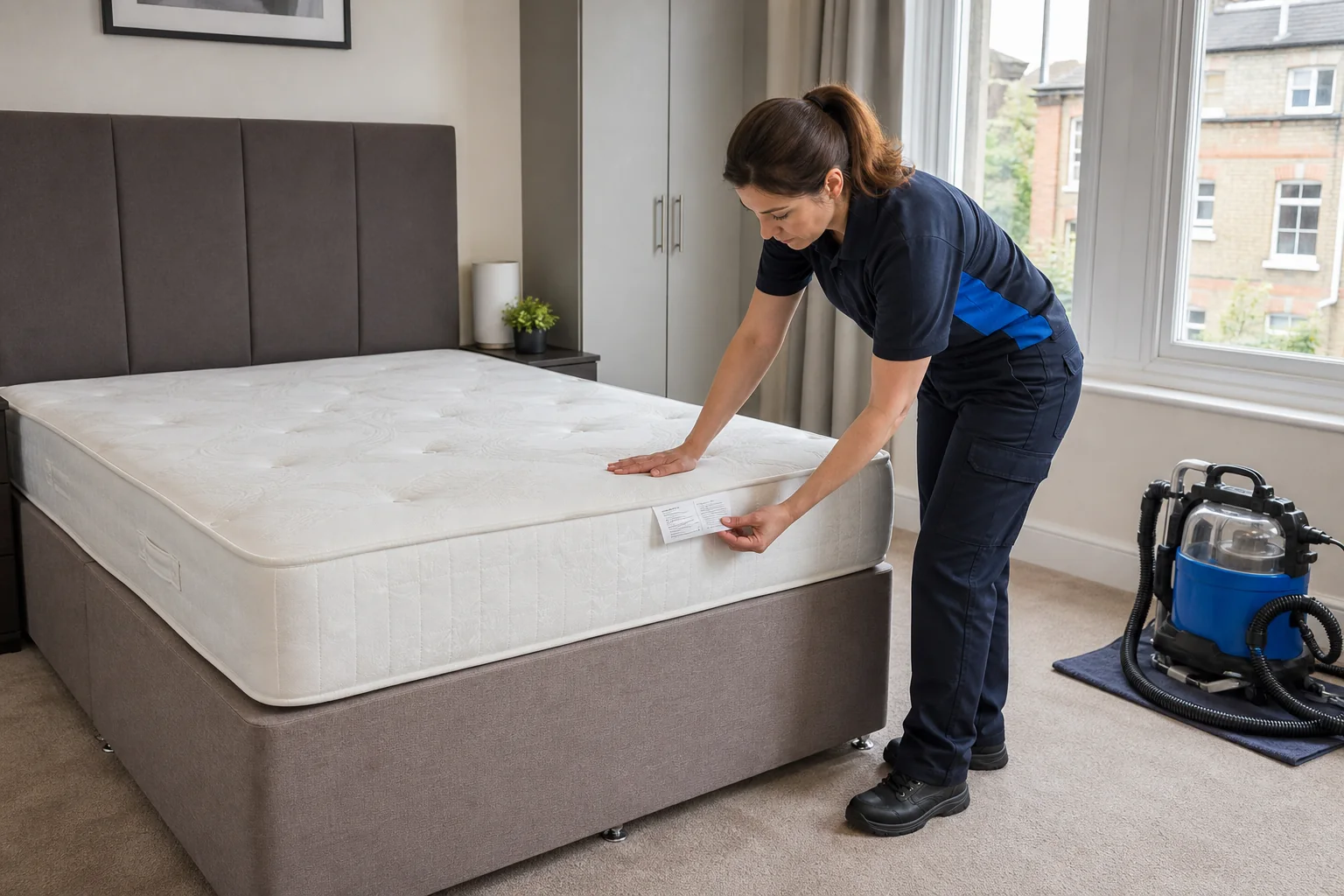
Mattress cleaning may improve some sweat-related marks on accessible ticking, but a yellow patch does not guarantee a removable stain. Body moisture, skin oils, bedding products and age can combine over time, while the fabric itself can change colour. A cleaner should assess the cover and construction before promising a result. Repeatedly wetting a mark that has already altered the textile may add moisture without returning the original white shade.
First check the maker's care instructions. Some mattresses have a removable cover with specific laundering guidance; others have a zip that must not be opened for routine care. A protector may have taken much of the moisture and can often be cared for separately under its own label. Inspect each layer before assuming the mattress core is the source of the visible mark.
What a sweat mark can contain
A gradual yellow or brown area may include body oils, salts, skin products and ordinary dust. The contact pattern can be broader than a single spill and may follow where the sleeper's shoulders or hips rest. A sharp circular edge after a home cleaning attempt suggests that moisture may have moved material to a drying boundary. Colour alone cannot identify the substance. Describe when the mark developed and what was applied to it.
An old patch may also show a permanent difference in dye or finish. A white ticking makes small changes conspicuous. If the fabric is worn or rough, cleaning may remove some soil yet leave the altered surface visible. The guide to Why Mattress Cleaning Needs Controlled Moisture explains why an edge can return after a seemingly successful wet treatment.
Start with layers and ventilation
Remove bedding and inspect the protector and topper. Launder only those items whose labels allow it, and dry them fully before replacement. A waterproof protector can help prevent later contact moisture reaching the mattress, but putting it back over damp ticking can trap moisture. If the base or underside is damp, that is a separate concern from a surface sweat mark.
Routine ventilation and bedding care may prevent a new mark from building as quickly. Follow the mattress maker's instructions about turning or rotating; not all models are designed to be flipped. Do not carry or bend a heavy mattress alone. A protector should fit properly so it does not bunch up and create another area where moisture remains in contact with the cover.
What a professional can treat
A technician can inspect the ticking, seams and visible condition, ask about earlier products and choose a controlled method if suitable. The goal may be to improve surface soil and reduce visible contrast across an area rather than chase one yellow outline with repeated wetting. A small test may help set an expectation, but it cannot guarantee that a deeper source will not reappear as the mattress dries.
The mattress cleaning service should explain which surfaces it can reach. Foam or padding beneath the ticking is difficult to assess without disassembly. A clean-looking top is not proof that every inner layer has been cleaned. If a large amount of body fluid or another contaminant has entered the core, consider a broader replacement decision rather than treating the cosmetic mark alone.
Products to avoid guessing with
Bleach can remove colour and damage fibres; strong fragrances can cover an odour without addressing its source. Household steamers and carpet machines may introduce more water than the mattress can dry quickly. Scrubbing can roughen the ticking. An online recipe may appear to lighten the patch while wet but create a larger brown edge later. Stop adding products if a first attempt has made the mark spread.
If a fresh event occurs, blot gently with clean white absorbent cloths. Do not soak the mattress to rinse a small patch. Record what happened, how much liquid was involved and whether a protector stopped it. This history helps a cleaner decide whether a surface service is appropriate.
Judge the dry result and the whole mattress
After cleaning, keep bedding off until the technician's drying conditions are met. Check seams, borders and the accessible underside as well as the main patch. Compare the dry result in similar light. If a faint yellow area remains but the mattress is dry and otherwise sound, another wet attempt may offer little. If a mark or odour returns, report the timing and discuss whether deeper material is involved.
Consider the mattress's support and age. Sagging, damaged seams or persistent dampness are not corrected by cleaning. The guide to Mattress Odour Treatment: Expectations and Limits sets out a broader decision. For a quote, send the model, size, label and photographs through the contact page. Ask about the likely visual limit before committing to repeated treatment.
Two yellow marks with different histories
One patch may have developed gradually beneath a pillow over years; another may have appeared after somebody soaked a smaller mark with water and detergent. They can look similar in a photograph. The first may include age-related colour change and body oils, while the second may be a drying boundary carrying residues from a lower layer. A cleaner should ask how each developed, test cautiously and avoid promising the same outcome for both. If only one part of a large white panel is cleaned, a brighter patch may reveal the surrounding discolouration. Discuss whether a wider surface treatment is safe and worthwhile.
Why a protector matters after treatment
A correctly fitted protector can take future contact soil, but its own label determines washing and drying. Choose it for the mattress model rather than assuming every waterproof material allows suitable airflow. If the mattress has just been cleaned, wait until all treated areas are dry before fitting it. Inspect the protector periodically for damage or staining; if it no longer performs its intended job, another mattress clean will not repair it. Good protection reduces repeated wet work on a material whose deeper layers are hard to dry.
If you are comparing before and after photographs, keep the camera angle and lighting similar. White mattress fabric can look much brighter in direct daylight than under a warm bedside lamp. Take a wide view of the whole sleeping surface as well as a close-up; a treatment that reduces a mark may also reveal that the surrounding ticking has aged differently. Do not assess a damp area, since moisture can temporarily hide the boundary. Note whether the mattress feels dry, whether an odour remains and whether the protector is clean before deciding on further work. A faint stain alone should not prompt unlimited wet treatment.