
Can Cleaning Repair Bleach Spots on Carpet?
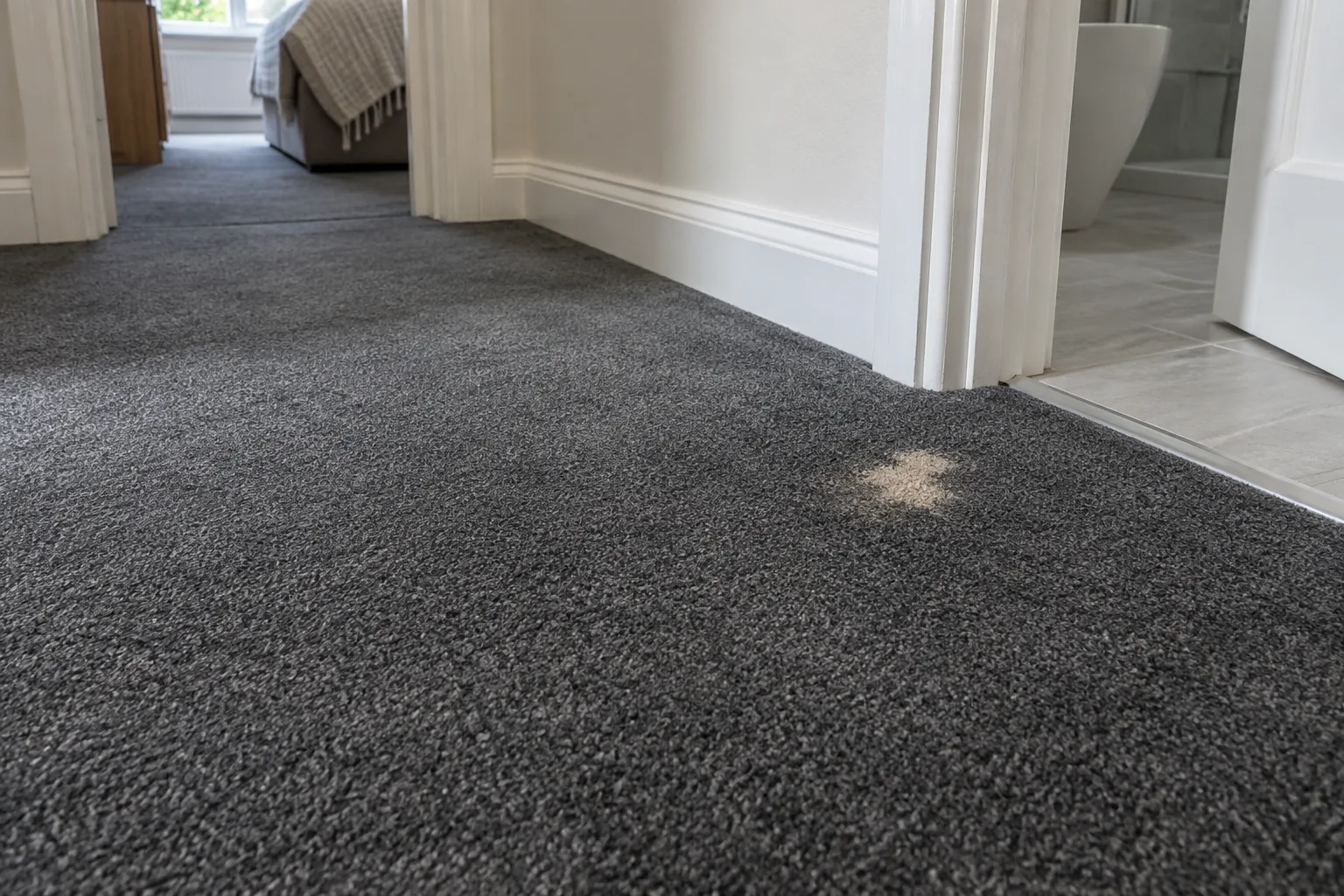
Direct answer: Bleach can remove or change carpet dye, which cleaning cannot restore. Stop exposure safely and seek colour-repair or replacement advice once the area is dry.
A pale spot left by bleach is often called a stain, but the word can be misleading. Ordinary cleaning removes material deposited on carpet fibres. Bleach and other strong chemicals can change or destroy the carpet’s own colour and may damage the fibre itself. If colour has gone, another wash will not put it back. A cleaner can assess whether any residue remains, while a carpet repair or colour specialist may advise on a different kind of remedy.
The first priority is to stop further chemical exposure and avoid adding a second product in an attempt to “neutralise” the patch. The right response depends on what was spilled, the carpet fibre and whether the material is still wet. A photograph and the product label are more useful than repeated home experiments.
Practical steps for the customer
- Follow the bleach product’s safety directions.
- Do not mix it with another cleaner.
- Record the product and photograph the dry patch.
- Ask about specialist colour or local carpet repair.
Why a pale patch behaves differently from dirt
A yellow or brown patch on wool calls for a different assessment from a pale bleach spot; the wool browning guide sets out those possible causes.
Tracked-in soil normally makes an area darker or duller because unwanted material is present on or among the fibres. A suitable clean may lift at least some of it. A bleach spot may instead be lighter because the dye or pigment in the yarn has been altered. You cannot remove a missing colour in the same way you remove a deposited mark.
Some household products sold for bathrooms, kitchens, drains or mildew can be strong enough to discolour carpet. Shaw Floors warns that bleach and several common cleaning agents may discolour or even damage carpet fibres. Acne treatments containing benzoyl peroxide can also have a bleaching effect on textiles. The exact reaction depends on the product and carpet. A pale patch is a clue, not proof that chlorine bleach was used.
Compare the patch under steady light after it is fully dry. Does it remain uniformly lighter from different viewing directions? A mark that reverses from dark to light as you walk around may be pile shading rather than lost dye. A pale patch with rough, brittle or unusually flat pile may involve fibre damage as well as colour loss. Tell the assessor what you see without pulling at the yarn.
If the spill has just happened
Keep people and pets away from the product and follow the chemical label for safe handling. If the container has leaked or a large area is affected, the response may be about safe cleanup of the chemical, not merely carpet appearance. Avoid mixing bleach with vinegar, ammonia or any other household cleaner. Mixing products can create a hazardous reaction and will not restore dye.
For a small fresh carpet spill, do not scrub. Blot from the top with a clean white absorbent cloth if it is safe to handle, and contact the carpet manufacturer or an appropriate professional for product-specific guidance. The Carpet and Rug Institute advises blotting and pretesting spot treatments to avoid fibre or dye damage. A large quantity that has reached backing or underlay needs a different assessment from a few surface drops.
Keep the product name, concentration and approximate amount. If the spill came from a cleaning spray, note whether it sat on the carpet before you saw it. If it came from a toilet-cleaning bottle or a plant-care product, that detail can change the likely chemistry. Do not throw away a label that could help a technician judge whether residue remains active.
What a cleaner can usefully assess
A professional can examine whether the light patch is truly missing colour, whether another stain is present, and whether the fibres are still sound. They may check the carpet specification, an inconspicuous area and the pattern of the mark. If a residue remains, carefully removing it may be worthwhile to prevent further damage or resoiling. That is a separate aim from making the patch match the original shade.
Ask for the expected result before agreeing to treatment. “Remove chemical residue” and “restore the original colour” are not interchangeable promises. Our carpet cleaning service can be discussed for the carpet’s general soil and condition, but cleaning alone should not be sold as a guaranteed repair of destroyed dye. A whole-room clean may even make a pale spot more noticeable as the surrounding soil is removed.
Colour repair specialists sometimes assess whether a small spot can be recoloured. Suitability depends on the fibre, dye method, original shade, size and condition of the yarn. A patch with melted or brittle fibres may need a physical carpet repair, such as a carefully matched insert, if one is possible. A retailer or fitter can advise on spare offcuts and whether the construction allows a neat repair. None of these options is certain to be invisible.
Why common home fixes disappoint
Colouring the spot with a felt-tip pen or furniture dye may make it look darker for a photograph but can produce a different hue, uneven absorption or transfer. Bleaching the rest of the carpet to “match” a small spot creates far more damage. A household stain remover cannot identify whether the original carpet used solution-dyed, piece-dyed or another yarn system, and it may make professional recolouring harder.
Some carpets advertise resistance to bleach. That claim applies to particular products and conditions, not every synthetic carpet. Check the actual manufacturer’s documentation and warranty before assuming a spot will remain unchanged. A treatment that is safe for one polypropylene product may be unsuitable for a wool or nylon carpet beside it. Backing and protective finishes matter too.
If the patch arose during cleaning by a contractor, record it promptly with photographs from the same viewpoint and lighting as any earlier images. Contact the company with the product and timing information you have, without applying further remedies. A clear factual record gives both sides a basis for assessing what happened and what repair is possible.
Decide whether repair is worthwhile
For a tiny pale spot in an unobtrusive corner, you may decide to leave it after confirming that no active chemical remains. A central patch on a dark carpet may justify an assessment by a colour repair specialist. If the carpet is old, heavily worn or has several damaged areas, replacement may be more sensible than paying for a repair that cannot blend well. Obtain a realistic description of the likely finish, not a promise that no one will ever notice.
Where a fitted carpet crosses rooms, a local repair may also be affected by pile direction and lighting. A spare offcut kept from installation offers a better match than a random sample, though age and sunlight can still create a difference. Ask a fitter about the feasibility before cutting any carpet yourself.
The key distinction is simple: cleaning can address removable soil and some residue, while lost colour calls for a colour or physical repair decision. Identify the product, protect the area from further treatment and ask the right specialist to assess the actual material before spending money on another wash.
Frequently asked questions
Can a cleaner wash out a pale bleach spot?
Cleaning cannot replace dye that has changed.
Should I use fabric dye myself?
An unmatched dye can make the patch more obvious.