
Can All Sofa Fabrics Be Wet Cleaned?
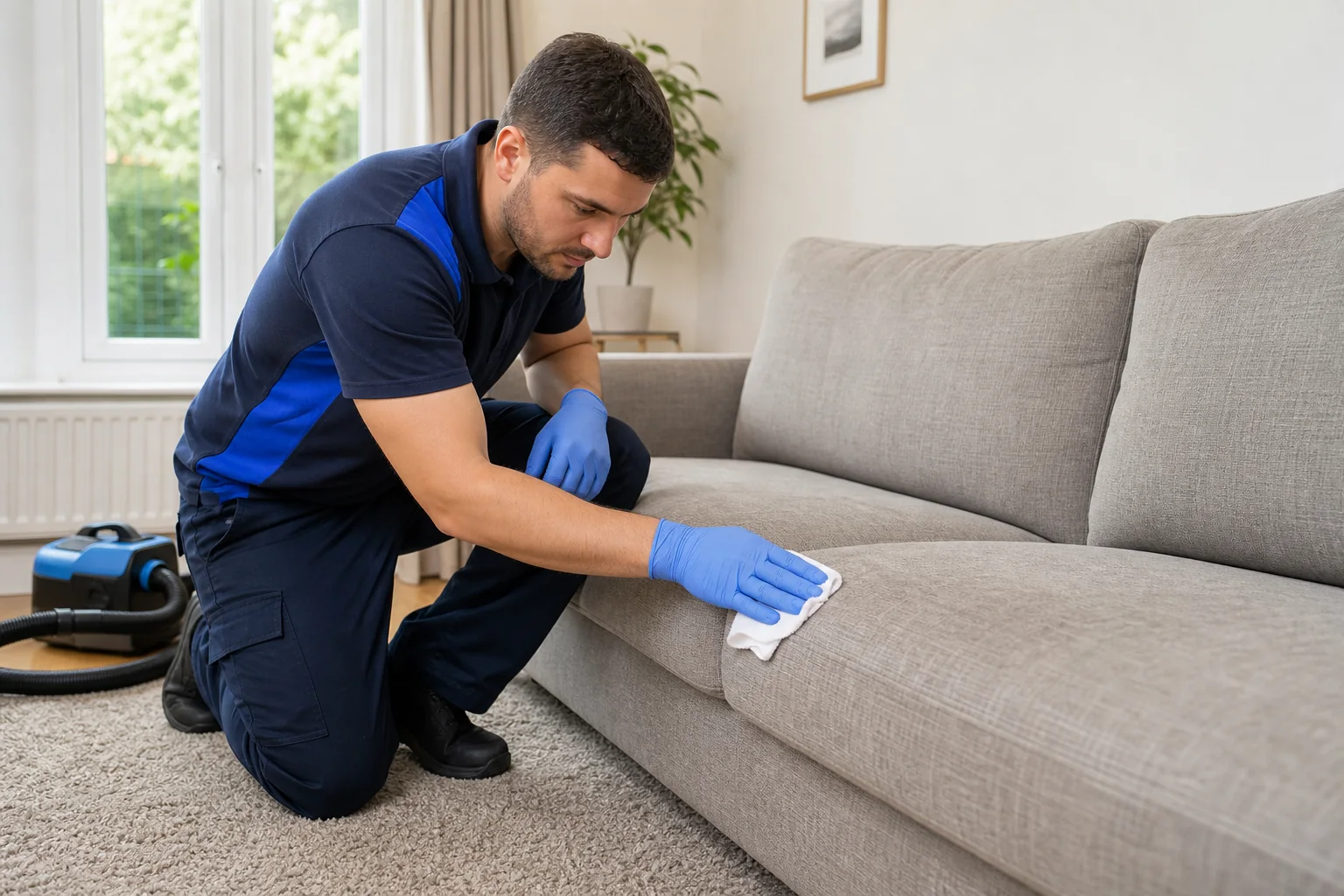
Not every sofa fabric can be wet cleaned safely. A water-compatible face fibre is only one part of the construction: dyes, backing, finishes, seams, piping and cushion filling also determine the risk. A suitable professional method may use carefully controlled moisture, a different solvent-based process or no treatment until the manufacturer's guidance is clarified. The question is what the complete sofa can tolerate, not whether the label says “polyester” or “linen” in isolation.
Start with the care instructions for the exact model. They may specify professional cleaning, a particular method, or restrictions on removable covers. Codes printed on labels can be useful, but they must be interpreted in context and should not be transferred from a different sofa. If the label is missing, ask the maker; do not assume a zipped cushion cover is designed for a washing machine.
Why the face fabric is only the beginning
The visible cover may be woven from a washable-looking synthetic yarn, but its backing can soften, release colour or shrink when wet. A decorative trim can contain a different dye. Buttons and piping create folds where moisture can collect. A cushion may enclose foam, loose fibre or feather that dries differently from the surface. Wetting the cover heavily can carry soil into those inner layers and produce a returning ring as the sofa dries.
Natural fibre blends add further questions. Linen and cotton can be sensitive to shrinkage, distortion or water marks depending on weave, finish and previous wear. Wool may need careful control of temperature, chemistry and agitation. Velvet describes a pile structure rather than one fibre; even two velvet sofas may have different instructions. The guide to How to Identify Upholstery Fabric Types illustrates why a fibre name alone is not a complete cleaning instruction.
Colour stability changes the decision
A cleaner should examine the sofa for contrast colours, faded areas and previous products, then test where appropriate. A test may reveal colour transfer onto a white cloth or a change in texture when moisture is introduced. That result can rule out a planned method or suggest a narrower treatment. A hidden test is informative but cannot guarantee that an older, sun-exposed seat will behave exactly like the sheltered underside.
If a dark cushion has pale piping, each part should be considered. Dye may migrate from one to the other during cleaning or drying. Why Upholstery Colour-Fastness Testing Matters discusses these edge risks. The same issue applies to printed patterns, embroidered details and fabric joined to leather or timber. A method safe for the main panel can still be unsuitable at the boundary.
“Wet cleaning” covers a range of moisture levels
It is misleading to imagine only two choices: flood the sofa or keep it entirely dry. Professional processes differ in product application, agitation, recovery and drying support. A technician may use a controlled amount of solution and extract it promptly when the construction permits. Another fabric may call for a lower-moisture approach or specialist treatment. The words “steam clean” are used loosely in advertising, so ask what process is actually proposed for your sofa.
The amount of water that reaches the filling matters as much as the amount placed on the surface. Excess moisture can lengthen drying, move residues toward a drying edge, or affect timber and metal components. At the same time, a blanket claim that any water destroys upholstery is wrong. The sofa cleaning service should explain the chosen method in terms of the fabric and construction it has inspected.
What to do before treating a spill
For a fresh liquid spill, gently blot with plain white absorbent cloths and lift loose food without rubbing it into the weave. Remove an obvious source of liquid if you can do so safely. Avoid applying a large amount of water, vinegar or retail product simply because the mark seems soluble. The stain may contain oil, dye or material from beneath the cover. A damp patch can look improved temporarily and then show a wider ring when dry.
Photograph the dry and wet appearance and record every product used. If a cushion is heavily soaked, mention the filling and any odour when asking for help. A surface clean cannot establish that its inner core is dry. Keep the seat unused until affected materials have dried according to the maker's and technician's guidance.
When the answer may be “do not clean yet”
An unstable dye, weak seam, damaged backing or unidentifiable delicate material may justify postponing a clean until a specialist can advise. The decision is especially important for valuable or older pieces. A careful cleaner should be prepared to decline a treatment that would risk irreversible damage. A small cosmetic mark may be preferable to expanding it across an entire cushion.
Ask for the proposed scope and limitations in plain language. Will the whole panel be treated? Are the loose cushions included? What is the likely drying arrangement? If you can share the label and clear photographs, the contact page is a useful starting point. The final choice should follow the physical inspection, not a generic promise that every fabric can take a machine clean.
The practical answer
Some sofa fabrics can be cleaned using managed moisture; others need a different process or a decision not to treat. The safe choice depends on the complete piece. Check the maker's instructions, disclose previous products and let the technician test the material before committing to a method. That is more reliable than judging by appearance or fibre name alone.
A removable cover is a separate decision
Consider a sofa with a washable-looking pale seat cover and fixed arms. The seat cover's label may permit a precise laundering cycle, while the arms need professional treatment or a dry-care method. Washing only the cover may change its shade or size relative to the fixed fabric. Before removing it, check whether the maker expects all covers in a set to be washed together and how they must be dried and refitted. If the instruction is unclear, ask the manufacturer. Wet cleaning a fixed arm because the loose cushion can be laundered would be an unsafe inference.
Consider what will happen after the wet process, not just during it. A loose cushion can sometimes stand in a safe position for airflow, while a fixed seat remains against the frame. If a room is cold or humid, the same cleaning volume can dry more slowly. Ask whether furniture must stay unused overnight and whether a protected floor or adjacent wall needs checking. If a sofa cannot be safely dried within the household's available time, rescheduling or another method may be preferable. The method is suitable only when its full application, recovery and drying sequence suits the item.