
Drying a Mattress in a UK Winter
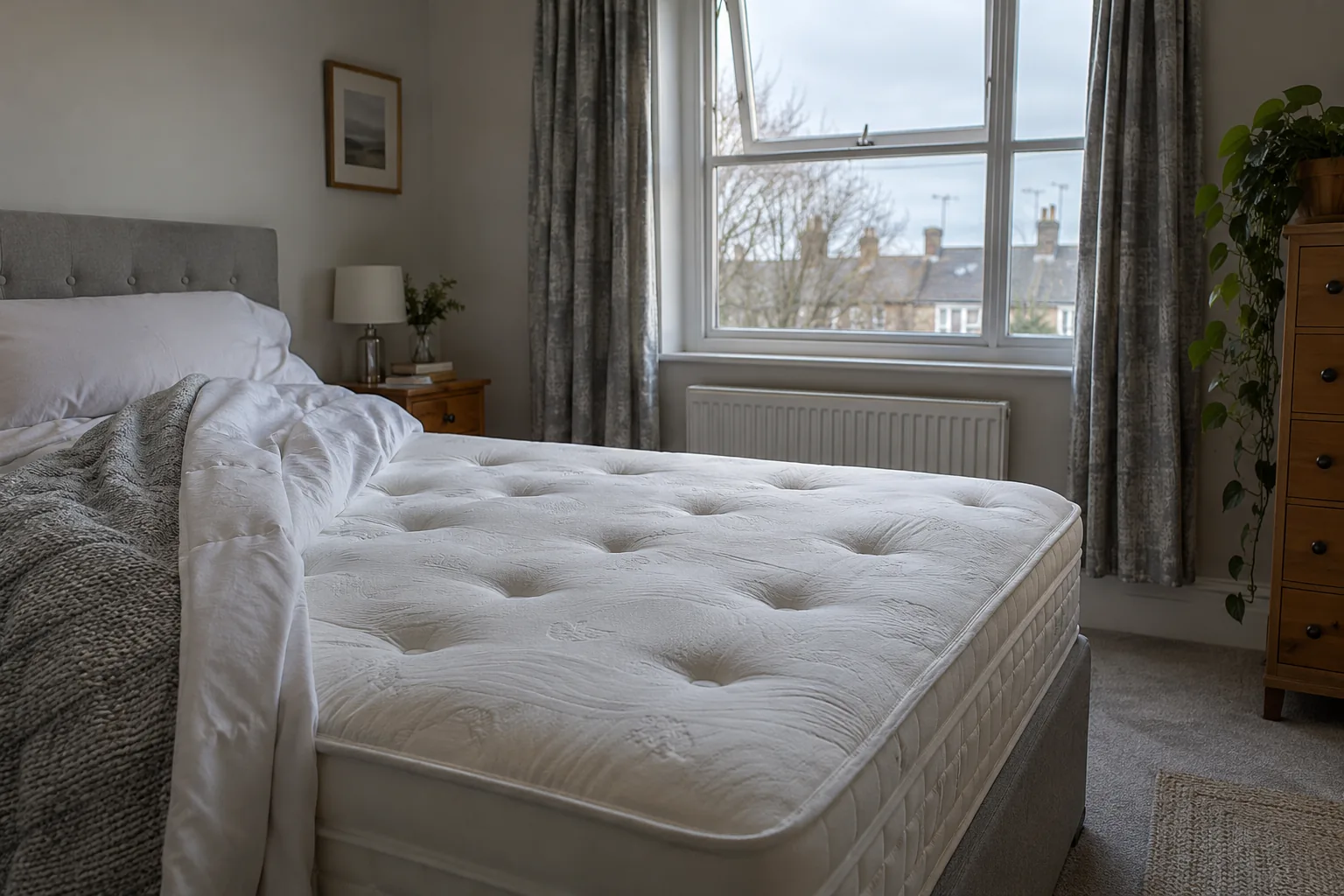
Cleaning a mattress on a cold winter morning can create a practical problem: the bed may be needed that evening, while the room has limited warmth and airflow. The surface may feel dry before seams or padding do. Closing the windows, turning the heating high and remaking the bed immediately can trap moisture instead of solving the problem. A sensible plan starts before the cleaner arrives and allows for the actual room conditions.
Direct answer: Winter drying depends on the amount of moisture used and the bedroom’s temperature, humidity and airflow. Keep the mattress uncovered and plan an alternative bed if necessary. A fixed promise that it will be ready by evening is unreliable.
No fixed number of drying hours suits every mattress. The amount of moisture used, cover and filling materials, room temperature, ventilation, humidity and mattress thickness all matter. A light surface treatment on a suitable cover differs from a large spill that soaked the core. This guide explains how to plan for drying without promising that any mattress will be ready by a particular clock time.
Why winter changes the room
In winter, windows may stay closed for long periods and cool walls can encourage condensation. Everyday activities such as cooking, showering and drying laundry add moisture to indoor air. If that moisture cannot escape, evaporation from a cleaned mattress can be slower. A room that feels warm but has stagnant humid air is not necessarily a good drying environment.
Think about the bedroom as part of the plan. Does it have an openable window, trickle vents or a working ventilation system? Is the mattress against an outside wall or on a base with little airflow beneath? Are there damp clothes drying nearby? Keep vents clear and follow the home’s ventilation guidance. Brief, appropriate ventilation may be useful even in cold weather, but the exact approach depends on the building and conditions outside.
If the room already has condensation or a damp smell, tell the cleaner before work. A routine cleaning appointment cannot resolve a leaking wall or an ongoing moisture problem. Addressing the room’s source of dampness matters as much as drying the mattress surface once.
Set up the room for drying
- Check the room’s ventilation and tell the cleaner about existing condensation.
- Confirm the maker permits the proposed cleaning method.
- Keep bedding and protectors off while the mattress dries.
- Check seams and accessible underside before reuse, not just the centre.
Ask about the cleaning method and moisture
Before booking, ask what the proposed process will do to the mattress. Is it a dry soil removal, a limited surface treatment, or a wet method involving extraction? Will seams and sides be treated? Does the maker permit that approach for this model? The cleaner should be able to explain where moisture will be applied and how it will be removed. A phrase such as “quick drying” is not a guarantee that the bed will be ready at a fixed hour.
For a foam mattress, the guide to foam layers and surface cleaning explains why limiting moisture may be essential. Describe the winter room conditions through the contact page so the cleaner can plan treatment and drying together.
Where the mattress contains foam, the maker may prohibit wetting the core. A washable removable cover may be cleaned separately, with its own drying instructions. Do not treat an approved cover wash as permission to soak the whole bed. If a pre-existing spill reached inside, that history changes the question; drying a routine treatment cannot be confused with restoring a deeply wet mattress.
Schedule work for a day when the bed can remain uncovered if drying takes longer than expected. If the mattress is the only bed available, discuss timing with the cleaner and arrange a fallback sleeping option where possible. That is particularly important for a household with children, guests or someone who cannot easily move to another room.
Use airflow without damaging the materials
Remove sheets, a protector and any topper before treatment. Keep them off while the mattress dries. Air movement around the top and, where permitted and safe, the sides can help moisture leave the fabric. A fan may assist circulation if placed safely and not directed at loose papers or fabrics; it does not create a universal drying time. A dehumidifier can help manage humid indoor air where appropriate, but it should not be used as an excuse to add excessive water to the mattress.
Avoid direct high heat from a hairdryer, heater or electric blanket. These can heat one spot without drying deeper layers and may harm foam, adhesive or upholstery. Follow the mattress maker’s restrictions. If the bed base is meant to be ventilated, keep its air path clear; some foam manufacturers specifically require a ventilated base to prevent moisture accumulation.
Do not lean a heavy mattress unsupported against a wall or fold it to expose the underside unless the maker allows it and people can move it safely. A damaged mattress or an injured person is a poor trade for marginal extra airflow. If the cleaner recommends repositioning, ask how it can be done safely with the available help.
Check more than the central surface
Touch the treated top, border, seams and accessible underside with a clean hand. A dry centre does not mean a quilt line or padded edge is dry. Check for cool damp patches and lingering odour. The cleaner’s guidance should take precedence over a casual fingertip check because inner layers may not be accessible. If you are uncertain, leave the bed uncovered longer and ask for advice.
Look at the room too. Condensation on a window or a rise in indoor humidity can indicate that moisture is not being removed effectively. It does not prove the mattress is the sole cause, but it is a prompt to improve ventilation and avoid adding other moisture sources such as indoor laundry. Do not leave a mattress exposed to rain through an open window or in a room that becomes very cold and damp overnight.
Our mattress cleaning service can discuss the material, method and expected drying conditions before an appointment. Ask what signs should delay putting bedding back and whom to contact if a treated seam remains damp. A realistic plan includes the possibility that the room conditions will change during the day.
When to remake the bed
Wait until the mattress and any separately washed cover or protector are fully dry according to their care instructions. A waterproof protector fitted over residual dampness can limit evaporation. The bed base should also be dry if liquid reached it. If a mark reappears or a musty odour develops, report that rather than covering it with fragrance and sheets.
Planning an alternative place to sleep for one night may be inconvenient, but it gives the mattress time to dry without pressure. Winter makes that contingency more valuable. The goal is a dry, usable bed, not simply a surface that looks ready when viewed from the doorway.
If the household cannot leave the bed unused overnight, say so when booking rather than waiting until the cleaner has finished. They may suggest a different appointment time, a more limited treatment that the manufacturer permits, or postponing work until the room can be ventilated properly. This is a practical constraint on the service, not a reason to shorten the drying period after moisture has already been applied. A spare sheet is no substitute for a dry mattress.
Frequently asked questions
Will turning the heating up dry the mattress immediately?
No. Warm air without moisture removal or airflow may still leave seams and padding damp; direct high heat can harm materials.
Can I remake the bed when the top feels dry?
Check the deeper details and follow the cleaner’s guidance. A waterproof layer over remaining moisture can restrict drying.