
Dye Transfer from Clothing onto Upholstery
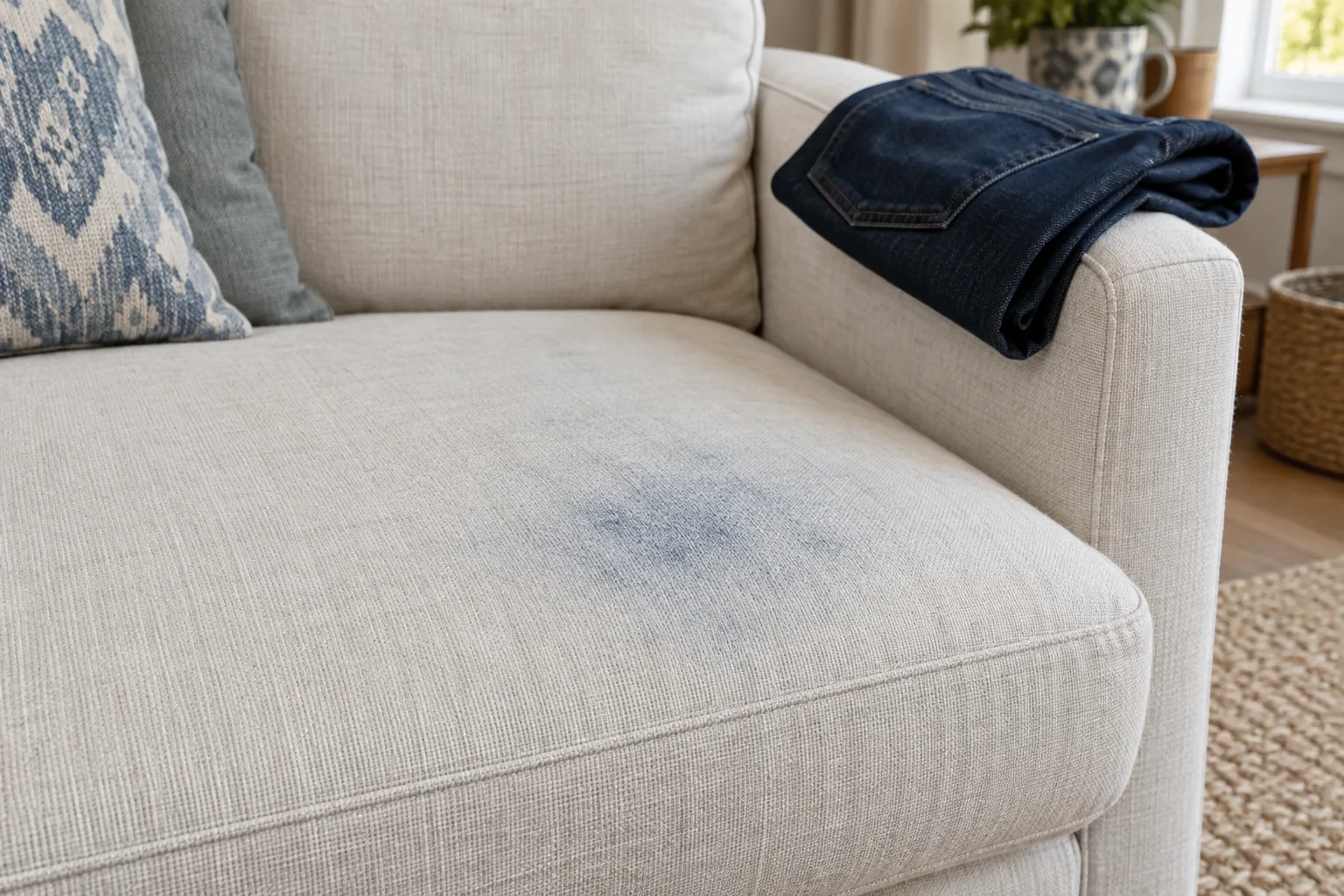
A blue cast on a light sofa seat may have come from dark denim rather than an accidental drink. New jeans, dyed cushions, bags and other textiles can release colour through repeated contact, especially with friction or moisture. The mark may build gradually, so nobody remembers a single event. Cleaning this kind of transfer requires a different expectation from removing surface dust: the foreign colour may have entered the upholstery fibres or combined with their finish.
Direct answer: Stop contact with the garment and leave the affected upholstery dry while you identify the fabric. Dark clothing dye may sit on the surface or become absorbed; aggressive rubbing can spread it or damage the sofa colour.
You can still take useful steps before booking a treatment. Identify the likely source, stop further contact, record the pattern and avoid a home experiment that might spread the colour. This article focuses on transferred dye from clothing and accessories. Colour loss from the sofa itself, sunlight fading and a spill containing coloured liquid are different problems that need separate assessment.
Recognise the contact pattern
Look where the body or item rests. Denim transfer often appears on the front of a seat, an arm touched by sleeves, or the back where clothing rubs as someone settles in. A handbag may leave a smaller patch on an arm; a throw can mark a larger regular shape. Compare the affected area with a protected part of the same fabric under a loose cushion. A pale grey or blue cast distributed across a frequent contact area is a clue, though it does not prove its source.
Check the clothing or accessory too. If a dark item has an instruction to wash separately or warns of colour transfer, take that seriously. Do not deliberately rub it on another sofa area to test your theory. A white dry cloth may pick up loose colour from the item, but a negative test does not rule out transfer under damp or prolonged contact. Record whether the seat became wet from rain, perspiration or a cleaning attempt; moisture can change the behaviour of both textiles.
Examine the sofa in consistent daylight and photograph the whole seating area as well as the close-up. Fabric texture and shadow can make a patch look darker from one direction. An apparent colour change near a seam or trim might also come from the sofa’s own dyes, particularly after wetting. A cleaner will need the history as well as the appearance to distinguish these possibilities.
First response checklist
- Remove the clothing or accessory suspected of transferring colour.
- Photograph the patch and check the sofa and garment care labels.
- Avoid bleach, heat and untested solvents on the upholstery.
- Ask for a colour-stability assessment and a realistic test before wider treatment.
Why rubbing and repeated spotting can worsen it
Transferred dye is not necessarily a layer sitting loosely on top of the fabric. Friction can work pigment or dye into the yarn. Some colourants bond strongly or respond unpredictably to water and solvents. Scrubbing may abrade the sofa’s own fibres and spread the colour across a larger surface. On a brushed or piled upholstery, the changed direction of fibres can create a second visible patch even if some foreign colour is removed.
Household stain removers are not interchangeable with specialist dye treatments. Bleach can remove the sofa’s original colour; solvent can affect adhesive, backing or finish; and a heavily wet cushion can draw residues from inside. A stronger product is not automatically a better choice. If an attempted remedy lightens the original fabric, the problem becomes colour loss, which cleaning cannot reverse.
An old transfer is harder to predict than a fresh one. Regular sitting may have pushed colour further into the yarn and accumulated body oils over it. There may be a gradual boundary rather than a neat spot that can be isolated. A responsible cleaner should say that improvement is possible but complete removal cannot be promised before testing, and perhaps not after a test either.
What to do immediately
Move the source item away from the upholstery. Keep it off pale fabrics until its maker’s care instructions have been followed and its colour stability is understood. If a seat is damp, blot it gently with a clean white absorbent cloth and allow airflow. Do not use coloured towels, spray the whole area with water or apply heat to hurry it. Moisture can create a ring as well as mobilise more colour.
If earlier wet spotting also left a distinct boundary, the guide to water rings on a fabric sofa explains that separate problem. When you contact the team about the dye, include the garment involved and a dry photograph of the seat.
If the sofa is dry, leave the transferred area alone while you check its care label. Vacuuming with a suitable upholstery attachment can remove loose surface dust, but avoid aggressive brushing at the discoloured patch. Photograph any product used already, including the bottle label or ingredients if available. This information can prevent a cleaner from using an incompatible next product. Note the age of the mark and whether it grew after a particular garment was worn.
For a small new mark, the manufacturer’s specific spot-cleaning guidance may permit a gentle response. Follow that guidance exactly, including test requirements. Generic internet instructions to use vinegar, bicarbonate, washing-up liquid or alcohol are unsuitable as a universal answer because upholstery dyes, finishes and filling vary. When you cannot identify the fabric or its approved method, stopping is the safer decision.
What a cleaner can assess
Inspection should cover the fabric identity, care instructions, colour stability, finish, construction and condition. A cleaner may test an inconspicuous part of the actual upholstered panel, then a limited part of the transfer if suitable. They should consider whether the sofa’s own colour moves under the proposed process. Contrasting piping, buttons and seams also matter because transferred dye can sit close to a material that reacts differently.
The possible outcome is a spectrum. Some recent surface transfer may respond well to a controlled treatment. An older or deeply absorbed dye can leave a residual cast. If removal requires a process likely to strip the sofa’s original colour, the sensible recommendation may be to leave the remaining mark. The choice belongs to you once the likely benefit and risk are clear. Our sofa cleaning service can assess the upholstery before recommending treatment.
It is useful to ask whether cleaning the entire panel would make the colour more even. A narrow cleaned patch on a generally soiled seat may appear brighter than its surroundings, while a targeted dye treatment may have different limits. These are separate issues and should be explained separately in a quote. A full sofa clean does not guarantee removal of dye transfer, and a successful dye spot does not mean every panel needs wet treatment.
Prevent a repeat after treatment
The first prevention step is source control. Follow garment and accessory labels, especially warnings about dark colours transferring to light furnishings. A washable throw or cover may reduce contact, but check its colour stability and ensure it does not simply move dye to the sofa. Consider how a protective item will be laundered and whether it changes the sofa’s ventilation or appearance.
Ask the furniture maker whether an appropriate protector is recommended for your exact fabric. A fabric protector may make some spills easier to address, but it is not a guarantee against dye transfer under prolonged friction. Do not apply a generic spray without checking compatibility; it may change the fabric’s hand or appearance. Prevention is more reliable when it addresses the item shedding colour.
After any professional work, judge the result in the same light and only after the seat is fully dry. If a cast remains, record its location rather than trying multiple unknown products in succession. A realistic outcome may be a substantial improvement with some permanent colour still visible. That is useful information for deciding whether further treatment, a fitted cover or replacement upholstery is the better next step.