
When Carpet Underlay Holds an Odour
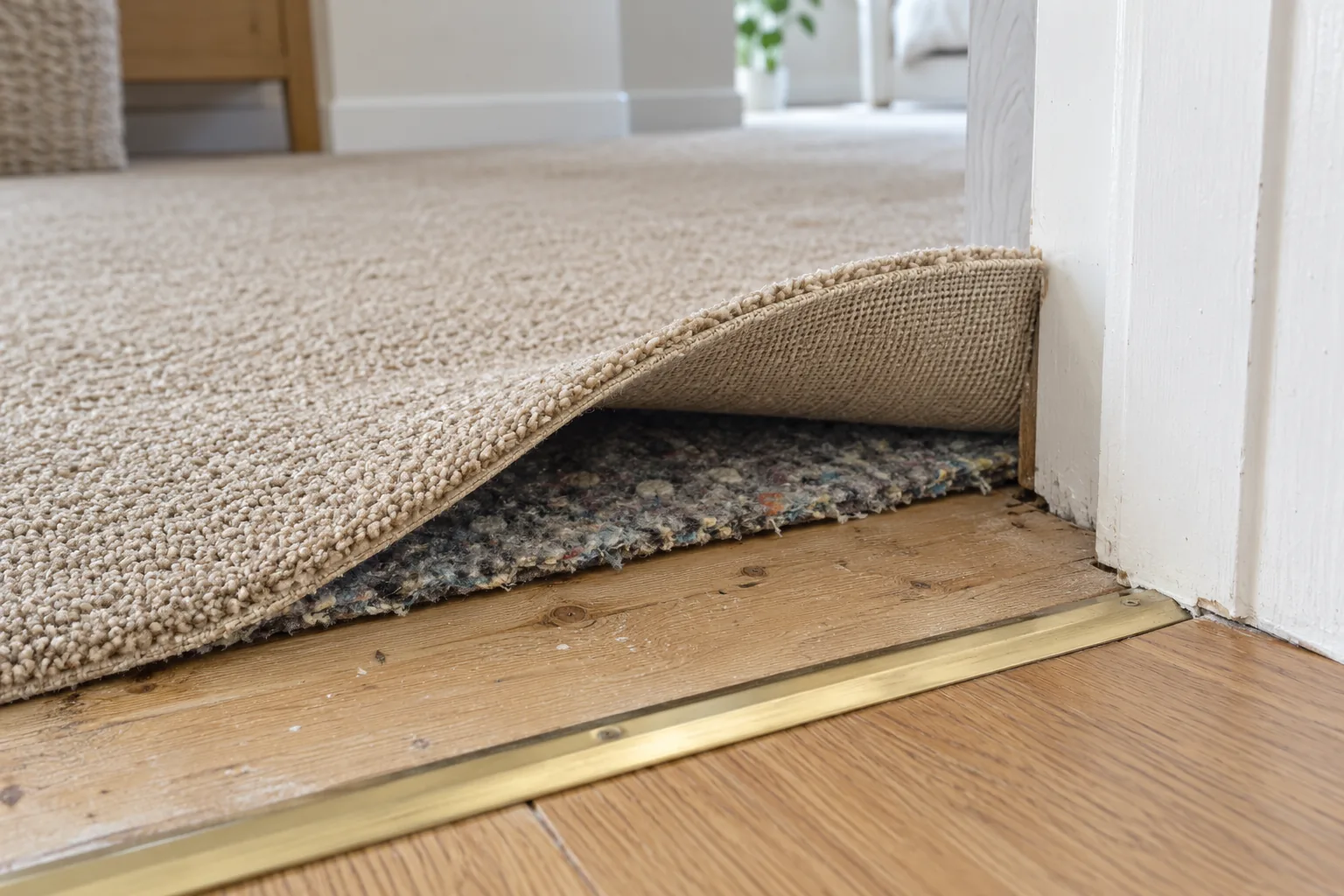
Direct answer: Odour returning after a surface clean may come from backing, underlay or subfloor. Locate the source and any moisture before paying for another general clean.
You have cleaned a carpet, the surface looks better, but an unpleasant smell returns when the room warms up or the weather is humid. That does not always mean the cleaner used the wrong fragrance or missed a visible spot. The source may be below the face yarn, in the backing, underlay or even the floor beneath. Surface cleaning cannot reliably reach every hidden layer, and adding more scented product can make the diagnosis harder.
The practical question is where the odour begins. A fresh spill on the pile, an old pet accident and a leak that soaked the underlay need different assessments. The aim is to identify the source and decide whether it can be cleaned, dried or must be repaired or replaced.
Why odour can return after the pile looks clean
Carpet is a layered floor covering. Liquid can pass through the pile into backing and cushion, depending on construction and amount. Some carpets have barriers that reduce penetration, but it is unsafe to assume every installation does. The Carpet and Rug Institute notes that pet urine can travel into backing and cushion and that complete odour removal is unlikely unless the source can be removed. Fragrance may mask the smell temporarily rather than solve it.
Humidity can make a residual odour more noticeable. That does not prove a particular chemical or biological cause. A damp subfloor, an old spill, adhesive, furniture, another textile in the room or a drain can all contribute. A cleaner should ask when the smell appears, where it is strongest and what has happened in that area. A single close-up photo cannot locate an odour source.
If the odour began immediately after a recent clean, the carpet may simply still be drying, but persistent dampness needs prompt follow-up. Ask the company about expected drying and whether underlay could have become wet. A musty smell after a known leak deserves water-damage assessment, not repeated deodoriser. The US Environmental Protection Agency stresses that backing or padding must be dried along with the carpet after water damage.
Map the smell without soaking the carpet
Note which room and part of the floor smells strongest, and whether it changes with open windows, heating or rain. Record any pet accidents, appliance leaks, plant pots, flood events and previous spot treatments. If the carpet has recently been moved or furniture rearranged, note that too. A source under a heavy item may have been hidden until the room layout changed.
Avoid testing the area by pouring water onto it to “bring the smell out”. That can move contamination farther into the underlay and create additional dampness. Do not sprinkle large amounts of powder or use repeated fragranced sprays. These can leave residue and interfere with an inspection. If a fresh liquid accident occurs, blot the surface safely and tell the cleaner immediately what happened and what was used.
Look for visible clues without lifting fitted carpet. An old ring, discoloured seam, damp skirting or loose edge may help identify a location. But a clean-looking patch does not rule out a hidden source. A professional may need to inspect an already exposed edge or use appropriate moisture testing. If the carpet must be lifted, arrange a competent person who can do it without damaging grippers, seams or heating components.
The role of underlay and subfloor
A recent leak changes the response: the soaked-carpet guide explains why the carpet, underlay and floor need separate attention.
Underlay can absorb liquid and retain residue while the carpet face dries. If the floor below is wood or another moisture-sensitive material, a leak may also affect it. Even a later successful surface clean may leave the hidden material unchanged. That is why a whole-floor assessment is more useful than a promise to spray a stronger deodoriser through the pile.
The appropriate response depends on what reached the underlay and how long ago. A small, recent incident may allow controlled cleaning and drying if the construction is sound. An old, extensive contamination may require replacement of the underlay or a local repair. If a continuing leak is present, stopping it comes first. No universal product can be assumed to penetrate every layer, remove the source and then dry the floor safely.
If a contaminated underlay is replaced, the carpet above it may still need cleaning or may be too damaged to retain. A fitter can assess reinstallation and seams; a water-damage specialist can assess moisture; a carpet cleaner can address suitable surface and backing soil. These roles may overlap in a company, but the tasks remain distinct. Ask who will inspect and verify each layer.
Questions before paying for another clean
Tell the company exactly what the first treatment achieved and when the smell returned. Ask whether the suspected source is in the pile, backing, underlay or another part of the room, and what evidence supports that view. Ask whether further surface treatment could reach it. If the answer is uncertain, an inspection is more valuable than a guaranteed “odour removal” add-on.
Our carpet cleaning service can be discussed as part of a proportionate plan once the likely source and material condition are known. A cleaner may improve a surface odour or remove soil that contributes to it. They should also state when a deeper source is outside the scope of routine cleaning. The published price guide may help frame a normal clean, but hidden-layer work needs a separate assessment and scope.
Be wary of claims that a strong smell proves the carpet is “sanitised” or that one fragrant product guarantees permanent success. A perfume can conceal the original odour for a short time. Conversely, the absence of odour immediately after cleaning does not prove that underlay is dry. Check the room again after the carpet has fully dried and under ordinary use.
When to escalate promptly
Act quickly if there is a current leak, damp skirting, a wet patch spreading across the floor or a strong musty smell after water damage. A water-damage professional can assess hidden moisture and whether underlay or flooring can be retained. If the source is sewage or unknown contaminated water, tell them that from the start. Do not use a routine cleaning booking as a substitute for an urgent moisture assessment.
If the carpet and underlay are dry but a local odour persists, a targeted inspection can still be worthwhile. It may identify a single old spot, a furniture item or another source in the room. Keep the history and photographs available, and ask for realistic limits before treatment. In some cases a local repair or underlay replacement is the most direct route to a durable result.
The central lesson is that an odour belongs to a source, not merely to a visible patch. Find that source, treat the right layer and verify drying. Surface cleaning can be useful, but it cannot promise to correct a problem hidden beneath a clean-looking carpet.
Frequently asked questions
Why does odour return?
A surface clean may leave a deeper source in place.
Will stronger deodoriser solve it?
It may mask a source temporarily; assess the layers first.