
Rust Marks Beside Carpet Grippers and Furniture
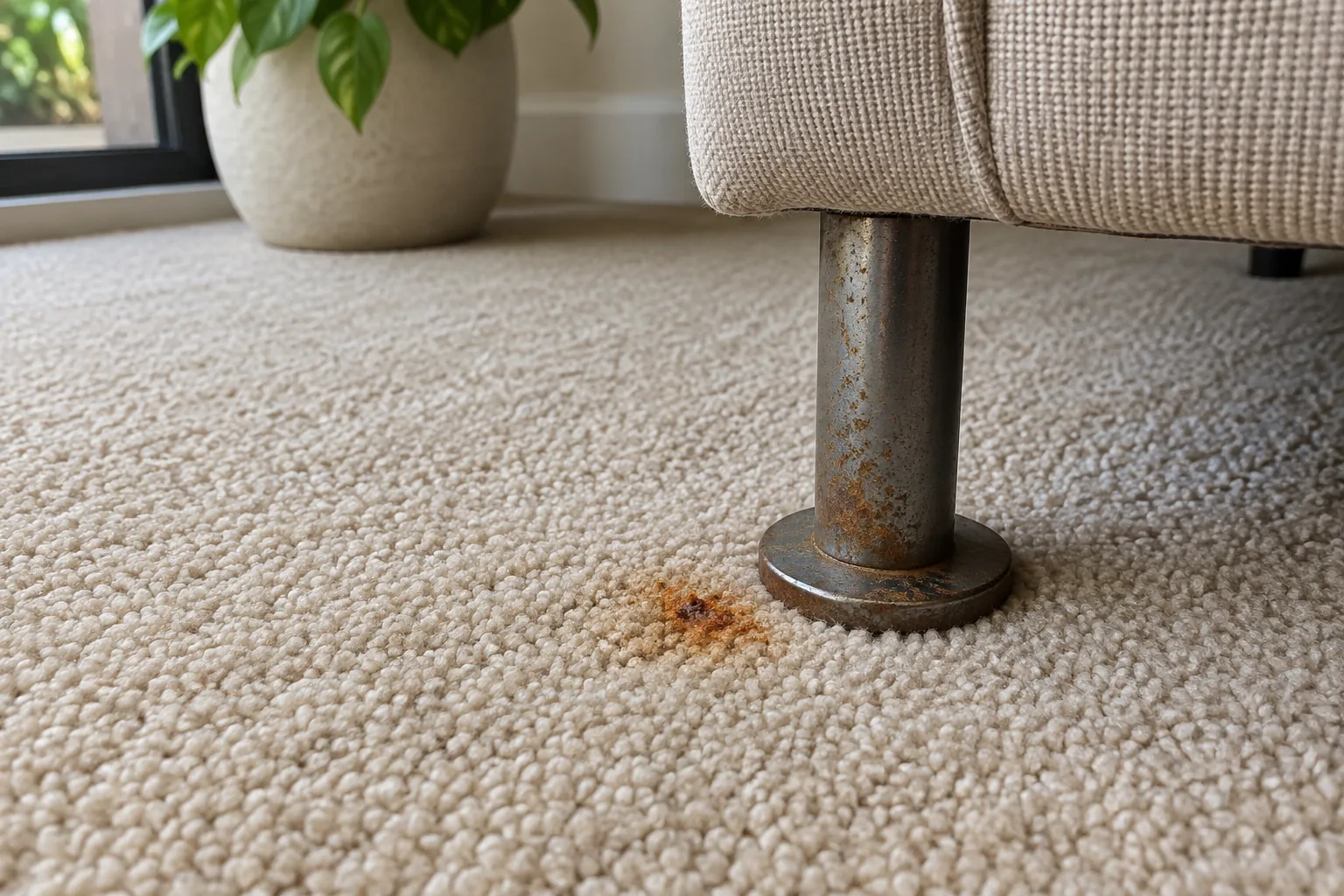
An orange-brown mark beside a metal furniture leg or along the edge of a fitted carpet may suggest rust. The location is a useful clue, especially after a spill or prolonged dampness, but it does not prove the cause. A drink, dye transfer, an old cleaning product or discolouration from the backing can look similar. Before choosing a treatment, identify the likely metal source and whether moisture is still reaching the area.
Rust requires a different assessment from ordinary soil. A general carpet clean may improve surrounding dirt while leaving the coloured mark. Specialist spot treatment may help some cases, but the fibre, dye, backing and age of the mark set limits. More rubbing or household acid is not a reliable shortcut.
Where to look for the source
Check whether a metal chair, table, plant stand or bed frame has stood over the mark. Has it been placed on damp carpet after cleaning, or did a plant pot leak nearby? A small patch shaped like the foot of a piece of furniture may show transferred corrosion. Move only an item you can shift safely and photograph both the foot and the carpet before cleaning them separately.
At a carpet edge, metal gripper pins or a threshold strip may be nearby. Do not lift fitted carpet to inspect them yourself. Grippers have sharp points, and disturbing the fitting can create a new problem. A fitter can examine whether water, corrosion or a loose transition is involved. If a skirting board or subfloor remains damp, address the moisture source before any stain treatment.
Note when the mark appeared. A fresh orange spot after a leak differs from a years-old brown line that has gradually emerged. Also note any product applied since then. An acidic bathroom cleaner or rust remover can affect carpet dye and backing; if one was used, keep the label information for the technician.
Rust and lookalikes
For a broader yellow-brown area with no metal nearby, compare the possible causes of wool carpet browning before assuming it is rust.
Rust is a product of iron reacting with oxygen and moisture. Its colour can transfer from corroding metal to nearby fibres. But a brown mark on carpet may have other origins. A jute-containing backing can produce a brownish migration after excessive wetting. Wood furniture finishes can transfer. A spill that dried at the edge may leave a coloured ring. Ordinary soil can gather along skirting from air movement or traffic.
The pattern helps frame questions. Is the mark exactly under a metal foot? Does it recur where the same furniture has been moved? Is it at a damp threshold with visible metal? Does the carpet look yellow across a broad patch unrelated to metal? A competent cleaner considers these facts and may test a small area. They should avoid claiming certainty from colour alone.
If the carpet fibre itself is damaged or its original dye has changed, rust treatment cannot rebuild it. A metallic stain may also have penetrated deep into yarn or backing. Even when the visible colour improves, some shadow may remain. Ask for an honest expectation based on the actual carpet rather than a guarantee of complete removal.
Why a household rust remover is risky
Rust-removal products are often chemically active and designed for specific hard surfaces or fabrics. A product safe on a bathroom fitting may change a wool or synthetic carpet’s dye, finish or backing. Do not pour it onto a fitted carpet or combine it with bleach or other cleaners. It may make the orange area larger or replace it with a pale damaged patch.
WoolSafe lists rust remover among treatments used by professional carpet cleaners in its wool spot guidance. That positioning is useful: it points to a specialist process, not an all-fibres household recipe. A technician can identify the fibre, test colour stability and apply a controlled treatment where appropriate. They also need to manage residue and drying, because leaving active product in the carpet can create another mark.
For an unknown orange mark, begin with documentation, not chemistry. Photograph the mark and suspected metal item, note any leak and keep the area from getting wet again. If there is loose dry soil, vacuum according to the carpet maker’s guidance without scrubbing the colour. Leave the specific discolouration for assessment.
What cleaning can achieve
A cleaner can remove surrounding soil so the carpet looks fresher overall. They may then test whether a targeted rust treatment reduces the orange colour. The result depends on the stain’s source, age and material. A sound carpet with a recent small transfer may respond better than a delicate carpet with old discolouration embedded through the pile, but the outcome cannot be promised in advance.
Our carpet cleaning service can be discussed alongside a targeted mark assessment. Tell the company about the suspected metal source and any water history before the visit, so they can decide whether to bring suitable products or recommend a specialist. A general hot-water pass should not be presented as a guaranteed rust-removal technique.
If a gripper or threshold is corroding, treating the stain without fixing the source invites another mark. A fitter may need to replace or adjust the metal component after the area is dry. If a furniture foot is responsible, clean and protect it separately before it touches the carpet again. Fit a suitable protector that does not trap moisture against the pile.
Consider the floor covering around the spot as well. If the edge is loose, the threshold is sharp or the carpet was left damp after a leak, a fitter or water-damage professional may need to address that condition before cosmetic cleaning. A mark caused by continuing moisture will not stay corrected if the floor remains wet. Ask the person who inspects it to distinguish the metal repair, moisture work and carpet stain treatment in the proposed plan.
Check the result in steady light
After any treatment, allow the carpet to dry under the cleaner’s guidance. Compare the mark with a before photograph taken under similar light. A damp area can look darker, so judging it immediately can be misleading. Ask whether a residual orange tint is likely to fade, remain or need a separate repair decision. Avoid repeating treatment on the same day merely because the wet patch looks uneven.
Keep the metal item off the treated area until both it and the carpet are dry and protected. If the mark returns, investigate the source rather than buying a stronger product. Repeated moisture or corrosion can keep creating new colour even after a successful spot treatment.
The practical sequence is to identify the likely source, stop further moisture or metal transfer, have the material assessed and then decide whether controlled spot treatment is worthwhile. That gives the carpet the best chance of improvement without sacrificing its colour or structure to an untested chemical.
Frequently asked questions
Does every orange mark mean rust?
No. Backing migration or a spill can look similar.
Will a standard clean remove rust?
Rust may need targeted treatment without a guaranteed result.