
Candle Wax on Carpet: Safe First Response
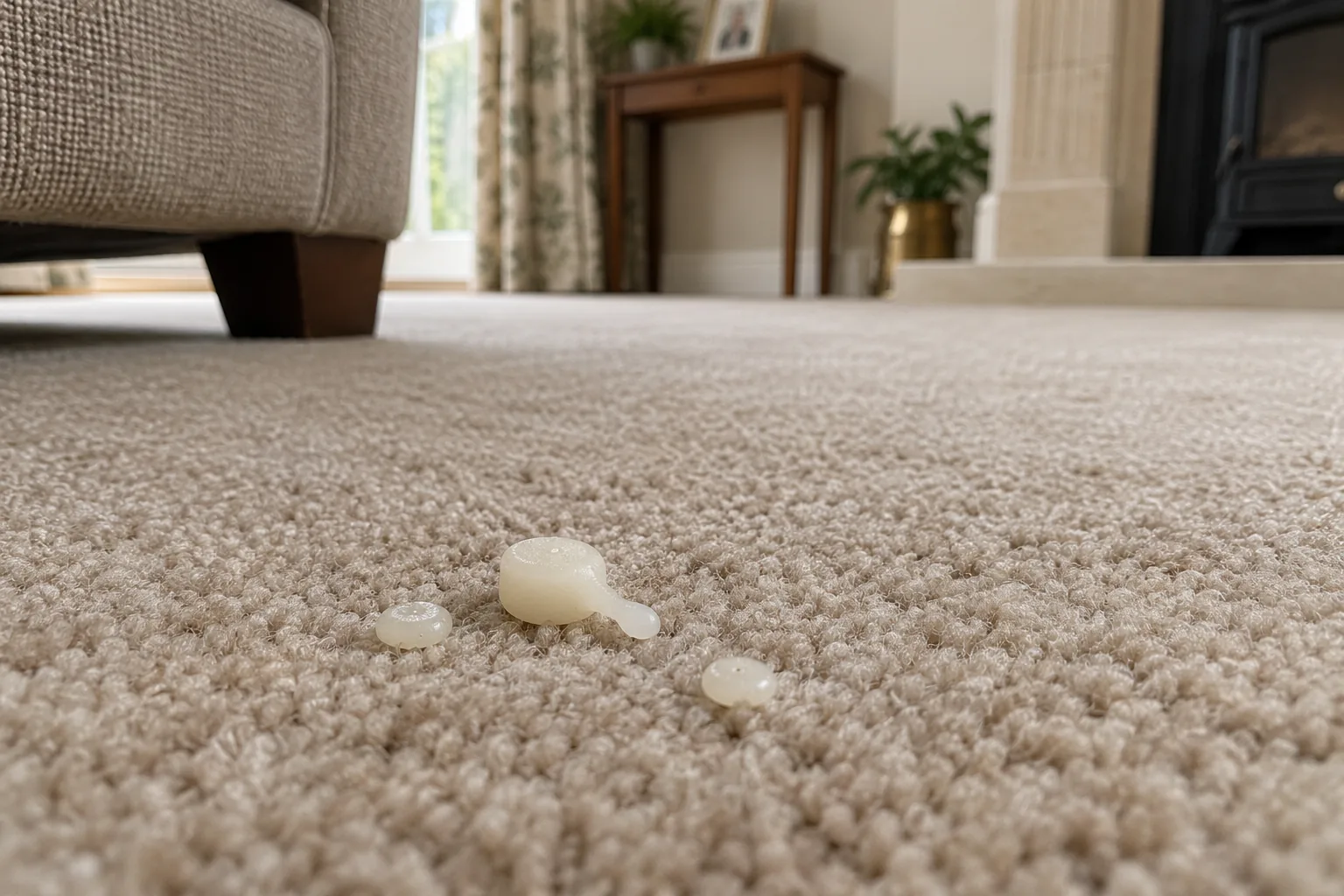
A candle tips and a few drops of wax land on the carpet. It is tempting to wipe them immediately, press with a hot iron or reach for a solvent. Each of those responses can make the mark larger or damage the pile. Wax changes state as it cools, may grip fibres, and can carry colour or fragrance ingredients that behave differently from the wax itself. A cautious first response aims to prevent spread and preserve the carpet for an informed treatment.
The advice below is for a small household spill. A large quantity of hot wax, a scorch, a fire concern or a spill involving electrical equipment needs the relevant safety response first. Carpet appearance comes second to dealing with heat and any immediate hazard.
Let the hot wax settle without spreading it
Keep children and pets away from the warm area. Do not rub liquid wax sideways with a cloth; this can push it through a wider group of tufts. Once the wax is cool and solid, it is easier to see where it sits and whether it has bonded to the yarn. Avoid walking over it while it sets, because pressure can drive it further into the pile.
If there is a candle holder or broken glass on the floor, remove the hazard carefully before focusing on the carpet. Do not use a vacuum on any hot material or on fragments of glass in a way that could damage the machine. With the area safe, take a close photograph and note whether the candle was dyed, scented or plain. A dark red candle on a pale wool carpet presents a different colour question from clear wax on a robust synthetic carpet.
For a small hard piece sitting proud of the pile, you may be able to lift an obvious loose fragment gently by hand without pulling yarn. Stop if it catches the fibres. A rounded tool can sometimes separate a brittle surface piece, but scraping hard can fuzz, snag or cut pile. The goal is to remove material that is already free, not to dig into the carpet backing.
Why heat advice needs context
Some specialist guides describe controlled heat and absorbent paper for particular wax spots. WoolSafe includes such a step for wool carpet in its treatment chart, alongside later solvent and spot-remover stages. That sequence is not a universal invitation to press a domestic iron onto every carpet. The fibre, dye, wax colour, thickness and previous treatments affect the risk.
Too much heat can change synthetic pile texture, flatten wool, transfer dye or leave a mark from the paper or iron. An iron also gives little visibility of what is happening underneath it. A hairdryer can soften wax without actually removing it, letting it spread deeper. If you do not know the carpet construction and do not have the manufacturer’s method, avoid heat experiments and ask a professional for advice.
Similarly, chilling wax can make a surface piece brittle, but an ice cube placed directly on the carpet adds water to the backing. A household freezing method may help in a specific case yet still leave coloured residue in the yarn. “The wax feels hard” does not prove that the whole mark can be safely snapped away.
Practical steps for the customer
- Keep people clear while wax is hot.
- Let it cool without rubbing.
- Note whether the candle was coloured.
- Ask a cleaner about safe removal for the carpet.
Coloured wax can leave a second problem
If a pale patch remains after an attempted heat or chemical treatment, the bleach-spot guide explains why lost colour is different from removable wax residue.
After solid material has been removed, a pale or coloured shadow may remain. It could be candle dye, oily components, fragrance residue, old soil trapped at the edge or a change in pile direction from handling. The wax and the residual mark may require different decisions. More scraping will not dissolve dye, and a general carpet shampoo may spread an oily residue.
Look from both ends of the room in consistent light. A patch that changes from dark to light with viewing angle may involve disturbed pile. A patch that stays red or blue may contain transferred colour. If a pale area appears, consider whether the original carpet dye or fibre has been altered by heat or chemicals. A technician can inspect and test; do not assume a stronger product will remove every remaining shadow.
Avoid pouring a solvent directly onto the carpet. The Carpet and Rug Institute warns that solvent reaching a latex-bonded backing can damage the bond between backing layers. Solvents may also affect colours, finishes or nearby flooring. A trained cleaner can use controlled amounts where suitable, test first and decide whether the material is safe for the treatment. Keep a record of anything already applied.
What to tell a professional cleaner
Provide the carpet’s fibre or product name if known, a photograph of the wax from above and a wider view showing its location. Say whether the candle was coloured, how much fell, when it happened and whether any heat, ice or chemical has been used. Mention an older stain that was already present underneath. The fuller the history, the easier it is to distinguish a fresh wax issue from pre-existing wear or colour change.
Ask what the treatment aims to remove and what may remain. A cleaner may be able to reduce surface wax and associated residue, while a transferred dye can prove much more difficult. They should explain the risk of changing texture or colour before attempting a stronger process. Our carpet cleaning service can be discussed for the carpet as a whole, but a wax spot needs its own material assessment and realistic expectation.
Do not schedule whole-room cleaning on the assumption that a general pass will melt or rinse out wax. The spot may need attention before wider cleaning, or the technician may advise that the risk of treatment outweighs the likely improvement. If the carpet has a manufacturer’s care guide, share it with them. If the wax is on an expensive or delicate rug rather than fitted carpet, a rug specialist may be preferable.
Prevent a repeat without hiding the risk
Place candles on stable, heat-resistant surfaces away from draughts and routes where someone may catch the holder. Avoid carrying lit candles across carpet. An unlit candle can still shed fragments, so check the floor after rearranging a display. These small measures reduce the chance that you will have to make a rushed cleaning decision while wax is hot.
If a mark remains after a professional treatment, compare it only after the carpet is dry and the pile has settled. Do not keep trying one household product after another. The visible mark may be colour transferred into yarn, a small damaged area or a residue requiring a different approach. Ask for a clear explanation of which part can be improved and which part cannot be safely changed.
Wax removal is not a single trick. Letting it cool, avoiding rubbing, lifting only loose material and passing on accurate details are sensible first steps. They give a trained person the best chance to choose a method without creating a larger problem.
Frequently asked questions
Should I use an iron?
Direct heat can damage fibres or drive wax deeper.
Why is colour left after wax removal?
Candle dye or another residue may need separate treatment.