
Jute-Backed Carpet and Moisture: What to Ask
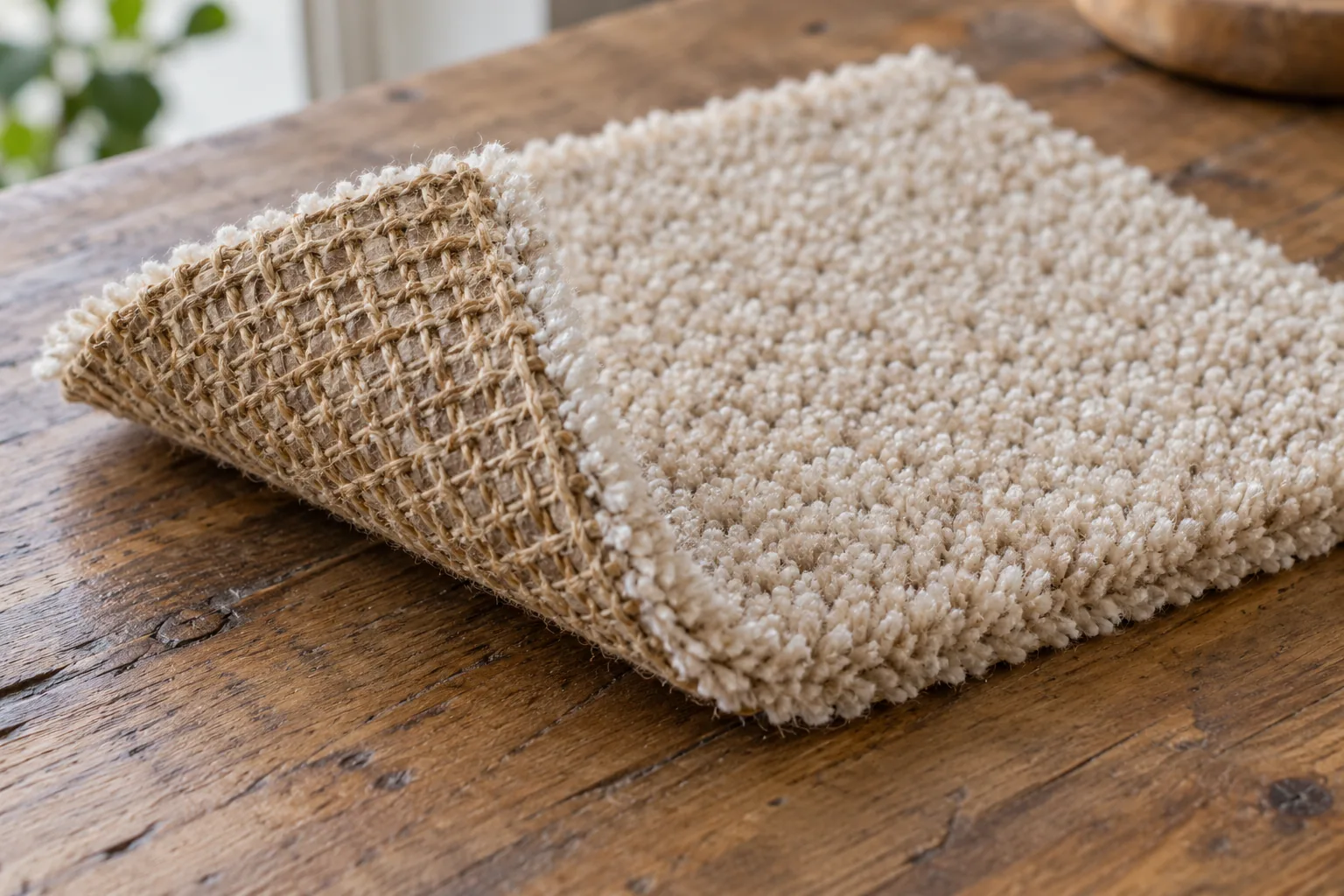
Two carpets can have similar surface fibres but very different backings. If one contains jute, moisture control deserves particular attention when planning a clean. Jute is a plant fibre used in some woven carpet constructions and as a secondary backing in some tufted carpets. It is not the same as the wool, nylon or other material you touch at the surface, yet it can affect how the whole carpet responds to wet treatment.
This does not make every jute-backed carpet uncleanable. It means the cleaner should identify the construction, choose a suitable method and explain how the backing will be protected and dried. A generic promise that “we clean all carpets the same way” is less useful than a short conversation about the actual material and its condition.
First confirm what the carpet is made of
Ask for the manufacturer’s label, purchase record or product details if you still have them. A sample offcut may reveal the backing clearly. At an already exposed edge, a technician may be able to identify woven natural backing without lifting a sound installation. Do not peel back fitted carpet to investigate; gripper strips are sharp and the edge may not refit properly after being disturbed.
The Carpet and Rug Institute describes jute as a natural cellulosic fibre used in carpet backing yarns and, in some tufted products, secondary backing. That is why a carpet can have a synthetic face but still contain a moisture-sensitive natural component beneath it. A care label or retailer’s advice can also identify other delicate components and any manufacturer restrictions.
If the backing cannot be confirmed, say so. A professional should not treat uncertainty as proof that it is synthetic or that saturation is harmless. An inconspicuous test, conservative moisture use and a suitable drying plan may be more appropriate. If the carpet is valuable, old or already damaged, specialist assessment may be the better first step.
Why the backing changes the conversation
Plant fibres can absorb moisture and behave differently from many synthetic components. If a jute backing becomes wet, coloured material or residue can migrate towards the face as it dries, leaving yellow or brown discolouration. The WoolSafe Organisation has documented a case of cellulosic browning after prior spot treatment wetted the backing. That case illustrates a possible mechanism, not a prediction that every jute-backed carpet will brown.
Other causes of brown marks also exist: tracked-in soil, an old spill, a metal furniture stain, a cleaning-product residue or dye movement. A cleaner should inspect where and when a mark appeared before naming the cause. A brown edge that emerged during drying invites different questions from a brown patch that was present for years before the clean.
Repeatedly soaking a spot in an attempt to wash the colour away can carry more material through the backing or make drying harder. Nor is an acidic household mixture a safe universal fix. A specialist may have controlled treatments for a particular case, but they should test the carpet and explain the risk of colour change or incomplete recovery.
Questions to ask before booking
If the backing already feels loose or separates at an exposed edge, read the delamination warning signs and ask for a structural assessment before wet treatment.
Start with the basics: “Have you identified the face fibre and backing?” and “What is your plan to keep moisture out of the backing?” Ask how the carpet will be dried, including airflow and room conditions, and when it will be safe to use. No responsible answer needs to promise a fixed drying time for every room. A cold, humid space will behave differently from a warm, ventilated one.
Explain any history of leaks, pet accidents, repeated stain removers or previous brown marks. Ask whether the technician will make a pre-clean record of existing discolouration and weak seams. If the backing appears unstable or a seam is opening, it may be safer to seek fitting advice before cleaning. A method that suits a sound carpet may not suit one whose construction has already weakened.
Ask what the proposed clean is intended to achieve. If the priority is loose soil, careful vacuuming may play a larger role. If a fixed brown mark is the priority, request an honest assessment of whether it is removable soil, migrated colour or permanent damage. Our carpet cleaning service should be discussed against the particular construction and condition rather than as an identical treatment for every backing.
Practical steps for the customer
- Find a label, sample or retailer details.
- Mention earlier browning or slow drying.
- Ask about moisture control and colour testing.
- Blot a fresh spill without flooding.
A spill at home: keep the response measured
For a fresh liquid spill, use clean white absorbent cloths to blot from the surface without rubbing. Work patiently and change cloths as they become wet. Avoid pouring water or detergent directly onto the carpet. The aim is to limit spread while arranging advice, not to drive the liquid into the backing. If the spill is extensive or has gone through to underlay, describe it as a saturation incident rather than a small surface spot.
Do not spray a colourless patch repeatedly because it “looks clean enough to take more water”. A jute-backed carpet can still carry moisture below the pile. Likewise, avoid vigorous brushing of a damp area; that may distort the face yarn while doing little for the backing. Tell any cleaner what liquid was involved, how much, when it happened and which products have already been applied. A precise history helps them choose whether to test, treat or decline.
If there is a continuing leak, first stop the source and obtain appropriate water-damage advice. Drying a surface while the floor beneath remains wet is not a complete solution. If the carpet is a loose rug rather than a fitted installation, the same material concerns may apply but access to the back and drying arrangements differ; a rug specialist may be more appropriate.
If browning appears after a clean
Take photographs in steady light and note when the mark first appeared. Is it near a seam, a former spill or a previously treated spot? Has the area fully dried? Contact the cleaner promptly and avoid adding a supermarket stain remover in the meantime. A new product can alter the colour and remove clues about the original cause.
The cleaner should inspect the carpet, review the treatment and consider other possible sources of discolouration. A small test may show whether some migrated residue can be reduced. Neither a successful small test nor a plausible explanation guarantees complete correction across the whole carpet. Ask what treatment would be attempted, its risks and what happens if the mark remains.
For future care, retain the carpet’s construction information and record any known problem areas. Vacuum with equipment appropriate to the face yarn and address spills promptly without flooding the backing. A planned clean with clear material information and drying arrangements is much easier to judge than an emergency attempt after several unknown products have been used.
Frequently asked questions
Is every brown mark caused by jute?
No. Soil, spills, rust and other materials can look similar.
Can jute-backed carpet be cleaned?
Possibly, with a method suited to its condition and construction.