
When Is a Cleaned Rug Ready to Put Back?
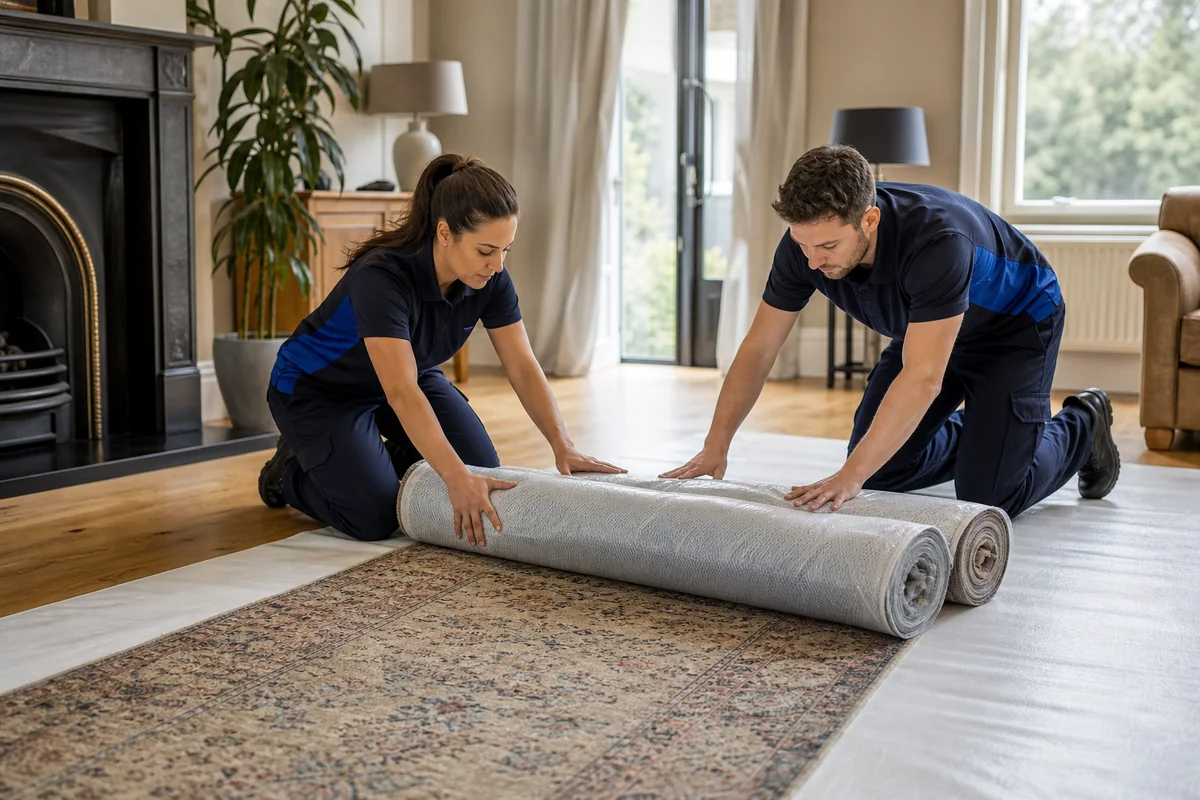
A cleaned rug is ready to put back only when the face, backing and any pad are dry and the surface beneath is also suitable. The pile may feel dry first while moisture remains at the reverse or in a dense edge. Returning it too early can trap moisture against wood, carpet or another floor and make colour transfer or odour harder to detect. The right check depends on the rug’s construction and the cleaning method; a thick wool rug, flatweave and latex-backed mat need different caution.
Check more than the visible pile
Ask the cleaner where the rug was treated and how it was dried. A rug cleaned in place may need to be lifted so the reverse and floor can be examined, provided it can be handled safely. A workshop-cleaned rug should arrive with specific care advice, but check it in the conditions of the room where it will be used. Look at the edges, binding, fringe and any dense section as well as the centre. A cool feel is not a perfect moisture test, so consider visible dampness, weight, odour and the cleaner’s guidance together.
Do not pull at a weak edge or drag a heavy rug to make this check. Ask for help if it is too large to lift without strain or distortion. If the backing is powdery, sticky or separating, drying alone will not repair it. Our guide to rug backing and construction explains why a failing bond needs a separate decision. A rug can be clean at its face while its structure remains unsuitable for normal use.
Inspect the floor that was covered
On wood, look for dampness, grit, colour transfer or a mark from an old pad. Wood can be vulnerable to trapped moisture, so do not replace the rug over a floor that still needs drying or assessment. On fitted carpet, check that the carpet beneath is dry; a rug laid over it can restrict airflow and hide a slow-drying patch. On tile or vinyl, examine the pad or backing for residue and check that the floor is dry and clean. The rug and the surface form one system once they are put together, so both need attention.
If the rug was lifted after a spill, ask whether liquid reached the floor below. A stain on a rug’s face is not a reliable measure of how far moisture travelled. Photograph any transferred colour or floor change before cleaning it with a product that might complicate the cause. Our guide to rug aftercare gives broader guidance on returning a cleaned rug to normal use.
Think about the pad and furniture
A rug pad may hold moisture or old residue even if the rug is dry. Inspect its condition and compatibility with the floor finish, then allow it to dry or replace it as appropriate. Do not reuse a crumbling or sticky pad simply because it keeps the rug from slipping. Ask the floor manufacturer or supplier about a suitable pad where the finish is delicate. Return furniture only after the rug is ready, and avoid dragging heavy legs across its pile or fringe. A damp fringe under a furniture foot may dry much more slowly than an open edge.
If the rug is valuable or has unstable dyes, keep a photograph of its condition before and after cleaning. A colour that appears darker while damp may lighten as it dries; a new halo or tinted pale border deserves prompt assessment. Do not attempt a household rinse to “finish” the colour. Our guide to checking rug colourfastness explains when a colour change should make you pause before returning the rug to a light floor.
Position it without creating a new problem
Once all surfaces are dry, lay the rug flat according to its construction and check that edges do not curl into a trip hazard. A newly cleaned rug may show pile direction or grooming lines in different light; that does not always mean new staining. Avoid forcing a curled edge flat with heavy weights without knowing why it changed shape. The fringe should lie free of chair castors and door movement. If the rug slides, address the pad or placement rather than using an adhesive that could affect the floor or backing.
Keep room ventilation suitable for the first period of use and check the underside again if the room is humid. A rug placed against an outside wall or on a floor that has had a previous damp issue needs particular attention. If an odour appears after replacement, lift it safely and inspect both surfaces before applying fragrance or more cleaner. The cause may be residual moisture, an old pad or another source unrelated to the face clean.
Ask for a specific handover, not a fixed clock
Our rug cleaning service can explain the method and aftercare for the individual piece. The price guide provides starting costs, while handling and any specialist work depend on rug size and condition. Ask which side and edge should be checked, whether the pad was treated, when the rug may return and what to do if a smell or colour change develops. Those answers are more useful than a blanket promise that every rug is ready after the same number of hours.
If a property is being prepared for a viewing or a new tenant, resist placing a rug back early just to finish the room. Leave it in a safe drying position and tell the person responsible when it can be returned. Record any remaining wear, weak fringe or backing issue separately from cleanliness. The rug is ready when the textile, pad and floor are sound and dry enough for their next use, not merely when its top looks presentable.
For storage rather than immediate use, confirm dryness before wrapping or rolling the rug. A rug sealed while still damp can develop a different problem from one put down too early. Follow the maker or specialist’s advice on rolling direction and covering, and keep it away from a damp floor. Keep a note of the rug’s condition and cleaning date so later odour or colour changes can be interpreted. If the rug will be transported, protect its edges without trapping moisture, and tell the recipient that it should be inspected before it is laid down. A handover note can prevent careful drying at one property being undone at another.