
How to Position Sofa Cushions While They Dry
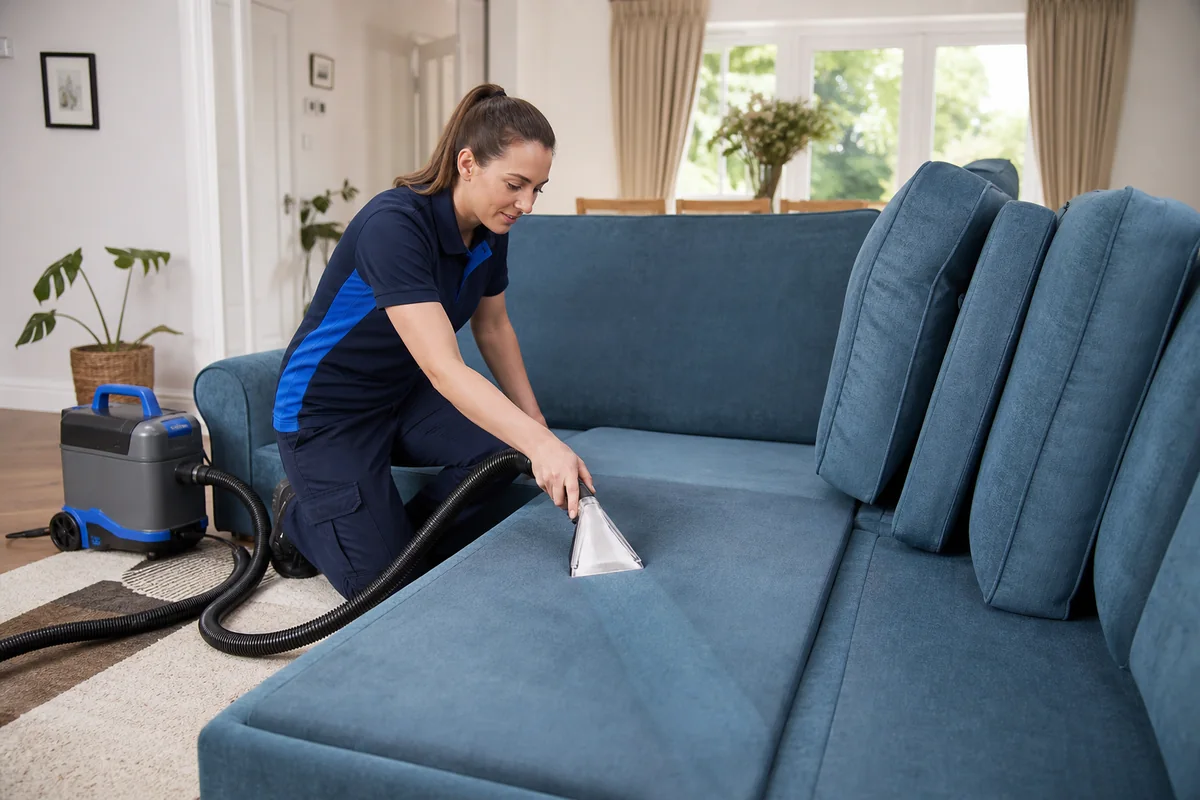
Sofa cushions need air around more than their visible face after cleaning. Putting a damp cushion straight back against the frame can hide moisture in the reverse, seam or filling. Stacking several cushions together has the same effect. The best position depends on whether the cushion is removable, the type of insert and the sofa maker’s instructions. Ask the cleaner to arrange them and explain when each can return to normal use; do not assume the cover and core dry at the same pace.
Find out what is inside
A seat can contain a solid foam core, loose fibre, feathers or layered combinations. A zipped cover may reveal an inner liner, but it does not automatically mean either part is washable. A fixed back cushion may not be removable at all. The filling changes how liquid moves and how you can assess drying. A foam core may look dry at the surface while its centre remains damp; loose fibre can hold wet pockets; feather compartments need careful drying according to the maker’s exact guidance. Our guide to sofa drying after cleaning explains those differences.
Tell the cleaner if a spill went beyond the cover. A surface clean can improve the fabric while leaving an affected insert untouched. If a large pet accident or drink reached deep filling, ask whether treatment, specialist assessment or insert replacement is more appropriate. Positioning cannot make a contaminated centre safe by itself. It supports drying only after a suitable decision about what has been cleaned and what remains.
Give removable cushions room
Where the technician advises it, stand cushions separately so air can reach the face, reverse and seams. Keep them on a clean, suitable surface that will not transfer colour, and protect a vulnerable wooden floor from any moisture. Do not balance a heavy cushion where it can fall or distort. Avoid pushing several seats together in a corner or leaning them hard against a wall. The exact orientation should follow the cushion shape and filling; a feather-topped seat may need different handling from a firm foam slab.
Do not strip a cover from its insert unless the maker allows it and the cleaner recommends that step. A damp cover may shrink or become difficult to refit; an exposed insert may be vulnerable to dirt or damage. Similarly, do not tumble dry or heat an insert because a separate decorative cushion carried that instruction. The manufacturer’s care information applies to the particular product. If there is no label, uncertainty calls for cautious handling and professional advice, not an improvised wash.
Fixed cushions need a room plan
When a cushion cannot be removed, the cleaner may have fewer ways to expose its underside. Ask how much moisture the method uses and how the fixed construction will dry. Leave space around the sofa, improve safe ventilation and avoid covering the seat with a throw or plastic sheet. Do not sit on the cushion to test it repeatedly; pressure can move moisture deeper and distort padding. If a fixed seat remains damp or smells after the expected drying range, contact the cleaner before another wet treatment.
Room temperature, humidity and airflow affect all upholstery, but direct intense heat can damage foam, adhesives or the face fabric while inner material stays damp. A heater or hairdryer aimed at one spot is not a reliable way to dry the whole cushion. Our guide to ventilation and fabric drying discusses the room factors. A dehumidifier may help in a humid room when used safely, but it does not replace a check of the cushion’s accessible parts.
Check before reassembly
Follow the technician’s reuse guidance and inspect the cover, seams, reverse and insert where safely accessible. A continuing cool damp feel, new ring or returning odour is reason to wait and ask for advice. One side may dry before another. Do not place a dry cover around a damp core or stack cushions on the frame simply because the sofa is needed for a photograph. A heavily wetted insert may require more than ordinary room drying or may be better replaced; the cleaner should explain that limitation.
Once the cushions are dry, refit them according to the maker’s instructions and check that they sit without distortion. Some fibre or feather fillings need permitted plumping and reshaping, but that is maintenance of form, not proof that hidden moisture has gone. Do not leave a cushion in direct strong sun for so long that one side fades. If you notice a persistent mark after it has dried, photograph it in comparable light and contact the cleaner with the original spill history.
Plan the appointment around an unusable sofa
Tell the provider the number of removable seats and backs, fabric care labels, stains and whether the sofa must be used the same evening. Our sofa cleaning service can assess the construction, while the price guide gives starting costs. Leave space in the room for each cushion to stand without blocking an exit, and arrange another seat while the sofa is unavailable. A fixed deadline should be discussed before a wet method is chosen, not after the cushions have been treated.
The practical rule is to preserve airflow and avoid trapping moisture, but the details belong to the actual cushion. Ask what was cleaned, where it may be placed and which parts need checking before use. A sofa that looks tidy when immediately reassembled can conceal a slow-drying insert. A sofa left sensibly open for a while may look less finished at handover, yet it gives the fabric and filling a better chance to dry safely.
If several sofas or chairs are cleaned in one visit, label or photograph the position of loose cushions before they are moved. Seats and backs can have different fillings even when their covers match, and an insert fitted in the wrong place may be forced into a cover or distort the sofa’s shape. Keep cushions from different items separate while drying. If the cleaner has chosen different treatments for one stained seat and the rest of the suite, note that too; they may not be ready to reassemble at the same time. A simple layout record prevents a rushed end-of-day puzzle that leads to damp pieces being put back merely to clear the floor.
Check each piece individually before returning it.
Allow extra time for any thicker seat that still feels damp, even if the matching back is ready.