
How Ventilation Affects Fabric Drying
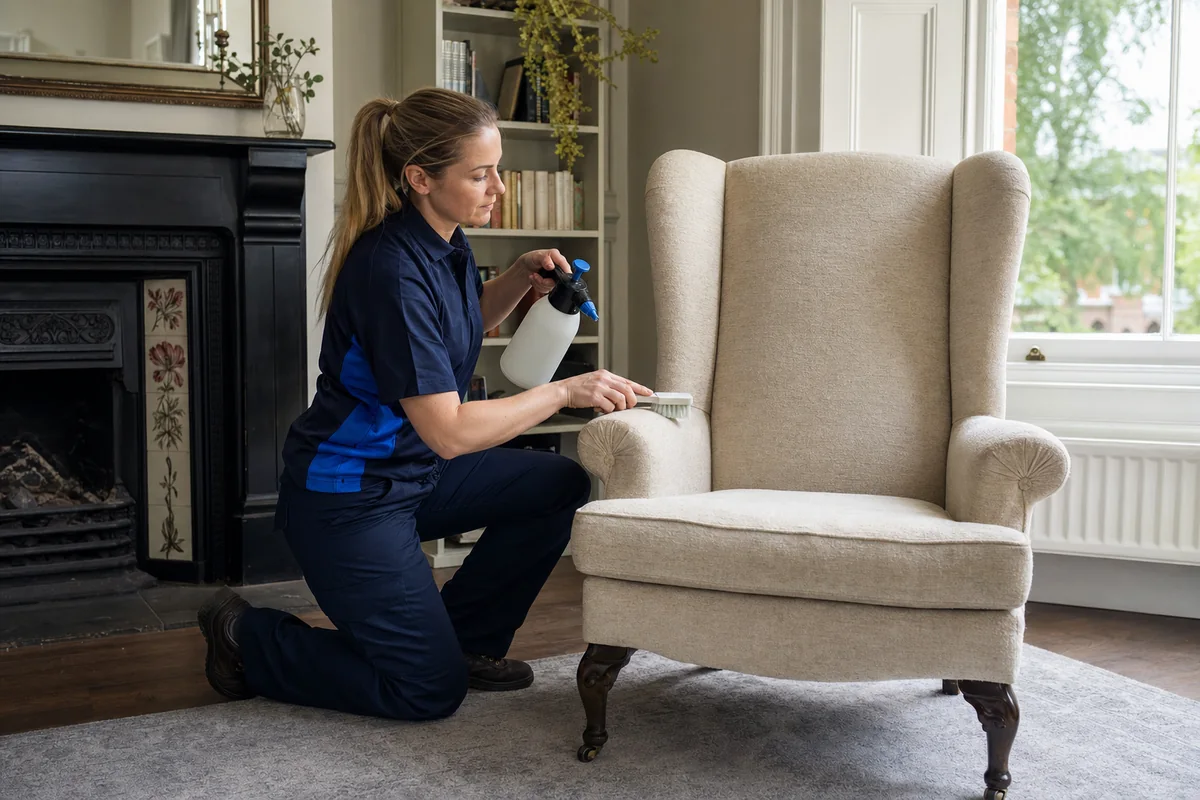
Ventilation helps a cleaned fabric dry by moving humid air away from its surface, but it is only one part of the drying process. The amount of moisture applied, how much was recovered, the fabric’s thickness and the material beneath it all matter. Opening a window can help in suitable weather; it is not a guarantee that a sofa insert, rug backing or carpet underlay has dried. Ask the cleaner how each item should be positioned and checked, then manage the room conditions without applying intense heat directly to a vulnerable surface.
Moisture must move somewhere
As a carpet, sofa or mattress dries, water evaporates into the surrounding air. If a room is already humid and closed, evaporation can slow. Air movement and a route for damp air to leave can support drying. Moderate warmth may help, but a heater pressed near one area can affect fibres, foam or adhesive while hidden layers remain damp. A dehumidifier can reduce room humidity in some situations; it does not pull moisture instantly from the centre of a thick cushion. The practical aim is a suitable environment for the whole item, not a dry-looking patch on its face.
Weather and building layout change the plan. A window left wide open during rain can introduce humid air or water; a small flat may have only one safe opening; an office may rely on mechanical ventilation. Follow the cleaner’s advice and the building’s rules. If the property is vacant, name someone who will return to check the conditions and close windows when appropriate. Leaving every door and window shut immediately after a wet process can slow drying, while leaving an unsecured property open creates a different problem.
Each textile has a different hidden layer
Fitted carpet sits over backing and often underlay. A thick rug has a reverse that may retain moisture after the pile feels dry. A sofa cushion can have foam, fibre or feather inside a cover. A mattress contains layered padding that is hard to inspect. Ventilation reaches exposed surfaces more readily than inaccessible centres. Ask whether a cushion may be safely stood for airflow, whether a rug can be lifted or whether a mattress should remain uncovered. Do not take apart an item beyond its maker’s instructions merely to speed drying.
Our guide to sofa drying after cleaning explains why a dry cover may hide a damp insert. The guide to returning a cleaned rug checks both the rug and the surface beneath. These are not interchangeable aftercare steps. A generic instruction to “open the windows for two hours” would ignore the materials and the room conditions.
Position items to expose the right surfaces
Where the technician advises it, keep removable cushions separate rather than stacking them damp against each other. Leave airflow around the reverse and seam, not just the face. Keep a mattress uncovered until the appropriate parts are dry, and avoid putting a rug back over damp carpet or wood. A heavy throw, plastic sheet or furniture piece can restrict airflow and hide a slow-drying area. Do not use a hairdryer or heater to force one spot while the rest of the item remains unchanged.
In a small home, plan space for these arrangements before the appointment. A sofa may be unusable while cushions stand, and a bed cannot be remade immediately if the mattress needs time. In an office, seats or carpets may need to remain cordoned off after the crew leaves. Ask for separate reuse guidance for each material. A person crossing a carpet once and a group of staff sitting on cleaned chairs all day are different levels of use.
Check the result without guessing from a clock
Drying time varies with treatment, construction, humidity and airflow. Look at seams, dense sections and accessible undersides, and follow the technician’s guidance on what a normal dry item should feel like. A cool touch is not a perfect moisture test, so consider visible dampness, smell and the treatment history too. If an odour returns or a tide mark appears as the item dries, contact the cleaner before applying another product. Old residues can move with moisture; the source needs assessment rather than automatic repeat wetting.
Ask when windows or fans may be reduced and when furniture, bedding or rugs can be returned. A room can feel comfortable while a thick textile still needs more time. Keep children and pets away from treated items until normal use is appropriate. Our carpet drying guide gives carpet-specific variables, while the other materials should be judged on their own construction.
Plan ventilation as part of the quote
Tell the company if the flat is cold, humid, windowless or likely to be locked after the visit. Ask whether the proposed method suits that situation and what the occupants will need to do later. Our carpet cleaning and upholstery cleaning pages describe different services; each should come with suitable aftercare. Do not ask a cleaner to promise instant dryness to fit a timetable that the material cannot safely meet.
Good ventilation supports a good cleaning process, but it cannot compensate for excessive wetting, poor extraction or a deeply soaked hidden component. The most reliable plan controls moisture during treatment, positions the item sensibly afterwards and checks actual condition before reuse. If the room remains unusually humid or the fabric stays damp beyond the advised range, raise that with the provider promptly. The answer may involve changing airflow, investigating an unrelated leak or reassessing the item, rather than simply waiting longer with the door shut.
Avoid turning aftercare into another hazard
Keep fan and dehumidifier cables away from walking routes and wet surfaces. Do not place electrical equipment where it can be splashed or where a child or pet can knock it over. Follow the appliance maker’s instructions for clearance and emptying collected water. If a room needs a window open, consider security, weather and whether somebody can close it later. In a shared building, a door wedged open for air movement may interfere with fire or security arrangements. Ask for another safe ventilation plan if the obvious route is unsuitable.
Record any advice from the technician before leaving the property. The person who returns to check the item may not have been present during cleaning and could otherwise replace cushions or bedding too soon. A brief note saying which pieces should remain separate and what to check is more useful than a general message that “everything is drying”. This is especially important in a rental, where cleaners, agents and incoming occupants may arrive at different times.