
What Controlled Extraction Means for Upholstery
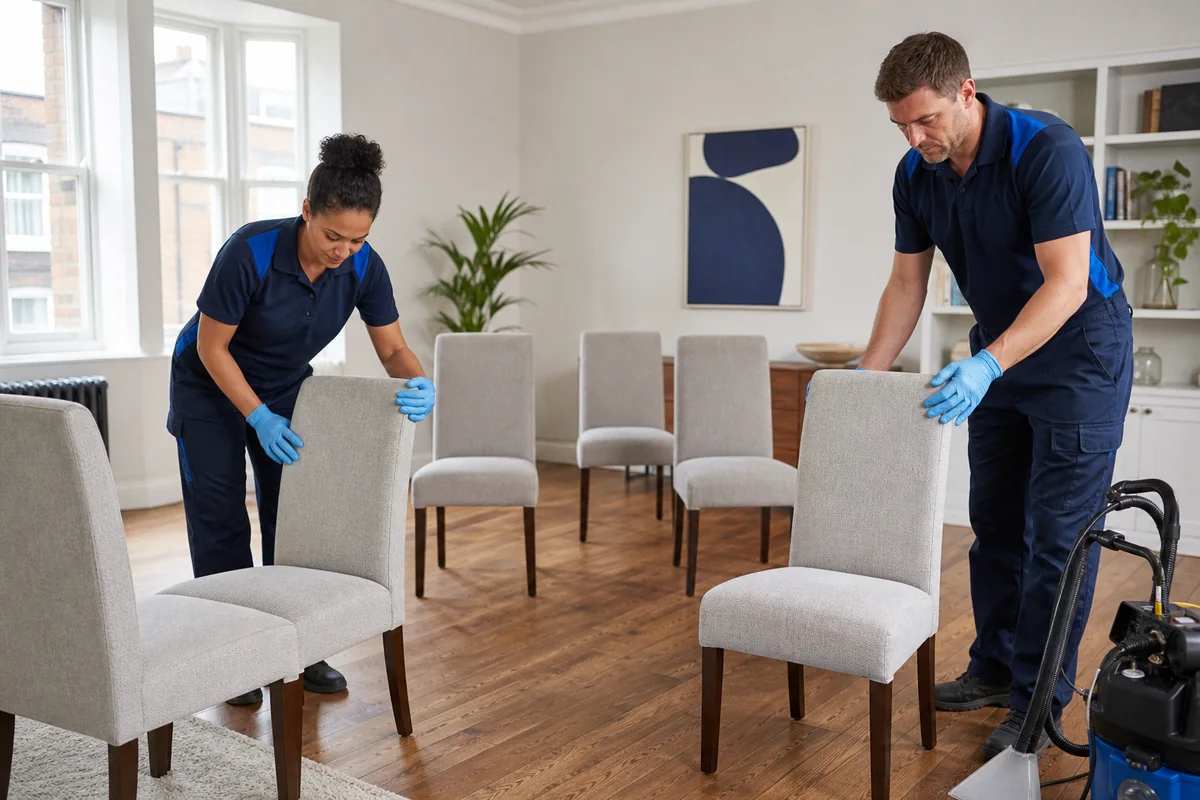
Controlled extraction on upholstery means applying only the moisture and product that a particular fabric and construction can tolerate, then removing as much as practical without distorting it. It is not simply using a smaller carpet tool. A sofa cover may sit over foam, fibre, feather or a fixed frame that dries differently from the face fabric. A good process starts with inspection, testing and a clear decision about what the treatment will reach. The aim is to remove suitable soil while avoiding a new tide mark, colour change or damp filling.
Inspect the whole seat, not only the stain
Look at the care information, face fibre, weave, dyes, piping, buttons and seams. Check whether the cushions are removable and what lies beneath the cover. A zip does not prove a cover can be laundered, and a removable cover does not make its insert washable. Previous household products may have left residues that affect later cleaning. A small water ring could be an old spill boundary rather than fresh soil, while a pale patch may be colour loss. The technician should discuss these possibilities before applying a wet process across a whole chair.
Some fabrics are particularly sensitive to texture change, colour movement or shrinkage. Velvet can show pile direction even after soil is removed; linen may crease or shrink if treated incorrectly; trims can behave differently from the main panel. Testing an inconspicuous area helps, but one test does not guarantee every dyed section will react the same way. If the material is unstable, a lower-moisture approach, specialist treatment or a decision not to clean may be safer than forcing the original plan.
Control application and recovery
An upholstery tool can apply solution and recover it through suction, but the operator must keep passes, pressure and product appropriate for the fabric. Excess liquid at seams or piping may travel into padding and emerge as a ring while drying. Repeating a wet pass in pursuit of a stubborn stain can make a cushion harder to dry. Ask how the cleaner will remove product and soil, and how they will limit wetting near vulnerable details. A strong vacuum sound alone does not prove that all moisture has left the filling.
Pre-vacuuming suitable dry soil is also useful. Crumbs in seat joins and dust on arms should be removed with an attachment that will not pull threads. A separate stain attempt may need a different product from the general soil treatment. More agitation can roughen fabric or change the nap. The process should adapt to the seat, arm and back rather than treat them as identical surfaces merely because they are part of one sofa. Our guide to pre-vacuuming fabric explains why the dry stage comes first.
The filling sets a practical limit
A cover can feel dry while foam or loose fibre beneath remains damp. If a spill entered the insert, cleaning the face may improve appearance without addressing the inner source. Ask whether the proposed work reaches the insert or only the upholstery surface. Do not accept a claim that a fixed cushion has been cleaned “all the way through” unless the method and drying check support it. An odour from a large pet accident may require insert replacement or specialist assessment instead of repeated surface extraction.
Our guide to sofa drying after cleaning compares foam, fibre and feather. Their differing construction changes where liquid may collect and how safely it can be removed. A decorative cushion, fixed arm and dining chair seat also have different internal builds. The technician should be able to say what is known and what remains hidden. If a label or manufacturer instruction limits wet cleaning, that guidance should shape the plan even when the outer fabric appears robust.
Drying is part of controlled extraction
After treatment, removable cushions may need to stand with airflow around them rather than be put straight back against the sofa frame. Do not stack damp seats or cover them with throws. Provide safe ventilation and moderate room conditions; avoid directing intense heater air at one small patch. Drying time varies with fabric, filling, thickness, product and humidity, so a universal number of hours is unreliable. Ask when the sofa can be sat on and what signs should prompt a follow-up. The surface and accessible underside should both be checked where the construction allows.
A returning ring, cool damp feel or new odour after the advised drying period needs attention. Photograph the feature and contact the cleaner with the original spill and treatment history before applying another product. The cause may be residual moisture, old stain material moving outward or an unrelated earlier mark. A dry, clean-looking cover is encouraging but does not prove hidden filling is sound after a substantial spill.
What to ask when comparing upholstery quotes
List the number of seats, loose cushions, chairs and any fabric headboard or ottoman. Give approximate dimensions, care labels and photographs of marks. Ask whether the quote includes arms, backs, cushion reverses and separate spot attempts. Our upholstery cleaning service describes the work, while the price guide supplies starting figures. A cleaner should confirm the final scope after seeing the item, especially if fabric or construction differs from the description.
Controlled extraction is valuable when it is genuinely controlled: material checks guide the product, application is limited to what can be recovered and dried, and the result is assessed after the item returns to normal conditions. It cannot repair a split seam, reverse faded dye or promise to remove contamination from inaccessible padding. A clear explanation of those boundaries is more useful than a claim that the most powerful machine always produces the deepest clean.
If several pieces of furniture are being cleaned together, leave enough floor space for each to dry without touching another damp surface. Record which items received a full clean and which only had a limited test or spot attempt. A sofa with two removable seats and a fixed back may not dry uniformly, so give the household separate reuse advice for those components. If the home is small, plan where people will sit while the suite is unavailable. That practical conversation is part of the method: pressure to reassemble a sofa too soon can undo careful moisture control during the cleaning itself.
Keep the care labels and treatment notes with the furniture record for a future visit.