
How Pre-Vacuuming Supports Professional Fabric Cleaning
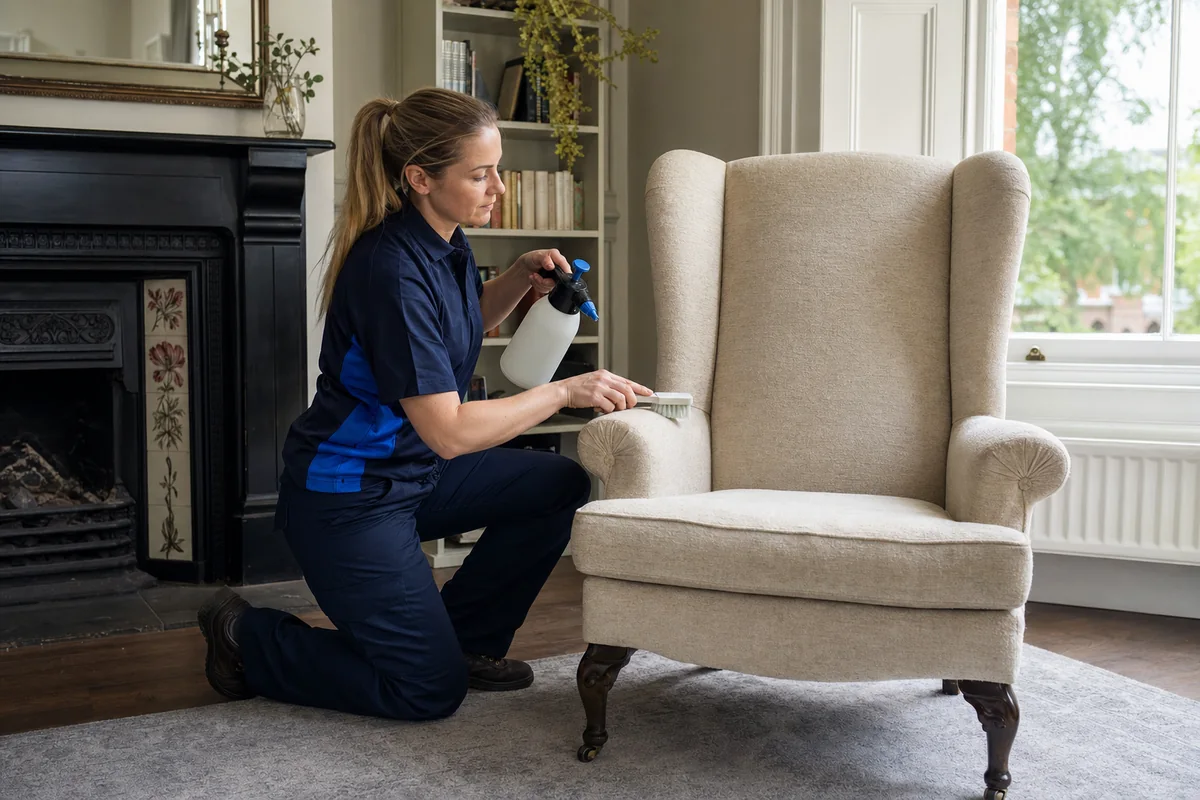
Pre-vacuuming removes loose dry soil before a fabric is treated with liquid or another cleaning product. That simple stage can improve the later work because grit, dust and crumbs do not become a muddy mixture in the pile or upholstery seam. It also gives the cleaner a closer look at wear, loose threads and hidden marks. The technique must suit the fabric: an aggressive brush that works on a robust carpet can damage a delicate loop, velvet pile or loose trim. Pre-vacuuming is preparation, not a substitute for cleaning attached soil.
Dry soil behaves differently from attached soil
Grit carried in on shoes sits among carpet fibres and can abrade them as people walk. Dust gathers at skirting, under furniture and in upholstery seams. Hair and crumbs may lie on the surface while oily body soil remains attached beneath. Suitable vacuuming removes much of the loose fraction without adding moisture. If wet pre-treatment is applied first, particles can be driven further in or turned into a residue that is harder to extract. The Carpet and Rug Institute’s residential standard calls pre-vacuuming critical before deep carpet cleaning.
That does not mean every fabric should be brushed vigorously. A rug fringe can be caught by a beater bar, a worn sofa seam can be pulled by a narrow nozzle, and a mattress tuft can snag. The cleaner should choose suitable suction and tools and stop if the material begins to distort. Manufacturer care instructions matter. Vacuuming can also reveal that a dark patch is wear or colour change rather than removable dust, giving the technician a better basis for the next stage.
Where a careful vacuum pass helps most
On fitted carpet, entrances and traffic lanes often contain the heaviest dry load. Work slowly enough for suction to collect grit rather than making a rapid cosmetic pass. Edges and corners may require a different attachment. Under movable furniture, a sheltered area can provide a useful comparison with the busy floor. Move heavy pieces only if planned and safe. Our guide to preparing a room for carpet cleaning covers access without unnecessary lifting.
On upholstery, loose soil collects at seat joins, along piping, beneath removable cushions and around arms. A clean, appropriate attachment helps avoid transferring dirt from an earlier job. On a mattress, quilting channels and border seams may hold dust, but the maker’s guidance and the strength of the ticking should govern how they are approached. Do not jab a hard crevice tool into a tuft or pull loose stitching. The goal is to remove what is accessible without claiming to extract every particle from an inaccessible filling.
It helps inspection as well as soil removal
After dry soil is removed, stains and wear may become easier to see. A cleaner can identify a stiff residue, frayed seam or colour change that was hidden by dust. This is the point to reconsider the planned method, not automatically apply a stronger product. If a spill may have entered underlay or cushion filling, vacuuming the surface does not reach that source. Tell the cleaner about accidents and earlier treatments even if the item looks cleaner after vacuuming. A clean face is not evidence that deeper contamination has disappeared.
Photographs before and after the dry stage can sometimes show how much of the apparent problem was loose soil. Use comparable light and avoid judging a pile solely by colour, since vacuum direction changes how it reflects. A dark traffic lane may remain because oily soil, compression and wear coexist. Our guide to carpet wear around furniture explains why those causes need different expectations.
The next cleaning stage still matters
Pre-vacuuming will not remove every attached residue, grease mark or old stain. A technician may apply a controlled pre-treatment and use hot water extraction or a low-moisture method suited to the material. The amount of product, agitation and recovery should be chosen after inspection. More vacuuming alone will not undo dye loss or worn fibres, while more detergent alone will not improve a poorly prepared carpet. A full process combines dry-soil removal with the treatment needed for the remaining soil, then allows safe drying.
Ask whether the quote includes pre-vacuuming and what it covers. A provider may expect the customer to carry out ordinary vacuuming before arrival, but the professional still needs to judge whether dry soil remains before applying moisture. Our carpet cleaning and upholstery cleaning services involve different materials, so one brush setting should not be assumed for both. The price guide offers starting context; compare quotes by the actual stages and items included.
After the visit
Once a carpet or upholstered item is fully dry, suitable ongoing vacuuming helps control new dust and grit. Follow the maker’s directions for pile and attachments. Do not vacuum a damp area aggressively to speed drying, and do not return a rug to a damp floor. A regular maintenance routine can delay the build-up that requires a restorative clean. In a busy entrance, a clean mat and frequent dry-soil removal may be more effective than repeatedly wet-cleaning the same lane while grit continues to enter.
Pre-vacuuming is worthwhile because it separates a removable dry load from soil that needs another method. Done carefully, it improves access to the fibre and gives the cleaner an early chance to spot damage. Done with the wrong tool or on an unsuitable item, it can cause the very wear cleaning is meant to avoid. The practical standard is not simply “vacuum first”; it is “remove dry soil in a way this particular fabric can tolerate, then choose the next stage based on what remains”.
In a commercial setting, the importance of this stage can be easy to miss because a carpet is vacuumed routinely by another team. Ask when it was last maintained and whether entrances, chair areas and edges received the same attention. A cleaner should still inspect the dry-soil load before restorative work, rather than assuming the scheduled vacuum was thorough. On a furnished rental, a sofa may have been used for years without its cushions being lifted; that neglected seam needs a different pace from an open carpet. These differences are reasons to specify the actual items and condition, not to add one automatic machine pass to every textile.
Keep the dry-stage observations in the job notes so the later result can be understood.