
How to Care for a Rug After Professional Cleaning
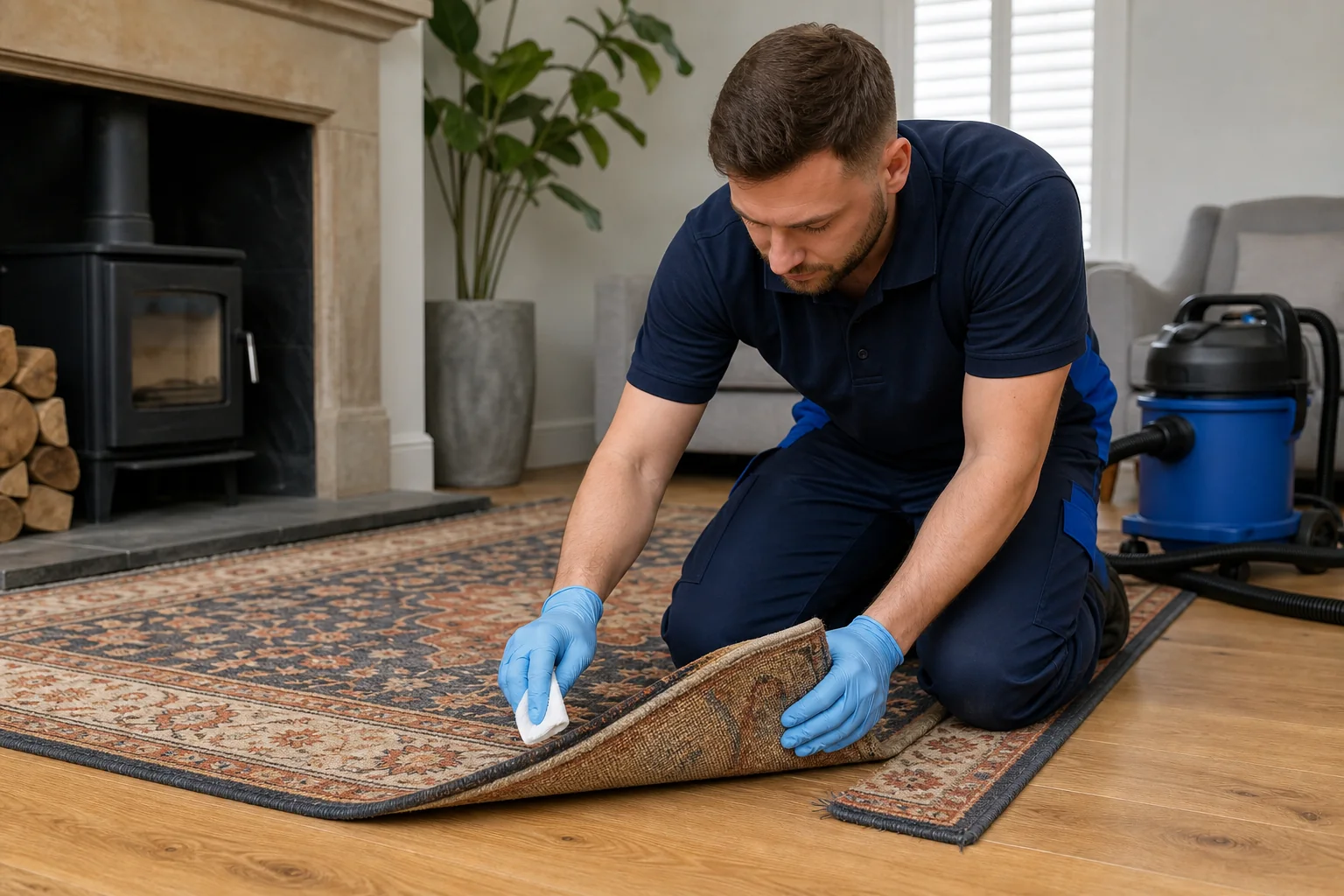
After professional cleaning, the most important immediate task is allowing the entire rug to dry as the cleaner advises. Pile tips can feel dry while the foundation, backing or fringe roots still hold moisture. Returning a damp rug to timber flooring, rolling it for storage or placing heavy furniture on it can create a new mark or odour. Aftercare should reflect the actual rug and method, not a universal number of hours.
Before the cleaner leaves, ask which faces were treated, how the rug was positioned for drying and when it can return to normal use. If the rug was cleaned in place, ask how the floor beneath was protected and checked. If it was taken to a workshop, ask whether the rug is fully dry on return and how any packaging should be removed.
Check both faces before replacing the rug
Feel and inspect the pile, edges, fringe roots and underside where safely accessible. A cool surface is not always wet, but a damp cloth, unusual smell or obvious wetness warrants more drying and a call to the cleaner. Do not lift a large heavy rug alone to check its backing. Ask for help or follow the technician's handling guidance. The floor should also be dry before the rug goes back.
The In-Home Rug Cleaning: When Is It Appropriate? explains why moisture beneath a rug can affect timber or laminate. A non-slip pad should be checked separately and replaced only when dry. If a spill affected the pad or floor before cleaning, they may need their own treatment; a clean rug cannot dry a wet surface underneath.
Give pile and fringe time to settle
Some rugs show grooming lines or a different shade while the pile lies in a new direction. View the dry rug from more than one angle before deciding there is a new stain. Wool and other pile fibres may also take time to settle under normal use. Do not scrub an apparent shade change with a stiff brush or wet it again. If a mark has a sharp edge, odour or sticky feel, photograph it and ask the cleaner to assess it.
Fringes need gentle handling. Do not comb hard through weak threads or trap them beneath a table leg. They may dry differently from the main field and show old dye movement or wear more clearly after the surrounding rug is cleaner. The guide to How Professionals Inspect and Clean Rug Fringes helps distinguish those possibilities.
Return furniture carefully
Wait for the advised dry condition before replacing a heavy sofa or table. Furniture feet can compress damp pile, transfer finish or leave a difficult indentation. Use suitable floor and furniture protection where the maker permits it, and lift rather than drag heavy items. If the rug has been rotated, check that edges lie flat and do not create a trip hazard.
A rug that curls at an edge after cleaning should not be forced flat with water or strong heat. Its backing, binding or foundation may have changed, or it may need time under suitable conditions. Photograph the dry edge and discuss it with the cleaner. Persistent curling or delamination may require repair advice rather than more cleaning.
Resume care according to the rug
Follow the manufacturer's vacuuming guidance, particularly for fringes, loops and delicate pile. Regular suitable dry soil removal can slow new dullness, but aggressive beater bars may damage weak threads. An entrance mat may reduce grit reaching a rug in a busy route if it is kept clean and does not create a hazard. Avoid a new retail protector or stain product unless the rug maker and cleaner agree it is suitable.
For a fresh spill after cleaning, blot gently with clean white absorbent cloths and protect the floor if liquid passes through. Do not assume the professional clean made every dye stable or the rug waterproof. Record the substance and contact the cleaner if a visible mark remains, rather than trying several household mixtures.
Storage needs a separate dry check
If the rug will be stored, confirm it is dry through the pile and foundation first. Do not roll it while damp or seal it in plastic that can trap moisture. Follow the maker's or specialist's advice on rolling direction, wrapping and storage conditions, especially for valuable or delicate rugs. Ask whether the specialist can supply storage guidance for this rug's foundation and fibre; a generic wrapping method may not suit it.
Keep the cleaning record, any identified limitations and photographs of the dry result. If a stain or odour returns, note when it appeared and whether the underside or floor is affected. The rug cleaning service can review a specific issue; send photographs through the contact page before applying another product. Good aftercare protects both the rug and the surface beneath it.
A rug returned from a workshop
Remove transport wrapping as the provider directs and inspect the rug in daylight before placing it beneath heavy furniture. Confirm whether it was returned fully dry and whether any fringe or dye limitation was recorded. If it must acclimatise or lie flat for a period, follow that guidance without forcing a curling edge with heat. Photograph a mark that was not present in the pre-clean record and contact the provider promptly. Keep labels or notes that describe the cleaning method; they help the next professional avoid unsuitable repetition.
In-home aftercare on a busy route
If the rug lies across a family walking path, plan another route while it dries. A damp pile can pick up soil quickly and furniture feet can leave impressions. Move pets' beds and food bowls elsewhere temporarily. Once dry, return the rug and any pad only after checking the floor beneath. If the rug shifts or curls, address the trip risk rather than waiting for traffic to flatten it. Normal suitable vacuuming can resume according to the cleaner's and maker's advice.
The cleaning method may leave a rug pile temporarily arranged in one direction. Before using a brush to change it, ask whether the rug maker or technician recommends any grooming. A delicate pile may be damaged by forceful brushing, while an ordinary modern rug may settle with gentle use. If a rug has a latex backing, check for powder or new cracking when it is lifted; cleaning cannot restore deteriorated adhesive. Report a structural change rather than attempting to glue the backing at home. Aftercare is not limited to appearance: it protects the rug's shape, underside and the floor it covers.