
How Long Does a Mattress Take to Dry After Cleaning?
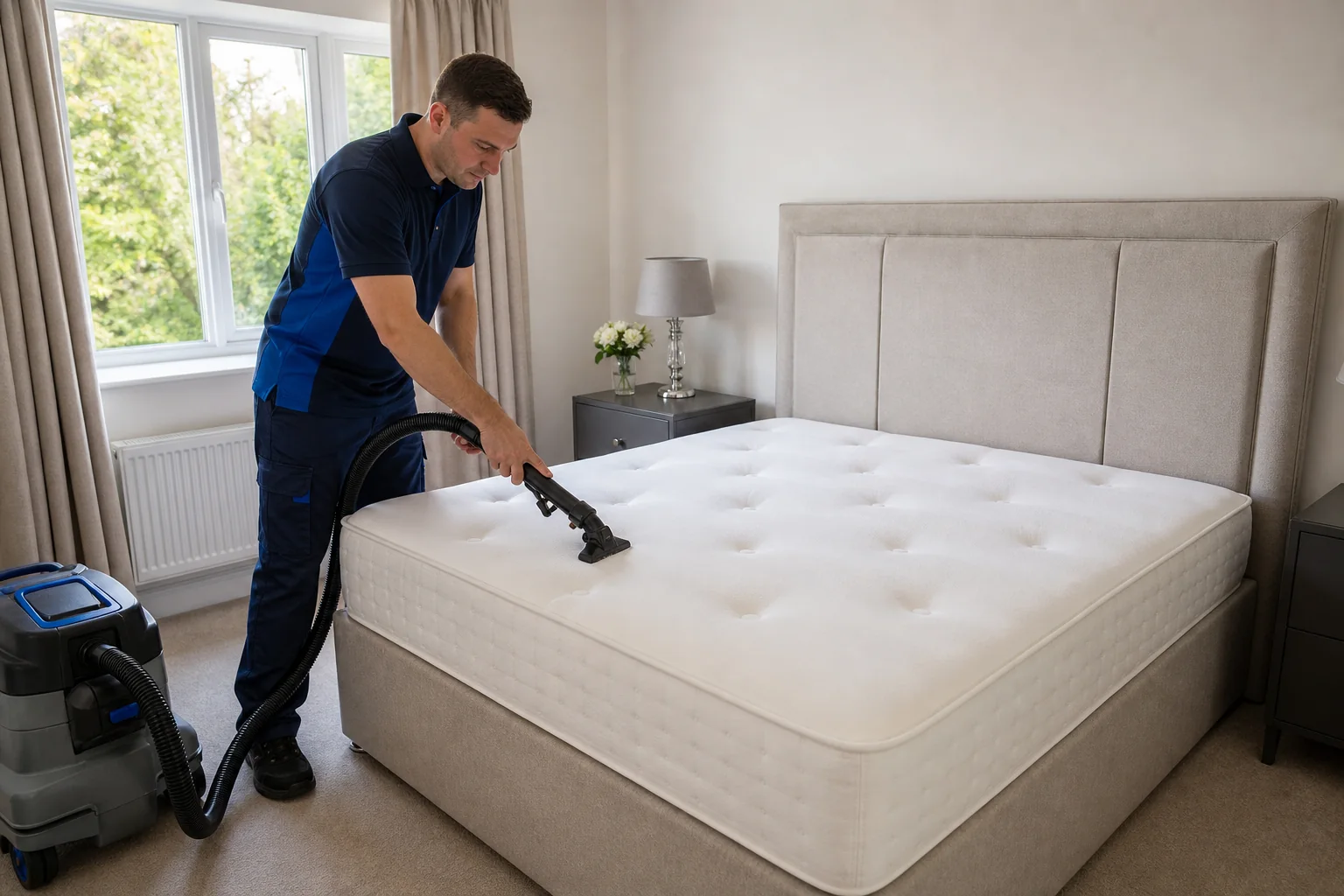
There is no reliable drying time that applies to every cleaned mattress. A thin surface treatment in a warm, ventilated room may dry differently from a deeper wet stain treatment on a thick foam model in winter. The technician should give guidance based on the actual process and the manufacturer's instructions, then explain what to check before the bed is used. The crucial question is whether the treated materials are dry enough to remake and sleep on, not whether a fixed number of hours has passed.
Do not judge only the broad top panel. Seams, quilted channels, sides and the accessible underside can retain moisture after the centre feels dry. A protector or fitted sheet replaced too early can restrict evaporation. If a spill also reached the base, the mattress and support need separate checks.
Construction changes the drying path
Mattresses contain different combinations of ticking, quilting, fibre padding, foam and springs. These layers absorb, hold and release moisture differently. A memory foam mattress may require particular caution because its inner foam is difficult to inspect and the maker may limit wet cleaning. A zip or removable-looking cover does not prove that the inner material can be soaked or that the cover can be laundered.
Tufts and stitched seams add low points where liquid can collect. A solid base may give less airflow below than a ventilated support, though the correct base is the one specified by the mattress manufacturer. The guide to Can Memory Foam Mattresses Be Wet Cleaned? explains why a dry face does not establish that a thick core has dried.
The method matters as much as the room
Ask the technician how much moisture was introduced and how it was recovered. A controlled surface clean should have a different drying demand from an accidental full soak. Repeatedly wetting a returning tide mark can increase the amount of liquid in the mattress even when the top temporarily looks better. A large spill may need a different assessment from routine surface cleaning; an inner layer may remain affected beyond the reach of normal tools.
The cleaner should say which face, border and seams were treated. If the mattress was turned, each side may need airflow. Do not lean a heavy mattress insecurely against a wall or bend a model that should remain flat. Ask for a safe positioning plan for the actual bed and room.
Support ordinary airflow
Ventilate the room in a way that is practical and safe for the weather. Opening a window briefly, using room ventilation or a suitable dehumidifier may help manage humid air, but equipment should not be placed against the mattress. Direct high heat from a hairdryer or heater can affect foam, adhesives and covers while leaving deeper layers damp. The guide to Why Mattress Cleaning Needs Controlled Moisture considers the limits of colder indoor conditions.
Keep bedding, waterproof protectors and toppers off treated surfaces until they are ready for use. Check the base and nearby floor for moisture. If a solid platform or upholstered divan has become wet, it may need separate drying and assessment. Trapping a damp mattress against a damp base defeats the benefit of drying its top.
How to check before remaking the bed
Follow the technician's stated guidance, then inspect the treated face, seams, border and accessible underside with a clean dry hand or cloth. A cool feel by itself may not prove dampness, so look for persistent wetness, unusual odour or a cloth that picks up moisture. Do not press hard enough to damage the cover. If uncertainty remains, allow more airflow and ask the cleaner for advice before using the bed.
If a mark reappears as the mattress dries, photograph its dry outline. Material from a previous spill may be moving towards a drying boundary. That does not mean the bed is ready for bedding or that another broad spray will fix it. Tell the cleaner when the edge appeared and what earlier products were used.
When drying becomes a warning sign
A mattress that remains obviously wet much longer than the technician expected, develops a musty smell or shows possible mould needs a prompt reassessment. A surface clean cannot verify the condition of every inner layer. If the mattress was heavily soaked by an appliance leak or contaminated liquid, a normal cleaning appointment may be inadequate. In some cases replacement is the safer practical decision.
The mattress cleaning service can discuss the treatment and its limitations. For a specific concern, share photographs and the model details through the contact page. Describe the room conditions and whether the base is wet. The response should address the whole drying situation, not issue a universal number of hours.
A sensible plan for the appointment
Book a day when you have another place to sleep if drying might run into the evening. This is especially useful in a cold or humid room. Ask the technician to explain when a protector, topper and sheets can return, and whether the mattress must remain in a particular position. Give the bed the time its materials actually need rather than making the clock the only test.
A cold-room example
Imagine a mattress cleaned on a winter morning in a small bedroom with closed windows and an upholstered divan. The top may feel dry by evening while the border and base remain cool and damp. Remaking it under a waterproof protector could slow the remaining evaporation. Ask the technician how to ventilate this room safely, whether a dehumidifier is useful and which surfaces to check before use. If the bed cannot be left unused overnight, that timing should be discussed before booking. A surface-dry claim without checking the edge and support would give false reassurance.
If the technician recommends a fan or dehumidifier, ask where to position it so airflow reaches the treated surfaces without blowing dust onto them. A dehumidifier can help remove moisture from room air, but it does not prove that the mattress core has dried. Empty and use it according to its manual. A window left open in wet weather may raise humidity instead of lowering it, so follow the actual room conditions. The simplest reliable rule is to combine the professional's expected drying plan with checks of the mattress, base and bedding layers before use.