
Sofa Cleaning Codes and Care Labels Explained
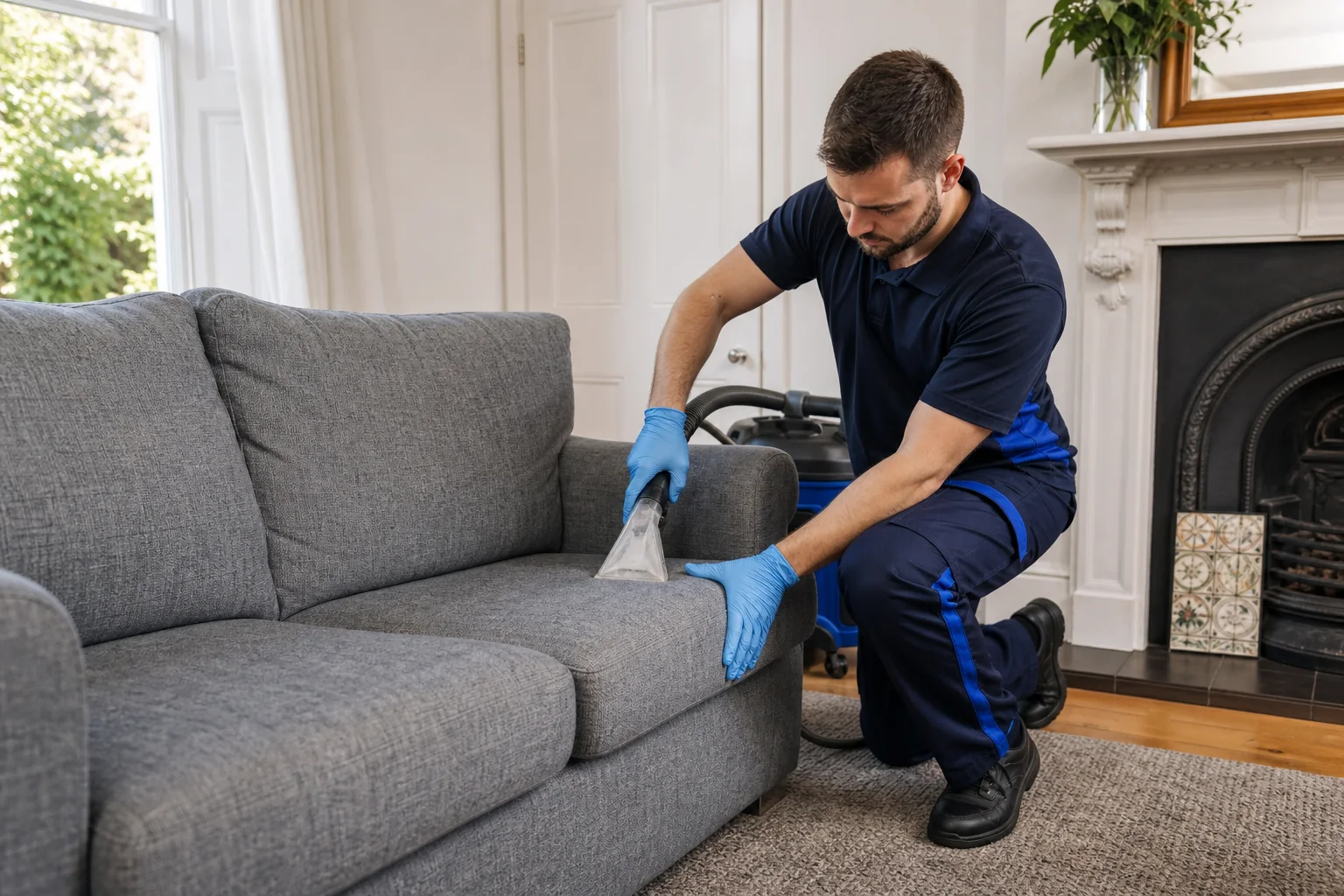
Direct answer: A sofa care code gives a starting restriction on suitable cleaning agents, not permission to saturate the furniture. W generally points to water-based spot products, S to suitable solvent methods, W/S to either type where the maker allows it, and X to vacuuming or gentle brushing only. Follow the sofa's own label and instructions first.
Find the right label for the right item
Check beneath cushions, under the frame and in purchase paperwork. A sofa may have a label for the upholstery cover, separate instructions for removable cushions and different guidance for a decorative fabric panel. The code on another brand's website is not a substitute for the instructions for your exact product. Some UK furniture may use wording rather than the familiar letter codes. If the label is missing or unclear, ask the retailer or manufacturer before putting a product on the fabric.
A zip does not prove that a cover is designed for machine washing. Some zips are fitted for manufacturing or professional access. Removing and washing a cover without permission can cause shrinkage or make it impossible to refit over the cushion. Ask whether the label applies to spot cleaning, full-panel cleaning or removable-cover care. Those are distinct decisions, and a short letter cannot describe every limit on agitation, water quantity or drying.
What W usually means
On manufacturers that use this system, W indicates a water-based upholstery product may be used for appropriate spot cleaning. It does not mean plain water or a domestic steam machine is safe in unlimited quantities. The maker may still require pre-testing, little moisture and careful drying. La-Z-Boy, for example, states that its W-labelled fabric should be spot cleaned with a water-based upholstery product, pre-tested and not saturated. Its instructions for that product do not recommend hot-water extraction or steam cleaning. The instruction belongs to that maker's item, not automatically to every W-labelled sofa.
Water can leave a ring on some fabrics when it moves soil or finishes towards the edge of a patch. Filling beneath the cover can hold moisture after the face feels dry. A cleaner should decide whether local treatment will create a light island or tide mark and whether a broader panel treatment is appropriate. Ask how they will control moisture and check the entire cushion, not only the spot on top.
What S usually means
S generally directs the user towards a suitable water-free dry-cleaning solvent method rather than a water-based cleaner. That does not authorise pouring any household solvent onto the sofa. Products have safety, ventilation and material instructions, and a professional may be better placed to choose and apply them. La-Z-Boy's S guidance calls for a small pre-test, no saturation and no water for its labelled fabrics. A cleaner should also consider trims, backing and filling that may respond differently from the face cloth.
If you already used water on an S-labelled sofa, record what happened and let the area dry before adding another product. A tide mark may result from moved soil or a changed finish; further home treatment can enlarge it. Tell the professional the amount of water and every product used. Do not hide the attempt out of embarrassment. The history helps distinguish removable residue from material change and can prevent an incompatible next step.
What W/S or S/W usually means
These markings can indicate that either an approved water-based or suitable solvent process may be considered. The words 'either' do not mean both should be applied in sequence or that every stain remover is safe. The maker may specify different responses to water-based and oily spills, plus testing and drying limits. A cleaner should choose according to the actual fabric, mark and construction. A pale woven seat with dark piping may need a dye-transfer test before a broader wet treatment despite a general W/S code.
Check the whole label for additional cautions. A performance finish, pile direction or loose cover can change the practical method. A code gives a category of chemistry, while technique still matters: amount, contact time, agitation, removal and drying. A large spill that reached the cushion filling needs assessment beyond what a simple surface-care code can answer.
What X usually means
For manufacturers using the common code system, X indicates no water-based or solvent cleaner should be applied; dry vacuuming or light brushing is the permitted routine. Ashley and La-Z-Boy publish this interpretation for their labelled upholstery. If a significant stain is present, do not override X with a home machine because another sofa responded well to it. Seek maker or specialist advice about whether any professional option exists for the specific item. Some marks may need to be accepted, repaired or addressed through cover replacement.
Vacuum gently with an appropriate upholstery attachment. A catching brush can damage a loose weave or pile. If an odour or dampness is coming from filling, X does not make the underlying problem disappear; it signals that routine face-fabric cleaning has a limit. A specialist may need to assess the item and source separately. Never treat the code as proof that a sofa can be left wet inside simply because the outer cover should not be washed.
Codes do not replace fabric inspection
The cleaner should examine colourfastness, wear, seams, piping, filling and previous products. A care code is printed when an item is new; an older sofa may have weakened fabric or a repaired panel. A small test can reveal dye movement or texture change, but it cannot guarantee that every colour and section behaves identically. A dark arm may contain body oils while a pale seat holds a drink mark. One process may not fit both. The guide to cleaning a sofa without damage places the code within that wider assessment.
For a quote, photograph the label, whole sofa and problem areas, then describe previous products and any earlier tide marks. The sofa cleaning service can discuss the item after inspection; the price guide gives starting information. Ask which parts the cleaner proposes to treat and how they will manage drying. If the label and proposed method seem to conflict, pause and seek clarification before work begins.
The most useful way to read a code is as a boundary. It tells you which broad approaches the maker may permit, but not which exact product will remove a particular stain or whether the cover and filling are sound today. Keeping the full care instructions with the furniture helps every later cleaning decision.
If a sofa has been reupholstered, the old frame label may refer to the former fabric and be misleading. Keep the new fabric specification from the upholsterer and tell the cleaner about the change. Similarly, a replacement cushion cover bought separately may need its own instructions. The code is only useful when it belongs to the textile being treated.