
How to Clean a Sofa Without Damaging the Fabric
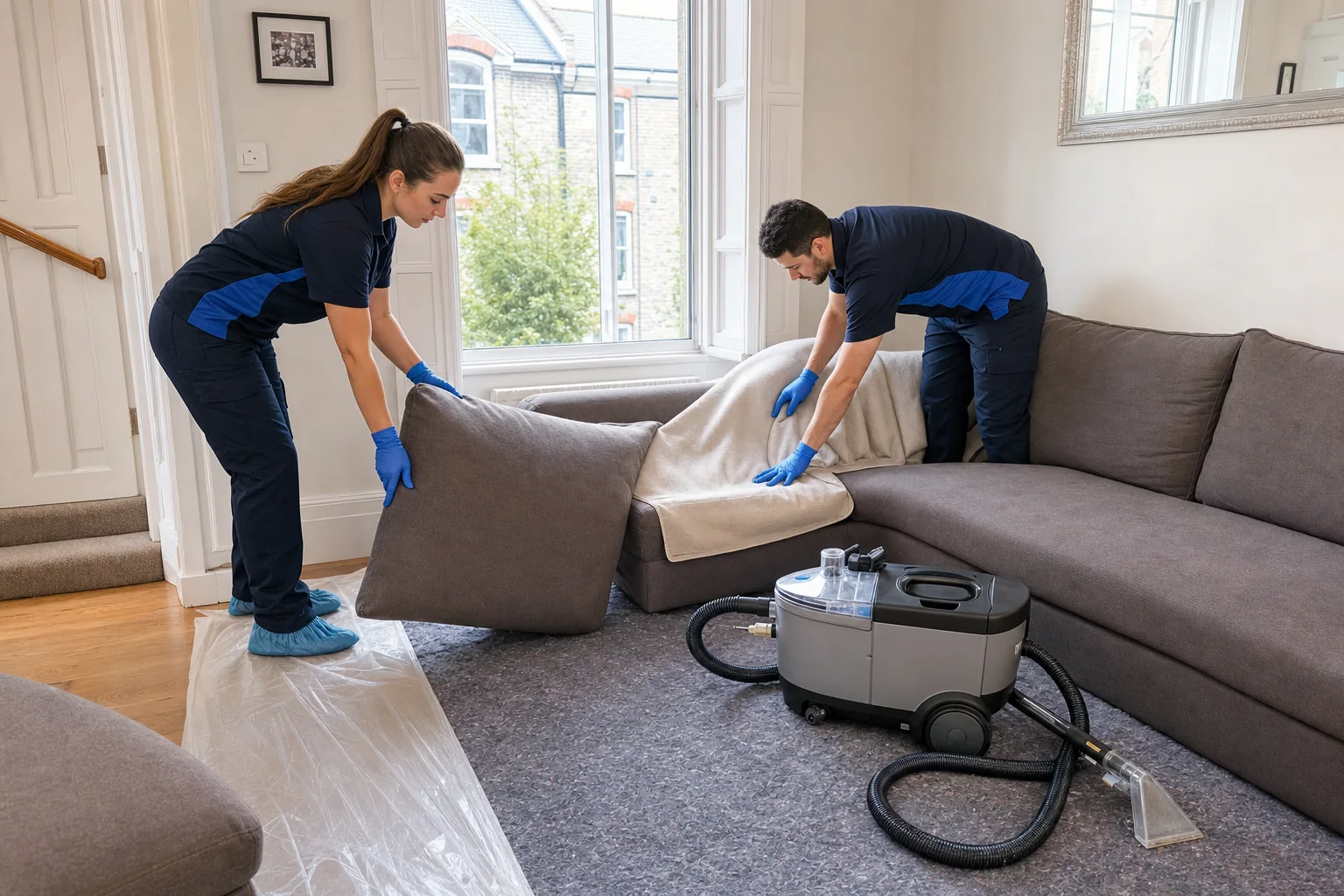
Direct answer: Identify the sofa fabric and its care instructions before applying liquid or product. Remove loose soil with a suitable upholstery attachment, blot fresh spills gently and test any permitted treatment in an inconspicuous area. A cleaner should consider fabric, dye, filling, trims and drying, not just the visible seat surface.
Find the care information before choosing a method
Look under a cushion, beneath the frame or in the purchase documents for the maker's fabric and cleaning instructions. Some manufacturers use codes such as W, S, W/S and X, but those letters must be read in the context of that maker's full guidance. They do not guarantee that every water-based or solvent product is safe or that the entire sofa can be saturated. If the label is missing, contact the retailer or ask a trained upholstery cleaner to assess the fabric. Do not infer the method from colour or softness alone.
The cover may contain more than one material. Piping, buttons, a contrasting back panel and the seat fabric can behave differently. A loose cover may have different wash instructions from the fixed body. The filling below can retain liquid after the surface feels dry. A professional should look at all of these before promising a uniform result. The guide to sofa cleaning codes and care labels explains how to interpret the common markings without treating them as universal permission for a home machine.
Remove dry soil without rough handling
Use an upholstery attachment and a suitable suction setting to lift dust and crumbs from seats, arms and crevices. A brush that catches a loose weave or frayed seam can cause damage. Check the tool on an unobtrusive area before working over a delicate pile or velvet-like surface. Avoid pushing grit into the fabric with a hard brush. Regular gentle care helps prevent soil from binding to body oils on the arms and headrest areas.
Turn or rotate removable cushions only if the maker's guidance permits it and their construction allows it. Some seats are designed to be one-sided or have fillings that need a particular orientation. Do not remove a fixed cover simply because a zip is visible; the zip may exist for manufacturing access rather than home laundering. Compare the protected fabric beneath a cushion with the exposed surface: colour differences can reflect sunlight and wear, not only dirt that cleaning will remove.
Handle a fresh spill with restraint
Keep the area safe if the drink is hot or a glass has broken. Lift solids carefully, then blot liquid with a plain white absorbent cloth. Work from the edge towards the centre and change the cloth as it absorbs colour. Do not scrub or pour water across the seat. Liquid can spread to the filling and return as a ring as it dries. A food spill containing oil, milk or sugar may need a different treatment from plain water; record exactly what it was.
Before using a product, read the sofa's care guidance and the product label. Test only as instructed and allow the trial area to dry fully before judging colour and texture. An untested cleaner can leave a tide mark or move dye from piping into a pale panel. A strongly coloured or large spill is a good reason to seek professional advice promptly rather than apply several household remedies. La-Z-Boy's fabric-care guidance advises identifying the fabric and code, pre-testing and avoiding saturation for its labelled products.
Why a whole-seat clean may be different from spot work
A small treated patch can look like a light island on a generally soiled cushion. Cleaning the whole panel may give a more even appearance, but it also exposes seams, filling and trims to a larger process. A professional should decide after inspecting fabric stability and the extent of soil. Arms and headrests often hold oily contact soil that needs a different targeted approach from a coffee spot on the seat. A blanket promise that one foam will refresh every surface ignores these differences.
Some visible changes are not soil. Pilling, flattened velvet pile, worn arm edges and fading may remain after suitable cleaning. If a coloured garment has transferred dye, the upholstery itself may be colourfast while the foreign dye is difficult to remove. Ask the cleaner what can reasonably improve and what is a material change. Photographs in stable light before and after drying help make that distinction.
Drying is part of fabric care
The surface can feel dry while cushion filling remains damp. Follow the cleaner's guidance on ventilation, cushion position and return-to-use time. Do not sit on a damp sofa or put loose cushions tightly against each other if airflow is needed. Avoid intense direct heat that might affect fabric or foam. A specific drying time cannot be guaranteed without considering fabric, filling, method, room temperature and humidity. If a new odour or damp patch persists, contact the cleaner rather than covering it with a throw.
Do not return decorative cushions or a coloured blanket until the upholstery is ready; dye can transfer onto damp fabric. If removable covers were separately laundered in line with maker guidance, confirm that both covers and fillings are dry before reassembly. The guide to sofa drying after cleaning explains the factors that change timing. Drying advice is as important as product choice for a safe result.
Decide when professional help is useful
Consider a specialist for a valuable or delicate fabric, widespread oily soil, a large spill, unknown cleaning code, unstable dye or earlier tide marks. Give the company the sofa's make, fabric information, number of seats, stains and any previous products. Our sofa cleaning service can assess the actual construction; upholstery cleaning information covers other furniture types. The price guide gives starting figures, with the method and scope confirmed for the item.
The safest sofa-cleaning plan is specific: identify the fabric, remove dry soil gently, respond to spills without spreading them, test a suitable process and let the entire item dry. Good cleaning improves what can be removed while respecting the cover and filling that must remain in use afterwards.
Keep the maker's care leaflet after the job. A future cleaner will benefit from knowing the exact fabric, the method used and whether any panel developed a ring or took longer to dry. If the sofa has been reupholstered, note that the original label may no longer describe the current cover. A sample of the new fabric or information from the upholsterer becomes more useful. This record helps avoid repeating an unsuccessful treatment and lets the next visit focus on the actual soil rather than rediscovering the furniture's construction.