
Carpet Cleaning for Offices: Planning the Visit
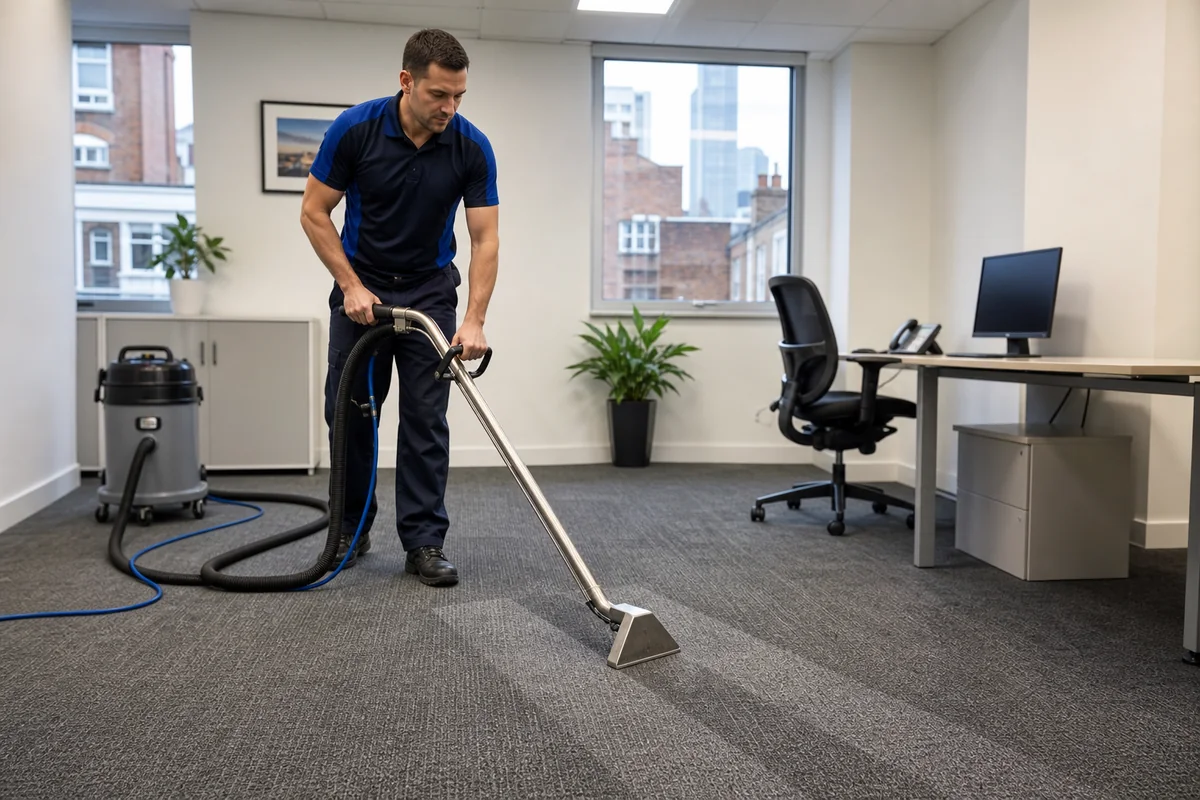
Office carpet cleaning is a scheduling and access project as well as a textile service. The work must fit staff hours, equipment routes, furniture, security rules and the time needed for the floor to dry before normal traffic resumes. A whole-office clean may not be necessary when only entrance lanes and meeting rooms are heavily soiled. Start by mapping the areas, their traffic and the reopening deadline, then ask a provider to recommend a maintenance or restorative method for the actual carpet.
Survey the floor by use
Identify entrances, lift lobbies, corridors, desk rows, meeting rooms and sheltered offices separately. A mat at the entrance can capture grit, but it needs maintenance itself. Chair castors and turning points may compress or wear pile even when soil is removed. Photograph representative areas in consistent light and note stains, odours, loose tiles or lifted edges. A cleaner can then distinguish removable soil from a tile that needs repair or replacement. Treating every square metre at the same frequency can waste time while the busiest lanes continue to deteriorate.
Ask facilities staff about manufacturer care guidance and previous treatments. Carpet tiles may have a specific maintenance programme; fitted broadloom may have different backing or installation limits. A water leak or persistent damp patch is not a normal cleaning item. Fix the source and assess the floor construction before routine extraction. The Carpet and Rug Institute’s facility maintenance advice emphasises regular vacuuming of high-traffic areas as part of keeping carpet serviceable.
Choose a realistic closure window
Decide whether work can happen during normal hours, after staff leave or over a weekend. Include the time for equipment setup, inspection, treatment, recovery and drying. A late-evening booking is only useful if ventilation and building access continue after the crew leaves. Ask when the floor can be walked on lightly and when desks, chairs and full foot traffic can return. Those may be different moments. Our guide to low-moisture carpet cleaning explains one method that may reduce downtime, together with its limits.
Nominate a decision maker with authority to approve a changed scope. The technician may discover a weak tile, unstable dye or old adhesive that makes the planned method unsuitable. If no one can answer, work may be delayed or a risky area left untreated. Confirm the building’s alarm, keys, lift booking, loading bay and any restrictions on noise or water disposal. A portable machine or different route may be needed where vehicle access is poor. Put these details in the quote request rather than relying on the cleaner to discover them at reception.
Prepare furniture and equipment
Clear loose cables, boxes and small items from the target zones. IT equipment, floor boxes and power leads deserve particular care; do not leave a cable hidden beneath a chair mat where hoses may catch it. Agree which light chairs can be moved and which heavy desks or cabinets will stay. A cleaner should not lift a bank of workstations without planning and suitable help. Map the excluded areas beneath immovable furniture so the final scope is clear. Protect delicate skirting and newly finished surfaces along the equipment route.
If staff will remain on site, cordon off the working zone and maintain a safe route to exits. Do not ask people to step over hoses or across wet carpet because a corridor is the shortest path to the kitchen. In a shared building, coordinate with the manager or neighbouring occupiers where necessary. A clear notice stating the area and expected reopening point is more useful than a vague message that “the carpets are being cleaned tonight”.
Match method to soil and downtime
Low-moisture interim methods can improve appearance with limited downtime on some maintained carpets; restorative hot water extraction may be needed at planned intervals for deeper soil. The Carpet and Rug Institute’s maintenance discussion describes both roles. Neither should be chosen solely for a marketing claim of instant dryness. Ask how dry grit will be removed first, what product is used, how soil and product leave the pile, and whether follow-up vacuuming is required. A weak or damaged tile may need replacement rather than more aggressive cleaning.
Our carpet cleaning service can assess suitable work, while the price guide provides starting context. An office quote should state the measured area, affected zones, access hours, furniture assumptions and any specialist spot work. Compare providers on that scope rather than a per-square-metre figure detached from the building. A phased plan may treat the entrance and main corridor first while less-used rooms continue normal operations.
Handover and the next maintenance cycle
Before reopening, check dryness, edges, thresholds and any area where furniture will be returned. Ask the technician to identify marks that remained because of wear, dye change or a risk in the material. Keep a written record of zones cleaned and the method used. If a spot reappears after drying, photograph it and ask for an assessment before adding another office product. A clean that looked uniform while damp can reveal pile direction or old wear in normal light.
Review vacuuming and entrance matting after the visit. The busiest lanes may need more frequent dry maintenance than sheltered offices. Record how long the appearance lasts and whether particular chair areas wear quickly. That information can guide rotation or replacement of carpet tiles, changes to matting and the timing of the next professional clean. The best office plan is not one annual appointment for every area; it is a repeatable programme that keeps routes presentable while limiting disruption and recognising when cleaning cannot fix worn flooring.
Agree the reopening check
Name the person who will inspect the space before staff return. They should know which corridors were treated, which rooms still need ventilation and whether temporary barriers may be removed. Do not judge the carpet solely by a dry-looking entrance if a thicker section by the meeting room is still damp. Check that chairs, cable covers and mats have been returned safely, without trapping moisture or creating a trip risk. If a lift lobby or shared stair is involved, coordinate its reopening with the building manager rather than assuming office staff can make that decision alone.
Keep the cleaning log available to the next provider. It can show which product and method were used, where a stain was tested and whether a worn tile was flagged for replacement. This record makes later work more efficient and helps separate new spills from conditions already observed. It also gives management a practical measure of value: whether the cleaning improved the areas that mattered and how well the floor remained serviceable under ordinary traffic.