
Dry Carpet Cleaning: Advantages and Limitations
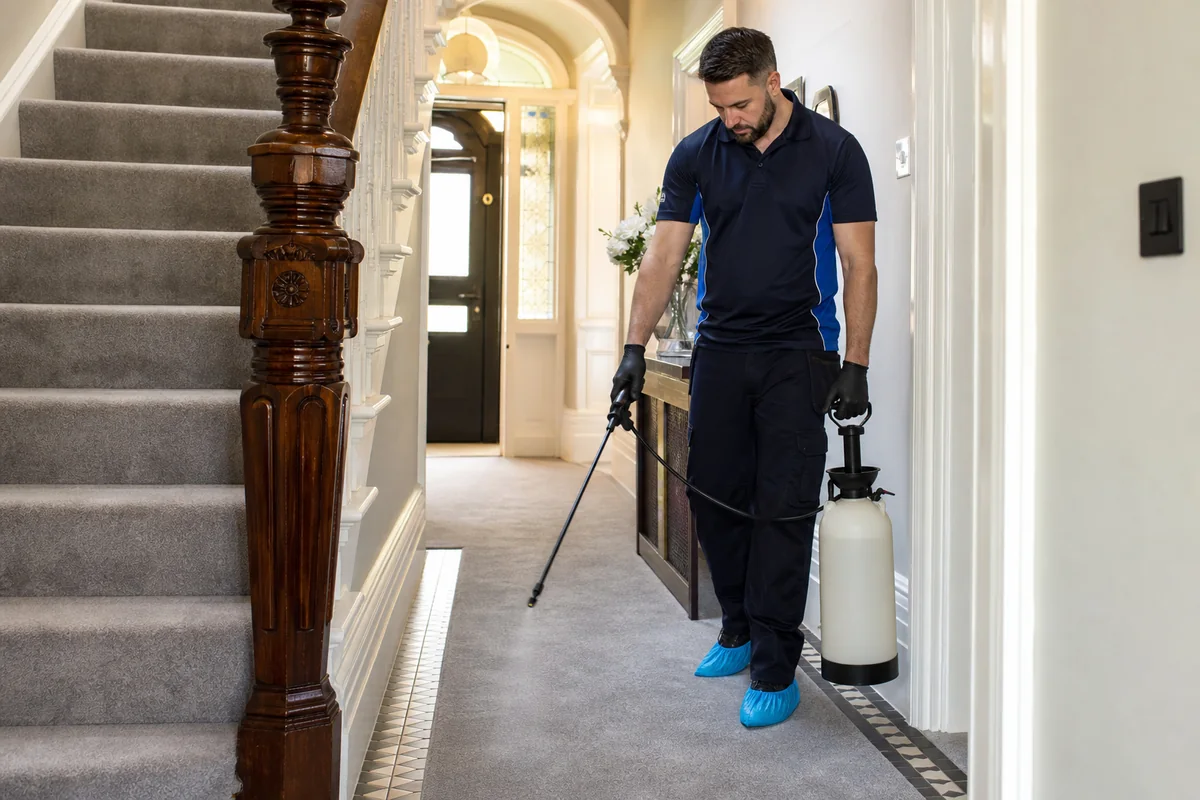
“Dry carpet cleaning” usually means a low-moisture process, not one that uses no liquid or leaves no product behind. Different systems use absorbent compounds, encapsulation solutions or pads. Their common appeal is shorter disruption and potentially quicker use of a room than a full wet extraction visit. The trade-off is that they may not remove the same soil load from every carpet, especially where deep contamination or old residues are involved. Choosing a method starts with the carpet’s condition and the time available for drying, not with a promise that one label solves every problem.
Clarify which low-moisture system is proposed
Ask the provider what will be applied and how it will be removed. An absorbent compound is worked through the pile and later vacuumed. An encapsulation product is applied in a controlled amount, allowed to dry and then removed through subsequent vacuuming as specified by the system. Pad or bonnet cleaning may primarily affect the upper pile and can be unsuitable if aggressive friction distorts the yarn. These are different processes with different maintenance needs. A quote that says only “dry clean” hides the steps that matter to your carpet.
Inspection comes first. Fibre, backing, pile construction, previous treatments, seam condition and manufacturer care guidance can change what is suitable. Dry vacuuming before the treatment is still important, because grit left in the pile can abrade fibres and reduce the effectiveness of later work. A delicate or loose loop pile may not tolerate a machine action that is routine on a robust office carpet. Colour stability should be tested where uncertain. Low moisture does not mean zero risk to dye or backing.
Where the method can be useful
A low-moisture interim clean can improve appearance on a maintained carpet when a room has limited closure time. In an office, that may allow a high-traffic lane to be treated between deeper scheduled cleans. In a home, it may be considered where the carpet’s construction or access makes heavy wetting undesirable. The Carpet and Rug Institute’s maintenance discussion describes low-moisture encapsulation as a way to improve appearance with limited downtime, alongside periodic hot water extraction. That supports treating it as one part of a maintenance programme rather than a universal replacement for restorative cleaning.
The amount of soil matters. A lightly dulled surface can respond differently from a carpet packed with dry grit and oily residues. The operator should explain the expected improvement and whether a more thorough extraction visit is planned later. If the carpet is only cleaned at the visible face while old contamination remains beneath, a quick visual improvement can be temporary. Ask what evidence will be used to decide whether the carpet needs more than an interim process.
Important limitations to discuss
Pet urine in underlay, a large drink spill that reached backing, active dampness or a persistent odour cannot be diagnosed from the pile’s appearance alone. A low-moisture treatment may avoid adding much water, but it does not automatically reach or remove a hidden source. Repeated product application without sufficient removal can leave residues and make a later restorative clean harder. A stain caused by dye loss, bleach or fibre wear will not disappear because the carpet was cleaned with less liquid. Record such features before treatment and ask for a realistic aim.
Some carpets have warranties or manufacturer recommendations that mention particular professional methods. For example, Shaw Floors’ care information discusses hot water extraction and proof of periodic cleaning for its warranty. That does not establish a rule for every carpet brand. Check the installed carpet’s own documentation. A cleaner should explain how the proposed low-moisture service fits that guidance, especially if the visit is intended as the only professional cleaning in several years.
Drying and aftercare still matter
Even a low-moisture system may leave the carpet slightly damp or require time for product to dry before vacuuming. Ask when the room can be used, whether furniture can return immediately and who will perform the follow-up vacuuming if the system requires it. A room that feels usable quickly is not necessarily ready for a heavy rug or furniture pad to trap residual moisture. The provider should state the aftercare for the actual product and carpet. Do not improvise by washing out a compound or applying a second household product when you see granules or a mark.
Judge the result after the specified drying and vacuuming stages. A small amount of remaining compound may indicate incomplete removal; rapid resoiling can have several causes, including residue, oily traffic soil or poor routine maintenance. Photograph the issue and ask the cleaner to inspect it. Regular suitable vacuuming between professional visits will often do more for appearance than repeated quick treatments of the same neglected lane. Our guide to cleaning frequency explains why traffic and maintenance matter more than a single fixed interval.
Comparing a quote with hot water extraction
Ask both providers to describe pre-vacuuming, product use, agitation, soil recovery, drying time and expected result. For extraction, ask how moisture will be recovered and whether an in-tank solution is rinsed. For a low-moisture system, ask what remains in the carpet until later vacuuming and who is responsible for that step. The carpet cleaning service and price guide are starting points; the sensible method and cost depend on material, soil level, access and downtime.
The strongest reason to choose a low-moisture method is a match between its specific process and the carpet’s needs. It may be an efficient maintenance tool for a sound, routinely vacuumed floor with limited closure time. It is less persuasive as a one-step answer to deep odour, heavy embedded soil or structural damage. A cleaner who can explain those limits, the role of future restorative cleaning and the exact aftercare gives you a better basis for comparison than the reassuring word “dry” alone.
For a busy workplace, include the cleaning process in the floor’s wider maintenance record. Note where entrance matting collects grit, how often traffic lanes are vacuumed and whether furniture makes some areas inaccessible. A low-moisture visit may brighten a lane without changing wear beneath castor chairs or at turning points. Photograph those features before and after, then use the results to adjust the next maintenance cycle. That is more informative than repeating an identical treatment whenever the carpet begins to look dull, especially if the underlying cause is poor soil control at the entrance.