
Why Scrubbing a Carpet Stain Can Make It Worse
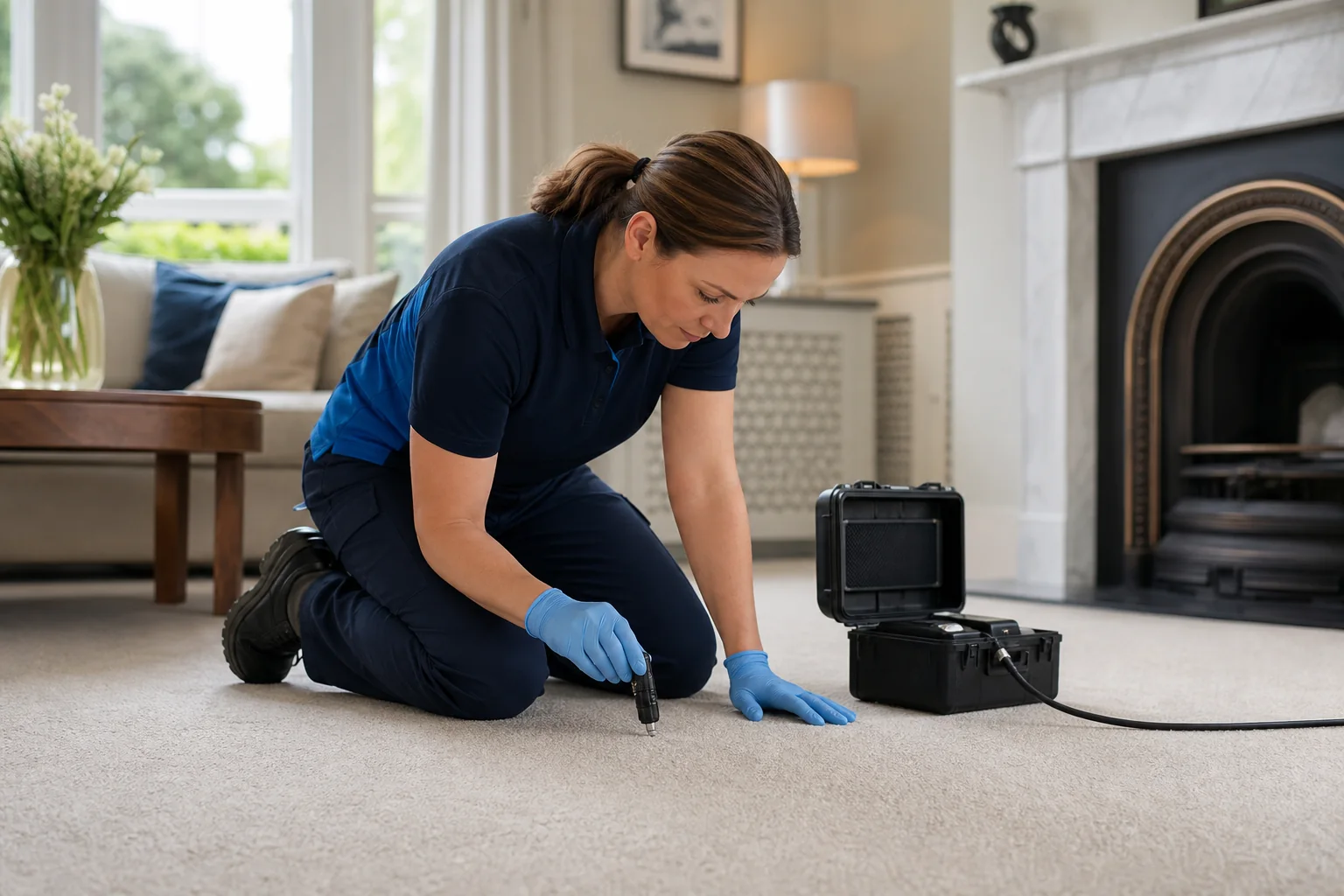
Direct answer: Scrubbing can spread a spill, push it deeper and disturb carpet fibres. Blot a fresh liquid with plain white absorbent material instead, working from the outside in. If colour or residue remains, the next treatment should suit the actual fibre and stain rather than rely on more force.
What friction does to a carpet pile
A carpet is a three-dimensional textile, not a hard tile. Yarn tips stand or loop above backing, and their direction affects how the surface reflects light. Vigorous rubbing can bend, fuzz or pull fibres even if it removes some spill. A cleaned area may then remain visible because its texture has changed. On a loop pile, a catching cloth or brush can tug an existing loose loop farther out. On a worn traffic path, more abrasion can expose pale fibre tips and make the route look larger.
The damage may not be obvious while the area is wet. A freshly damp patch often looks darker, and vigorous brushing can temporarily make compressed yarn stand up. Only after drying may a rough or lighter halo appear. That is why a small test and patient drying are more informative than scrubbing harder each time a mark seems to persist. Cleaning can remove suitable soil but cannot undo all mechanical wear created during the attempt.
How a spill spreads under pressure
Liquid moves through the pile and can reach backing or underlay. A circular rubbing action often widens the wet area and drives colour into neighbouring yarn. It may also move a stain from the tip of the fibre towards its base, where a later treatment is harder. Pressing a saturated cloth repeatedly onto the same spot can return liquid to the carpet rather than lift it. Change cloth or kitchen roll as it absorbs the spill, and use a gentle lifting motion instead of friction.
Work from the outside towards the centre. This helps keep the perimeter from spreading, though it does not guarantee complete removal. If the spill is hot, make the area safe before touching it. If it is an unknown chemical, follow the product's safety instructions and seek appropriate advice rather than treating it as ordinary food. A large spill or one that reaches beneath the pile calls for a different assessment from a few drops on the surface.
Blotting is an initial response, not a whole treatment
Plain white absorbent material avoids the risk of transferring dye from a coloured towel. Blot until little more liquid transfers, then stop. Do not soak the carpet to 'rinse' it unless the carpet and product guidance clearly support the method. An excessive rinse can carry residue deeper into the backing or cause a ring as moisture dries. WoolSafe's advice for fine fibres recommends blotting, limited quantities of suitable products and pre-testing, rather than scrubbing or flooding.
Some spills are not liquids. Lift a solid piece carefully without grinding it into the yarn. Ordinary mud can often dry before loose particles are vacuumed. Gum, wax and grease each need a different response; forcing them with a rough brush is unlikely to help. The important first question is what the substance is and whether it is still moving, not which household stain remover is nearest to hand.
The product can create another problem
Washing-up liquid, laundry detergent and strong all-purpose cleaners may leave residue or affect dye. A brush can then spread the product well beyond the original mark. If the patch becomes sticky, it may attract new soil and appear to 'come back'. Combining a second product with an unknown first one adds uncertainty and may be unsafe. Keep the bottle name and tell a cleaner exactly what was applied. They need to know about earlier chemistry before choosing any further treatment.
Bleach is particularly misleading because it can make a dark stain look pale while removing the carpet's own colour. Scrubbing a bleached area will not restore dye; it may add texture damage. A mark that does not change with gentle blotting might be permanent colour change, pile shading or wear. Check it from more than one viewing angle after drying. The related guide on stain removal limits explains why some visible features are not removable soil.
When to stop and ask for help
Seek an assessment if the carpet is wool or otherwise delicate, the spill is large or strongly coloured, an odour develops, or the area remains damp. A seam, stair edge or loose loop near the stain can limit how much agitation is safe. If a product has already been used, report its name. A professional may inspect the fibre, backing and colour stability, then trial a suitable treatment in a limited area. They should explain uncertainty and stop if further action risks a worse patch.
For a quote, give the size and location of the mark and a short timeline. Photographs in normal light help, but the cleaner still needs to see the material. Our carpet cleaning service can assess whether targeted work is sensible; the price guide describes starting costs rather than a guarantee that every rubbed mark can be removed.
If you have already scrubbed the area
The type of brush or cloth is worth recording. A stiff brush may have abraded yarn tips, while a coloured cloth can transfer its dye. A heated appliance may change a synthetic fibre's shape. These clues help a technician explain why an area looks different even if the original spill has gone. They also inform whether a small safe clean is still useful. If the patch crosses a seam or has a loose loop, mention that before anyone tests it again; mechanical damage can worsen when the same place is worked repeatedly.
Scrubbing can make a homeowner feel that they acted quickly, but speed and force are not the same thing. The first minutes are best used to stop spread, absorb accessible liquid and record the source. After that, patience is often protective. Let a small test dry completely before deciding whether it worked. A wet patch may conceal both a remaining stain and a newly damaged texture. This slower comparison gives the cleaner a clearer starting point and prevents a chain of escalating home remedies.
Let the carpet dry before deciding what remains. A new light or fuzzy halo may indicate pile change; a tacky dark patch may indicate product residue. Photograph the area and note what you did, including the brush, product and amount of water. Do not try to even out the texture by brushing the surrounding carpet. That can enlarge the damage. A cleaner can explain which part is still soil and which part may be altered fibre.
The most useful habit for future incidents is to keep an absorbent white cloth available and know the carpet maker's care guidance. A prompt gentle response leaves a professional more options than a forceful one. The goal is not to remove every visible trace in one minute; it is to lift what can be lifted without changing the carpet beneath it.