
Why Regular Vacuuming Does Not Replace Professional Cleaning
Direct answer: Regular vacuuming removes loose dry soil and helps protect carpet from abrasive grit, but it cannot address every oily deposit, sticky residue or embedded spill. Professional cleaning uses a method chosen for the material and soil. Neither process repairs worn pile or lost colour.
Give vacuuming its proper role
A suitable vacuum removes dust and grit before repeated steps press particles into the yarn. That is a major part of preserving appearance, especially at entrances and along hallways. It is not an optional prelude to a professional visit; it is the routine that keeps a carpet manageable between visits. The machine should suit the pile, and its bag or container and filters should be maintained. A rotating brush that catches loops can do harm, while a machine with poor suction may leave grit behind despite frequent passes.
Frequency should follow traffic and soil entry. A busy family route may need dry-soil removal more often than a spare room. Mats reduce walked-in material if they are placed in the route and cleaned themselves. WoolSafe and the Carpet and Rug Institute both place prevention and routine vacuuming alongside professional cleaning in a maintenance system. The goal is to remove particles before they cause abrasion, not to wait until the carpet looks visibly grey.
What the vacuum leaves behind
Oily soil from footwear, cooking or repeated contact can attach to fibres. Sticky residue from a spill or home product can hold more dirt. A vacuum may remove the dry particles sitting on top while the underlying film remains. An old drink mark or local odour may need a targeted assessment. More vacuum passes cannot dissolve or extract every attached material; pressing harder can wear the pile. A professional can assess whether the soil is removable and which process suits the fibre and backing.
The limit is not always soil depth. A dark path can combine oily soil, flattened yarn and abrasion. Cleaning may improve the first component while the others remain. If a sheltered patch under furniture looks taller and brighter, that contrast does not prove the vacuum failed. Compare colour and texture from more than one angle. A cleaner should explain the likely contribution of wear before promising that a room will become uniform.
What a professional process adds
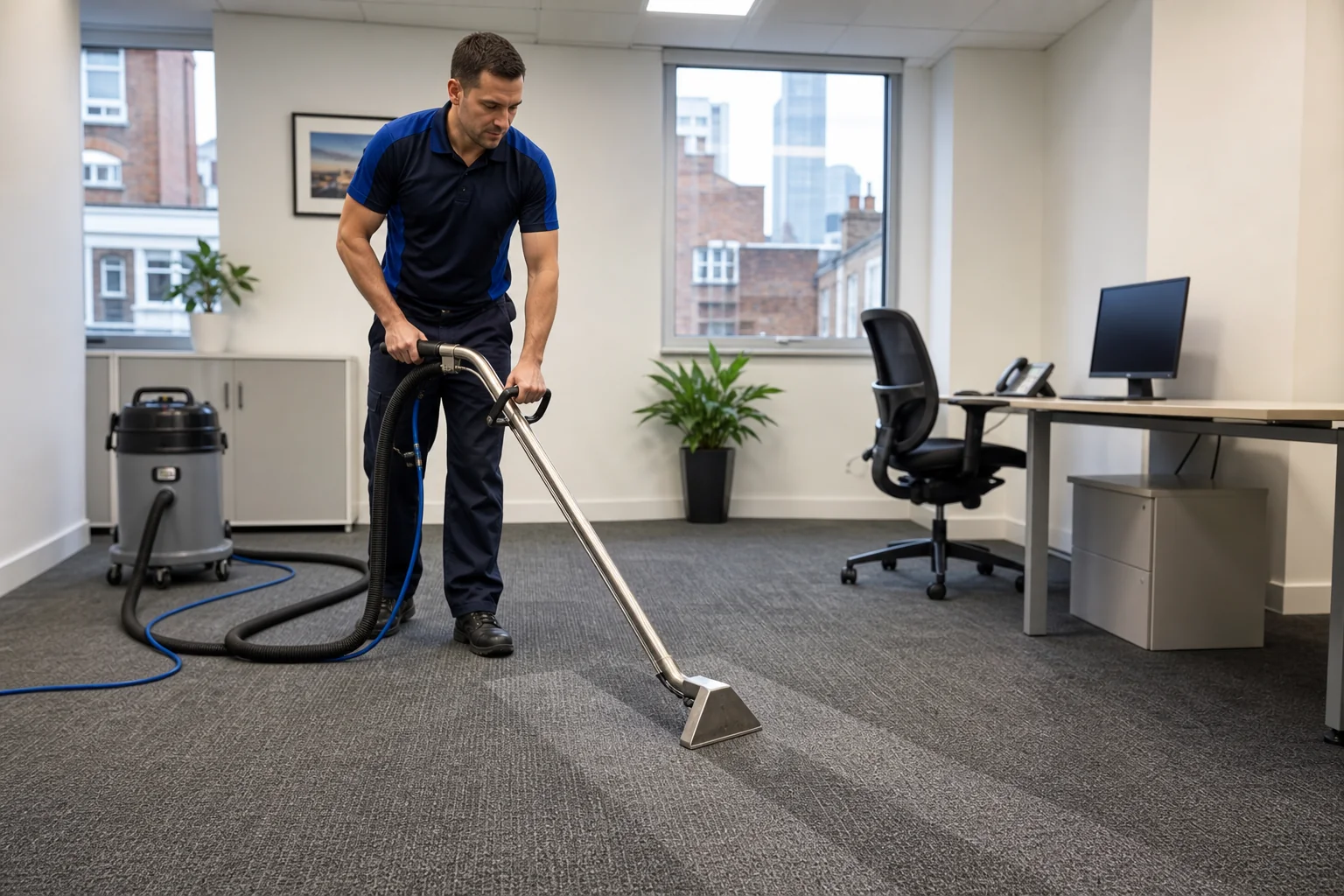
Professional work should begin with inspection: fibre, backing, dyes, seams, traffic, stains and earlier products. Dry soil is removed where appropriate before a compatible treatment is applied. A technician may use extraction or another system suited to the material and goal, then manage product removal and drying. The method is not simply 'more powerful vacuuming'. It addresses attached soil and residues through a controlled process that a routine dry vacuum cannot perform.
Ask why the proposed method fits the carpet. A natural backing, unstable dye or loose seam may limit moisture or agitation even when the face pile looks sturdy. A well-trained cleaner should describe pre-tests, the amount of liquid used, how soil and product are recovered and what aftercare is needed. The Carpet and Rug Institute's residential standard treats those stages as a linked system. A strong machine alone does not compensate for an unsuitable product or poor drying plan.
A rented machine is a separate decision
A domestic or hired machine can be used on some suitable carpets when its instructions and the carpet maker's guidance are followed. It is not equivalent to professional assessment of unknown fibre, dye or backing. Too much detergent may leave residue; repeated wet passes without good recovery can prolong drying. If the carpet has a stain with unknown history, a loose edge or earlier browning, ask for advice before attempting a broad wet clean. A surface that feels dry later does not prove underlay was unaffected after saturation.
Do not use stronger chemistry simply because vacuuming did not shift a dark patch. Bleach can remove carpet dye, and hard brushing can alter pile texture. The guide to common carpet cleaning mistakes explains these risks. The right escalation is diagnosis of the soil and material, not an automatic increase in product strength or water volume.
Set the cleaning interval by condition
There is no universal date when vacuuming ceases to be enough. Traffic, carpet type, household use, entrance protection and manufacturer guidance all affect the interval. A well-maintained spare bedroom can differ from a busy hall even in the same home. Look for dullness that remains after suitable vacuuming, attached spots, a changed feel or an odour with a clear source. Ask a cleaner to assess the condition rather than booking a full-house clean solely because a calendar alert appeared.
The carpet cleaning service can be scoped to the rooms that need it; the price guide provides starting figures. Tell the company how often the carpet is vacuumed and which problem persists. That information helps distinguish a maintenance gap from soil that needs a different process. It can also reveal a permanent appearance change that neither vacuuming nor professional cleaning can reverse.
Keep the result after the visit
The distinction also helps with budgeting. Spending time on effective dry-soil removal can delay how quickly a professional clean is needed, while postponing a necessary deeper clean can allow attached soil to become harder to manage. Neither extreme is efficient. Ask a cleaner which rooms genuinely need treatment now, what maintenance would extend the result and whether a specific stain requires its own targeted work. A clear scope is more useful than a blanket package for every carpet in the home.
Keep manufacturer guidance and service notes together. If a future technician knows the fibre, earlier products and how quickly the carpet dried, they can assess the next job more accurately. This is particularly helpful for a room with a natural backing, unusual dye or past browning. A maintenance record supports both routine vacuum choices and professional method selection without turning the homeowner into a fibre expert.
Follow ventilation and furniture guidance until the carpet is dry. Judge the outcome in similar light to the starting condition and report any sticky patch, unusual dampness or new odour. Then return to appropriate vacuuming. Professional treatment does not seal a room against future grit, and routine maintenance does not eliminate the need for periodic deeper soil removal. The two stages support each other when the method suits the material.
If a dark route returns quickly, investigate why. A dirty entrance mat, active oil source or residue can defeat an otherwise useful cleaning plan. A flattened pile may only appear to return as grooming settles. A clear description of timing and texture helps the technician choose the next step. The practical answer is to use each tool for the soil it can address and avoid asking either to repair the carpet's structure.