
Why Professional Cleaners Inspect Fabrics First
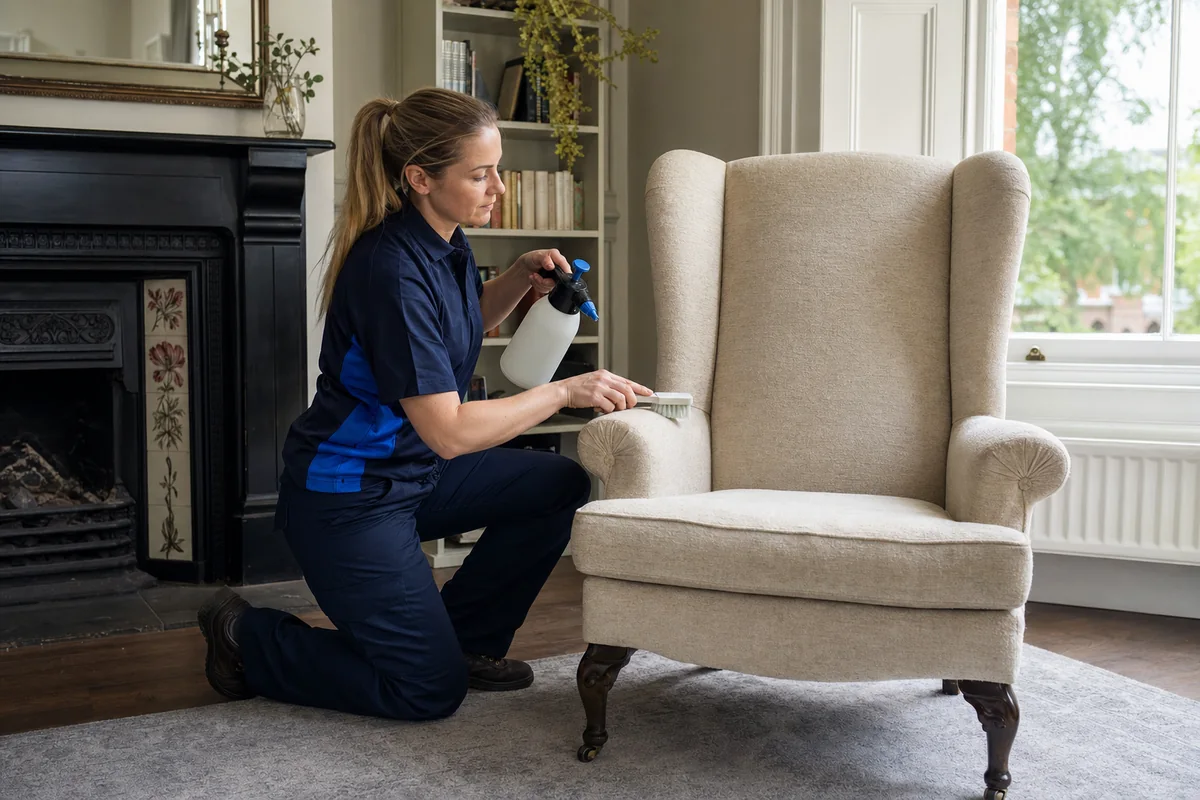
Fabric inspection is the step that keeps professional cleaning from becoming a one-product experiment. A sofa arm, fitted carpet, rug fringe and mattress panel can look equally soiled while having different fibres, dyes, backing and hidden layers. Before applying moisture or a spot treatment, the cleaner needs to identify what the item is, where it is weak and what outcome is realistic. An inspection cannot remove uncertainty entirely, but it can prevent a process that is unsuitable for the material or the problem.
Begin with the item's construction
Check labels and manufacturer guidance if they exist. A label on a removable sofa cover may not describe the filling beneath it; a rug face may have a moisture-sensitive backing; a carpet may be attached to a pad that has been affected by an old spill. The cleaner should examine accessible seams, piping, edges and reverse surfaces without dismantling the item beyond what is safe and permitted. A zip does not automatically mean a cover can be washed. The whole construction determines whether a wet process can be applied and dried properly.
Fibre names alone do not answer every question. Two items described as wool can differ in dye, weave, finish, age and previous treatment. A synthetic upholstery fabric may still have a colour-sensitive trim or adhesive. A carpet with loose seams can be harmed by mechanical agitation that would be ordinary on sound material. Ask the cleaner to point out these details before work begins. A small photograph can help record a weak edge or mark, but physical inspection may reveal texture and bonding that the camera cannot show.
Separate soil from permanent change
A dark patch can be soil, pile direction, abrasion or a combination. A pale area can be bleach damage, fading or a clean patch beside a soiled one. An old stain may have chemically changed dye even if some residue can still be removed. Inspection allows the technician to decide what cleaning might improve and what should be documented as a limitation. Our guide to carpet wear around furniture explains why colour alone is an unreliable diagnosis. Do not ask for repeated wet passes simply because a worn route remains visible.
History is part of inspection. Tell the cleaner when a spill happened, whether it was wet for long and which products or machines have been used. Bleach, detergent, fragrance or a previous solvent can change how a later test behaves. A returning odour may come from hidden padding rather than the surface. The correct plan may include a limited test, a different specialist or no wet cleaning at all. An honest refusal to treat an unstable item is sometimes the best protection for it.
Testing reduces risk but does not erase it
A cleaner may test colour transfer, fibre response or a stain treatment in an inconspicuous area. That gives useful evidence for the proposed process. It cannot guarantee that every coloured motif on a rug or every seat of an old sofa will behave identically. The test should match the intended chemistry, moisture and contact time as closely as practical. If a dye releases or a texture changes, stop and reconsider. Do not interpret a successful test as permission to increase product strength indefinitely.
The Carpet and Rug Institute’s residential carpet standard presents professional cleaning as a series of appropriate maintenance choices and checks, not one universal machine setting. For a delicate rug or upholstery item, the manufacturer’s instructions and specialist assessment carry even more weight. A customer should be told what the test suggests, what remains uncertain and how the method will control moisture and remove residue.
Scope, quote and consent follow the inspection
The original phone quote may be based on photographs and room sizes. After inspection, the cleaner can confirm whether it covers the actual item and stains. If the material is more delicate or the affected area larger than described, agree any change in method or price before work starts. Our carpet cleaning and upholstery cleaning pages describe separate services; a combined job still needs each fabric assessed on its own. The price guide provides starting context, not a guarantee for an unknown textile.
Ask what is included: dry-soil removal, routine pre-treatment, spot attempts, extraction or low-moisture treatment, and aftercare. Clarify whether the work reaches a sofa insert, carpet underlay or rug reverse. A face clean cannot prove that hidden layers are free from moisture or contamination. If an old pet accident has reached padding, a replacement component may be more appropriate than applying more surface product. Recording these limits gives both parties a fair way to judge the result later.
After treatment, return to the starting observations
When the item is fully dry, compare it with the original notes and photographs in similar light. Pile direction and dampness can temporarily alter colour, so do not judge the final appearance while it is still wet. Check the seam or trim that was noted as weak, and follow the technician’s instructions before replacing cushions, rugs or furniture. A new odour, colour change or damp patch should be reported promptly with the original condition and cleaning date. Avoid an untested household remedy that would obscure what happened.
Inspection is valuable because it turns a vague request to “deep clean the fabric” into a specific plan for one material. It identifies removable soil, recognises wear and damage, tests a realistic method and defines what the cleaner can reach. That sequence may take a few extra minutes before a machine is used, but it is what makes the treatment explainable and reviewable afterwards.
In a multi-item property, the order of inspection matters too. Photograph and check each sofa, chair, rug and carpet before moving them around, so an existing mark is not mistaken for something caused during the visit. Note which items belong to the customer and which may be part of a furnished rental. If a cleaner cannot access the reverse of a heavy rug or a fixed cushion, record that limitation rather than pretending the hidden material was examined. The quotation can then state the assumptions under which work proceeds. If a later problem appears, those notes help separate a new issue from a condition that could not be inspected initially.
Keep those observations with the final job record.
They will also help the next cleaner understand what was tested and which areas remained uncertain.