
Velvet Upholstery: Pile Direction and Cleaning Risks
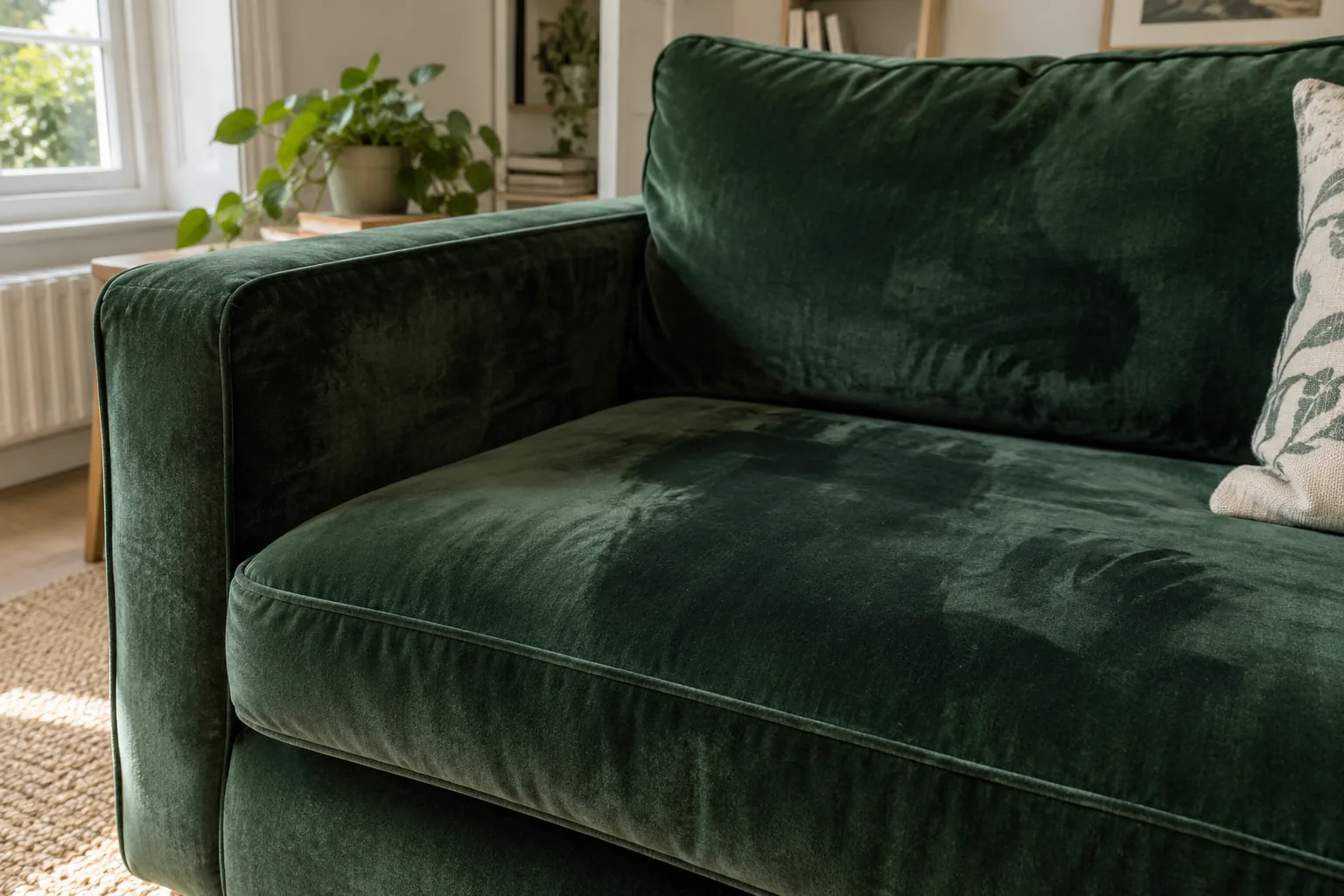
A velvet sofa can appear to change colour when you walk past it. One seat looks pale from the window, then darker from the door; a handprint can remain visible after the hand has gone. These effects are often about pile direction and light, not dirt. Velvet’s short, dense surface fibres reflect light differently when they lean in different directions. Actual soil can also be present, which makes a careful diagnosis more useful than assuming every patch needs a stronger cleaner.
This guide explains what to check before attempting to clean a velvet upholstered piece. The word “velvet” describes a surface construction, not one single fibre or care method. A polyester velvet cover with instructions for professional dry cleaning is not interchangeable with another velvet cover that the maker permits you to machine wash. The label for the exact item takes priority over a generic tip.
Look from more than one direction
Stand on opposite sides of the sofa and compare a suspicious patch in consistent daylight. If it changes from light to dark as your viewing angle changes, the pile is influencing the appearance. Gently stroke a small unmarked area in one direction and then the other with a clean hand, if the maker’s guidance allows. You may see the same change without using water. This is a visual clue, not a reason to brush the entire sofa vigorously.
Small attached bobbles are a different surface problem from directional shading; the guide to sofa pilling versus dirt helps separate them. If you request an assessment through the contact page, include photographs from both viewing directions.
Notice where the feature lies. Broad irregular shading across a seat can be caused by normal use changing the direction of the pile. A clear rectangular impression where a cushion rested suggests pressure. A ring following the edge of a spill suggests moisture or residue. Greasy soil may appear in a regular contact band on the arms. Some marks have more than one cause, so photographs from two angles can be more informative than one dramatic close-up.
Feel the fabric gently. A crushed area may feel flatter than its surroundings. A patch that feels stiff or sticky could contain a spill or an unsuitable cleaning product. A scraped or bare area shows physical loss of pile, which cleaning cannot restore. Keep the distinction in mind when discussing the result you want: removing soil, lifting a temporary impression and reversing worn fabric are different tasks.
Why pressure marks can persist
The pile bends under body weight, cushions, boxes, pets and everyday handling. Some press marks relax with time; others remain, particularly after repeated pressure or when the fabric has been wet and compressed. The maker of one velvet sofa may recommend a soft brush or a particular steaming method to help the pile recover. That advice applies to their product, not automatically to every velvet material.
Never put a hot iron directly on the velvet face. Direct pressure and heat can flatten or change the pile. A household steam cleaner may also deliver more moisture than a cushion can dry safely, or affect its backing and seams. The fact that a garment can be steamed does not establish that a fixed sofa cover can be treated the same way. Check the exact care information and ask the furniture maker if it is unclear.
Where fibres have broken or an area has worn shiny, moisture and brushing cannot grow them back. A cleaner may reduce the soil that draws attention to the patch, but the directional difference may remain visible. This is a reason to inspect velvet before work and record existing pressure marks, not to assume cleaning caused every post-treatment shade change.
Treat dust and spills gently
Routine dust removal should follow the maker’s instructions. Some brands advise a soft brush or microfibre cloth and caution against vacuuming deep pile velvet; other products specifically permit a soft vacuum nozzle. Choose guidance for your sofa instead of treating those instructions as a contradiction to resolve with a guess. Work lightly with the pile and avoid rubbing a stain back and forth.
For a fresh liquid spill, gently blot with a clean white absorbent cloth. Lift liquid from the surface without pushing it into the cushion. Do not saturate the area with water, and do not apply detergent until you know what the fabric can tolerate. A wet mark can draw dissolved residue to its boundary as it dries. Using more water to chase the ring may create a larger one. Tell a professional what was spilled and every product subsequently used.
If a removable cover has a zip, look for the separate care label. A zip alone does not prove that the cover can be washed. Some covers use a different fabric on the underside or contrasting piping that may wash differently. Washing a single removable cushion while fixed panels remain unwashed may also leave an obvious colour difference. Ask the maker whether the cover can be treated independently and how it should be dried and refitted.
What to ask a cleaner before booking
Ask whether they have experience with the exact velvet construction and whether they will test for colour movement, pile change and water marking. Show them any care instructions and photos of the issue in different light. They should inspect the whole piece, including trims, seams and cushion filling, rather than judge only the face fabric. A method suited to a durable synthetic velvet may be inappropriate for a delicate or unknown pile fabric.
Discuss the expected outcome in plain terms. A cleaner may remove surface soil yet leave normal shading. A pressure mark may improve with careful grooming if the fabric and maker permit it, but it may not disappear. A permanent shine or abrasion is wear. Our sofa cleaning service can assess the construction and discuss those limits before recommending treatment.
Ask how the upholstery will be dried and when it can be used again. Sitting on a damp velvet cushion can create new pressure marks. The final appearance should be judged after it is dry, from the same viewing directions as the original photos. A freshly brushed surface can look even for a short while without proving that a permanent underlying change has gone.
Make a realistic care plan
Keep an eye on the maker’s maintenance advice and use light, regular care rather than waiting for a heavy build-up of soil. Avoid placing heavy objects on the seats for long periods, and protect the sofa from avoidable spills. If a favourite seat takes most of the use, check whether cushions can be rotated; some fixed or shaped cushions should not be moved.
If the only concern is a patch that reverses with your viewing angle, cleaning may have little effect on what you see. If the surface feels greasy or dusty as well, a suitable clean could help that part of the problem. The goal is to match the work to the actual condition of the velvet and to protect a fabric whose appearance naturally changes with light.