
Protecting the Bed Base During Mattress Cleaning
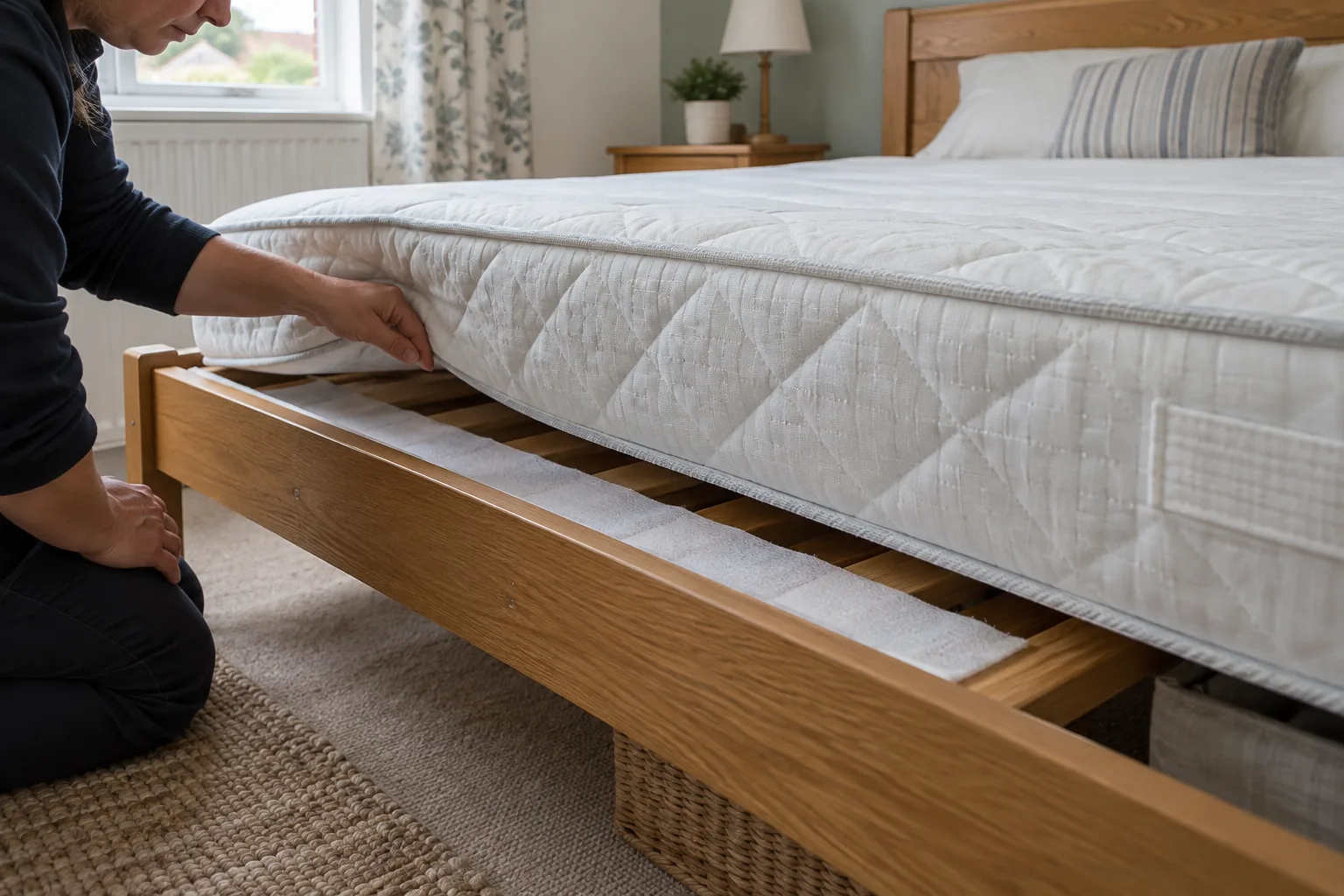
Direct answer: Protect the bed base as well as the mattress during cleaning. Check whether the base is slatted, timber, upholstered or solid; keep overspray and spills off vulnerable materials, and confirm both the mattress and base are dry before reassembly.
It is easy to focus on the mattress top and forget what lies directly underneath. A bed base may be made of wood, metal, upholstered fabric or a solid platform. Each reacts differently if cleaning moisture, an old spill or a product reaches it. A fresh mattress surface will not be a lasting success if the base beneath remains damp, transfers a mark back to the ticking or restricts drying.
Preparing the base is part of a sound mattress cleaning plan. The aim is to give the cleaner safe access, identify existing damage and keep nearby materials dry. You do not need to dismantle a heavy bed to do this. Inspect what you can safely reach and tell the cleaner about anything hidden.
Know what supports the mattress
Remove bedding and look at the visible edge of the base. Slats leave spaces for air movement, while a solid platform offers less direct airflow beneath the mattress. An upholstered base can hold dust or moisture in its own fabric. A wooden board may show old water marks or a loose finish. Metal fittings can corrode if left wet. The mattress maker may specify the type of base needed for support and ventilation, so check its care information before changing the arrangement.
If the mattress can be moved safely with help, inspect the underside and base surface. Photograph any staining, dampness, loose slats, tears or dark marks before cleaning. Do not assume a brown line on the underside was caused by the upcoming appointment. A pre-existing base problem should be addressed first, particularly if moisture seems to be coming from a wall, floor or leak.
Avoid lifting a large mattress alone. Do not pull it by handles unless the maker says they are designed for that use. Do not fold a mattress merely to see underneath; some foam and spring constructions can be damaged by bending. Tell the cleaner if you cannot access the base safely so they can plan the work or advise on help needed.
Protect nearby surfaces during treatment
Clear bedside items and electrical cords from the work area. Make a route around the bed so the technician can reach the sides without brushing against furniture. Remove a topper or protector for separate inspection and care. If the bed is close to a wall, check whether it can be shifted safely; there is no benefit in straining a frame or damaging flooring for a small gain in access.
Ask the cleaner how they will prevent overspray or drips reaching the base, carpet and adjacent furniture. The approach may be controlled application, absorbent protection, repositioning or treating one section at a time. A plastic sheet placed carelessly beneath a wet mattress can trap moisture against both surfaces; protective materials need to be used in a way that still allows an appropriate drying plan.
An upholstered headboard deserves attention too. If a cleaner works near it, product can splash or transfer from the mattress edge. Its fabric and trims may have different care needs. Photograph a pale headboard before work and point out any existing mark. Do not assume a mattress-safe product is suitable for the headboard.
Prepare the base before cleaning
- Clear access and inspect the visible base without lifting a heavy mattress alone.
- Record pre-existing dampness, stains or loose supports.
- Ask how the cleaner will control drips and protect adjacent materials.
- Check the base, underside and floor for moisture before remaking the bed.
A base may already be part of the problem
If a drink, pet accident or leak reached the mattress underside, check the base rather than cleaning only the top. A timber base may need to be dried and inspected for damage; an upholstered base may hold a stain or odour. A slatted base could be largely dry but still have moisture in the joints or fabric webbing. If the base remains affected, it can rewet or re-soil the cleaned mattress when the bed is put back together.
The guide to drying a mattress in a UK winter explains why the room and base affect drying together. If the base is stained or damp, describe its material and send photographs through the contact page before the appointment.
The source of dampness matters. Condensation from poor ventilation, a plumbing leak and a one-time drink spill require different remedies. Cleaning cannot solve an ongoing water source. If the base shows mould or persistent dampness, seek suitable assessment before placing a cleaned mattress back onto it. Covering the condition with a new protector is unlikely to fix it.
Some mattress manufacturers specify a ventilated base to prevent moisture accumulating in their products. That instruction applies even after the visible cleaning has finished. If a solid board was added to an originally slatted frame, check whether it conflicts with the mattress maker’s requirements. The safest support is the one approved for the exact mattress and frame, not a generic rule that every bed must have the same slat gap.
What to agree with the cleaner
Ask whether the service includes only the top, both mattress faces where permitted, the sides, or any part of the base. A standard mattress clean may not include the bed frame or an upholstered divan. If the base needs cleaning, request a separate assessment and quote. Our mattress cleaning service can explain the scope of mattress treatment; any additional material should be identified before work starts.
Discuss how the mattress will be supported while damp. It may need airflow at the edges, but must not be left leaning insecurely or touching a wet wall. Ask when it can safely be placed flat, when bedding can return and how to check the underside. A cleaner should avoid a fixed drying promise if the base or room conditions may slow the process.
If the base has loose joints or a broken slat, repair is a separate job. Cleaning over an unstable support could create a safety issue for the worker and later sleepers. Point it out before the appointment. Likewise, valuable timber finishes and delicate upholstery should be identified so product contact can be avoided.
Reassemble only after both parts are dry
After cleaning, inspect the mattress border, underside you can safely reach, slats or platform and nearby floor. A dry top does not prove the base is dry. Do not trap a damp area between a waterproof protector and a solid platform. Allow the technician’s drying guidance and the maker’s instructions to guide when to remake the bed.
Clean loose dust from the base by the method its manufacturer permits, but avoid adding water simply because the mattress was cleaned. Check that slats and supports are correctly seated before replacing weight on them. If an old stain or odour returns after reassembly, include the base in the follow-up description. The useful outcome is a dry, stable bed as a system, rather than a clean-looking mattress on an overlooked damp support.
Keep any fabric storage drawers beneath the bed open long enough to check for transferred moisture, if their design allows it. A spill at the mattress edge can drip into a drawer or onto stored bedding without leaving a dramatic mark on the base above. Remove affected contents for separate care and dry the compartment before closing it. If the frame has electrical adjustments, keep liquids away from controls and consult its manual before cleaning nearby.
Frequently asked questions
Does a mattress clean include the bed base?
Not automatically. Ask which surfaces the quote covers and request separate assessment if the base is affected.
Why does a slatted base matter for drying?
Open spaces may support airflow, but the mattress maker’s support and ventilation requirements still govern the bed.