
Mattress Tide Marks: Why the Edge Can Remain
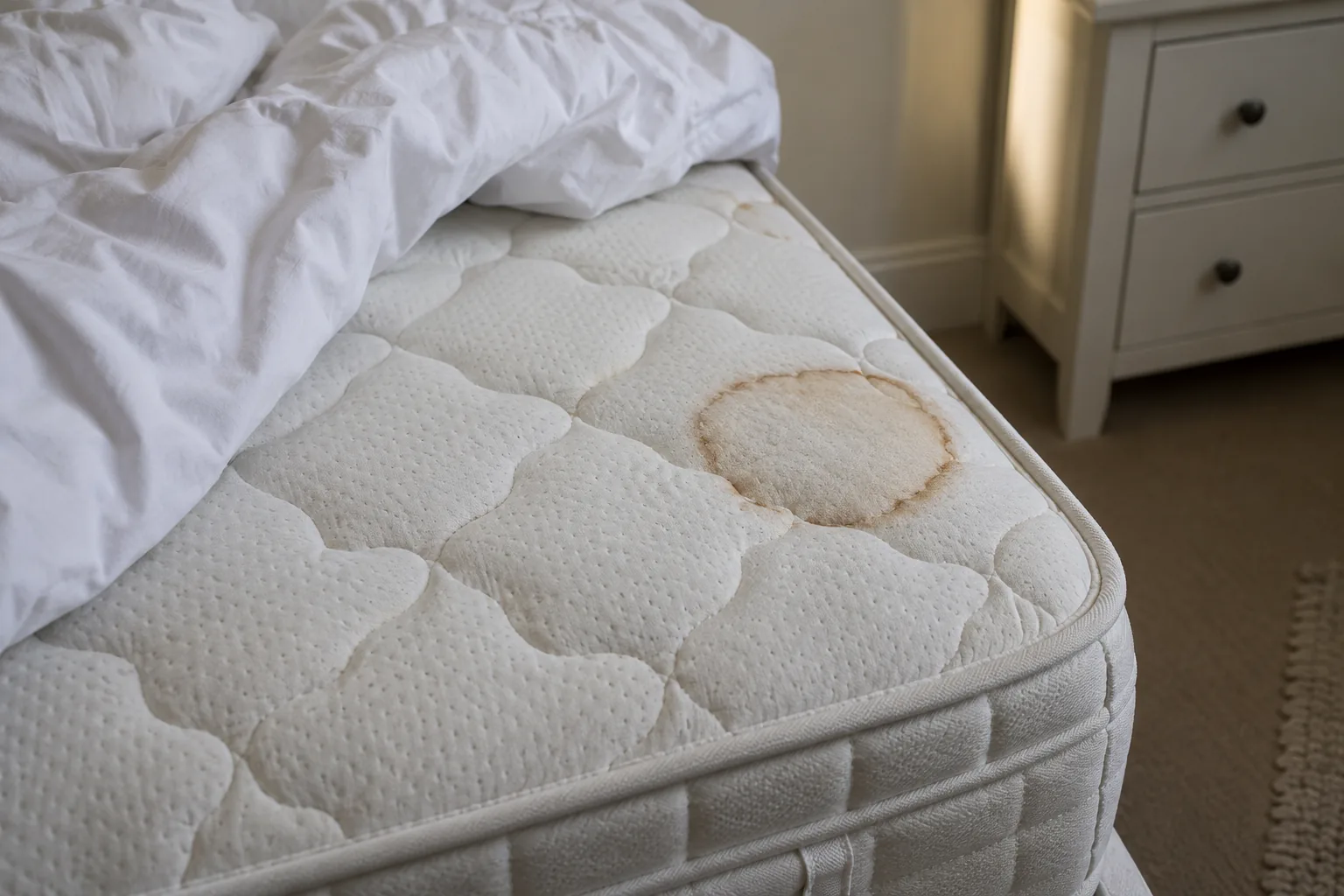
A mattress can look cleaner while damp and then show a pale brown outline once it dries. The mark may follow the edge of an old drink spill, a previous spot treatment or a patch of body moisture. It is tempting to wet the line again until it disappears, but that can move the boundary further outward. A mattress contains layers that are difficult to inspect and dry, so the cause of a tide mark matters before any more liquid is added.
This article is about an existing visible edge on mattress ticking. If the mattress has been heavily soaked, smells persistently damp or has possible mould, the decision is broader than appearance. A surface clean cannot prove that inner layers are sound.
The edge is a drying boundary, not a diagnosis
When a wet area spreads through fabric, dissolved material can move with it. As the area dries, some material can concentrate near the outer boundary and leave a line. That process is often described as wicking. What travelled may have been part of the original spill, old soil in the ticking, a cleaning product or material from a deeper layer. The shape shows where moisture reached; it does not tell you which substance caused the colour.
Think back to what happened before the line appeared. Was a drink spilled? Was a stain treated with a spray, water or an extraction machine? Did the mark emerge only after a previous professional clean? Was bedding put back while the surface still felt damp? Photograph the whole mattress and the close-up in daylight. Record the timing and all products used. A cleaner can make a better plan from that history than from a description of a “water stain” alone.
Notice the colour and texture without rubbing. A yellow or brown edge can have several causes; a grey line may be ordinary soil concentrated at the boundary. A stiff feel may indicate product residue. A discoloured line along a seam may involve different construction from one across an open panel. Do not cut open the cover to investigate; the manufacturer may have specific safety and care requirements for its layers.
Why the mark can reappear after cleaning
Cleaning may improve the top layer but leave residue lower in the ticking or padding. Moisture used during treatment can draw that material upward as it dries. The surface then appears clear for a few hours and a ring returns later. This does not automatically mean the cleaner skipped the area. It means the source of the visible line may be below the part that was cleaned.
There may also be a permanent colour or finish change. A stain can alter the fibre, and age or previous products can leave a difference even after removable soil is gone. A light mattress ticking makes a faint difference easy to see. Repeatedly treating the same line may increase the amount of moisture in the mattress without improving its appearance. A professional should explain that possibility before a second attempt.
Mattress construction adds uncertainty. A quilted top has stitching channels that can retain liquid, while foam layers may impede airflow. A spring mattress can contain padding and side panels with different materials. The care label for the exact model matters more than a generic recommendation. Even a zip does not prove that the cover is removable or washable.
What to avoid at home
Do not flood the ring with water, vinegar, bleach or detergent. Bleach can remove the original colour and affect fabric; strong products can leave residue or an odour. A broad spray may create a larger wet boundary. Heat from a hairdryer or direct heater can affect covers, adhesives or foam while the inner layers remain damp. Rubbing can roughen the surface or spread a spill.
If an accidental spill is still fresh, blot it gently with clean white absorbent cloths and keep bedding off the area. Support ventilation without forcing a hot appliance onto the mattress. Follow the maker’s guidance for the model. If the event involved a large amount of liquid or a contaminant, call for appropriate assessment rather than treating the top line as the only issue.
For an old dry tide mark, the safest immediate action is usually to stop experimenting and gather information. Check the mattress label, purchase details and any protector that was in place. Some protectors can be washed separately and may account for part of the visible problem. A removable mattress cover should only be removed if the maker says it is safe and gives instructions for refitting.
What a cleaner can realistically assess
An inspection can identify the fabric and visible condition, review earlier treatment and test a limited area if suitable. The cleaner should discuss how much moisture a proposed method introduces, how it will be removed and how drying will be checked. A test may suggest whether the colour can improve, but it cannot guarantee that no deeper residue will wick back later. A mattress cannot generally be assessed throughout its interior without disassembly.
If you contact the team about a returning tide mark, include both the original spill history and a photograph taken after full drying. The published price guide sets out starting prices; a mattress with deep moisture may need a different decision from a routine surface clean.
Ask whether the goal is to reduce the visible line, clean the wider sleeping surface, or address a deeper spill. These are different scopes. Our mattress cleaning service can assess the surface and explain what its treatment can reach. A claim that a clean surface proves all interior contamination is gone would overstate what the process shows.
If a line keeps returning, ask whether another controlled attempt is justified. A faint remaining mark may be a more acceptable result than further wetting a mattress with uncertain inner drying. If the mattress is structurally damaged, persistently damp or has a serious contamination history, replacement may be the sounder option. Make that decision based on the whole mattress, not just the visible edge.
How to judge the outcome fairly
Allow the mattress to dry fully before photographing it again. Similar lighting and viewing angles matter because a quilted surface casts small shadows. Check seams and sides as well as the original spot. Do not put sheets or a protector back while any part feels damp. Follow the cleaner’s specific drying guidance; room humidity and airflow make a fixed number of hours unreliable.
If the mark fades but does not disappear, note whether the area is otherwise dry, clean and free from odour. The remaining colour may reflect a historic change rather than fresh soil. A washable protector can make future care easier, but it should only be fitted after the mattress is dry. Keep the record of this event so any future cleaner knows which products and methods have already been tried.
The useful question is not simply “How do I erase the line?” It is “What moved to this edge, how far did moisture travel, and what treatment can be done without making the mattress harder to dry?” That leads to a safer and more honest plan.