
How to Prepare a Sofa for Professional Cleaning
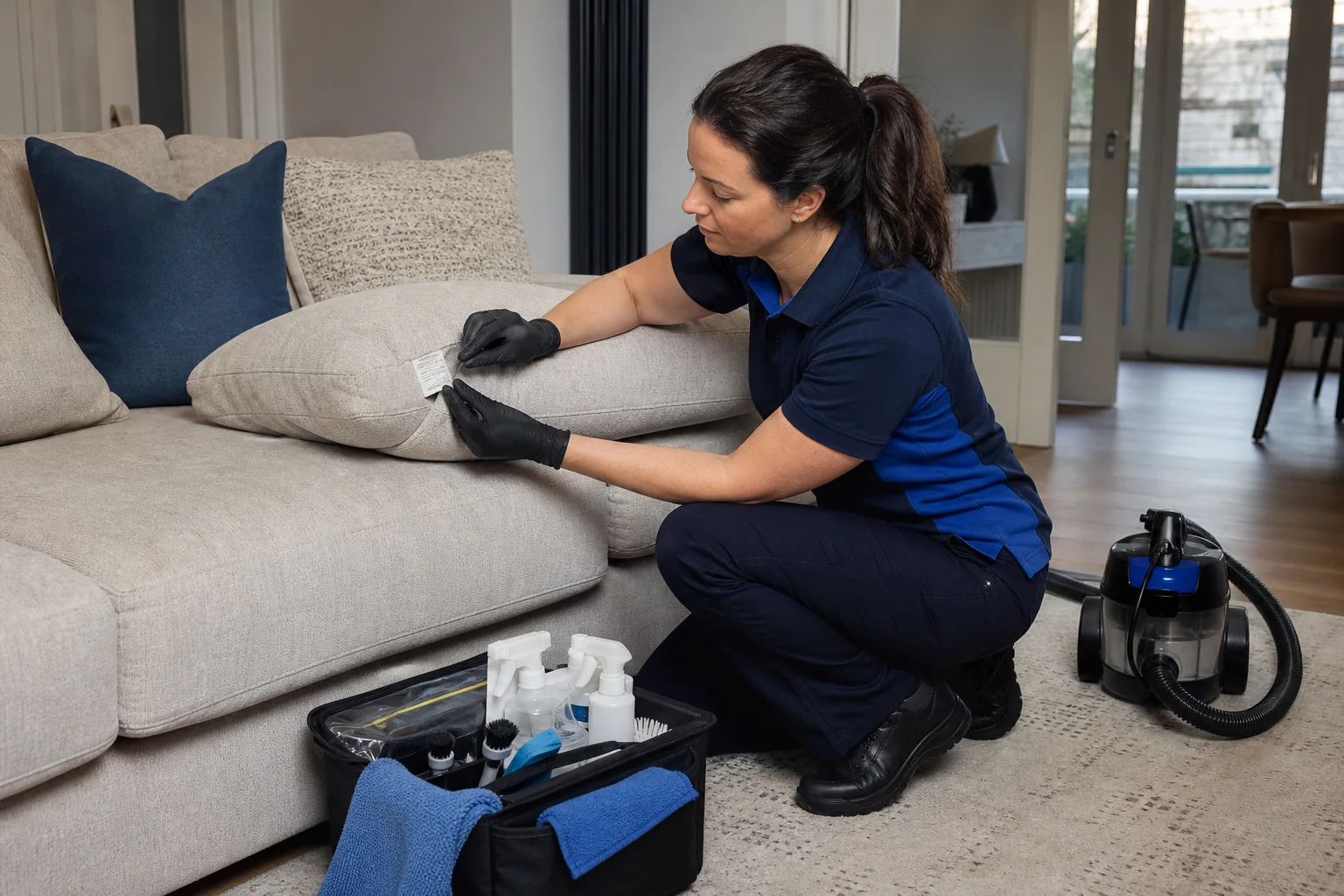
Preparing a sofa is less about moving every piece of furniture than about giving the cleaner accurate information and safe access. The fabric label, a list of spills and products used, and clear photographs can change the proposed method. Small practical steps also protect the surrounding floor and make it easier to treat the areas you actually want cleaned. A short preparation avoids a rushed decision when the technician arrives.
Start with the booking scope. Say how many seats the sofa has, whether it is a corner unit or sofa bed, and whether the cushions are loose, fixed or reversible. Identify matching chairs or footstools separately. Ask whether the quote covers outside backs, arms, loose cushion faces and decorative pillows. The sofa cleaning service and price guide give a starting point, but the actual construction and condition shape the work.
Gather the information that matters
Find the manufacturer's care label, often beneath the frame or a removable cushion, and photograph it clearly. If you still have the model information or care booklet, keep it nearby. A fabric name alone may not describe the backing, finishes or cushion filling. A zip on a cover does not prove it is machine washable. Do not remove covers unless the maker's instructions tell you to do so; a cover may be difficult to refit after shrinkage or movement.
Make a brief treatment history. What spilled, approximately when, how much, and which products were applied? Include water, household spray, rented machines and any previous professional clean. If a mark is old or its source unknown, say that rather than guessing. A cleaner can use this information to choose a sensible test and explain limits; an undisclosed strong product can make a result unpredictable.
Photograph the starting condition
Take one image of the whole sofa and closer views of stains, worn areas, loose seams, piping, buttons and any colour difference. Use ordinary daylight if possible and avoid a flash that hides texture. Photographs help record what was present before work and show which areas matter most to you. They also help when obtaining a quote, although no photograph can establish colour stability or the state of filling inside a cushion.
If an arm is worn or a seat has pills, note that specifically. Cleaning can remove suitable soil but cannot mend a torn seam, replace abraded yarn or restore sun-faded dye. A professional should point out these limits before treating the piece. If you have been using a throw over one section, show the cleaner the uncovered sofa so they can compare soil and colour across panels.
Make access safe without overdoing it
Remove loose possessions, toys, remote controls and fragile ornaments from the sofa and immediate work area. Shift a small side table if it can be moved safely. Do not strain to drag a heavy sofa across flooring or disconnect a powered reclining unit without its manual. Explain stairs, a narrow doorway, parking or loading restrictions when booking so equipment and time can be planned properly.
Point out floor finishes, nearby electrical sockets and furniture that should not be splashed. A cleaner may provide protective sheets or move light items as part of the service, but agree that before the visit. If the sofa has pets' hair in the creases, you can gently vacuum it with a suitable attachment under the maker's instructions. Avoid hard brushing, home stain products and wetting the seat in an attempt to “help” immediately before the appointment.
Decide on priorities and likely limits
Tell the technician whether the priority is general soil, a particular spill, body-oil marks on arms or an odour. These are different problems. If a large spill entered the filling, mention it before a routine surface clean begins. A clean cover does not prove that foam or padding is unaffected. A recurring odour may require source identification rather than a fragrance or repeated surface treatment.
Ask what the cleaner will inspect and test, which panels will be treated and what happens if colour is unstable. The guide to Why Upholstery Colour-Fastness Testing Matters is useful when the sofa has contrast edges or decorative details. These areas may respond differently from the main fabric and should be included in the pre-clean discussion.
Plan for the drying period
Choose an appointment time when the sofa can remain unused for the advised drying period. Arrange ordinary ventilation if possible and keep children and pets away from treated areas. Drying varies with the fabric, filling, method and room conditions, so ask the technician for guidance based on the actual work rather than relying on a fixed online promise. Do not put heavy throws or waterproof covers back on a damp seat.
If loose cushions are cleaned, ask how they should be positioned while drying and when they can be returned. A cushion face may feel dry before its deeper filling. Avoid placing an intense heater or hairdryer against the cover; heat can affect dyes, finishes or foam. Note any special instructions the technician gives about use, grooming or a follow-up check.
On the day, leave the final method to the assessment
Be available briefly to walk through the sofa's history and desired outcome. Show the label, photographs and particular marks. Let the cleaner inspect and test before agreeing the final method. If the fabric cannot be safely treated as planned, a changed scope or a decision not to proceed can be the responsible outcome. A quote based on honest limitations is more valuable than forcing an unsuitable technique.
For advance questions, use the contact page to send the details. A prepared customer helps the cleaner focus on the actual sofa and gives both sides a clearer record of what the treatment was intended to achieve.
If the sofa cannot be moved
Large corner sofas, sofa beds and reclining units can be difficult to shift. Give the cleaner dimensions and a room photograph in advance, then agree which sides are accessible. Do not unplug or move a powered unit against its manual. A cleaner may be able to work safely around it, or may need a different appointment plan. The limitation should be clear before a price is agreed so an inaccessible outside back is not mistaken for a missed area. Check that a sofa bed is closed or opened only as the maker permits.