
How to Choose a Carpet Cleaning Company
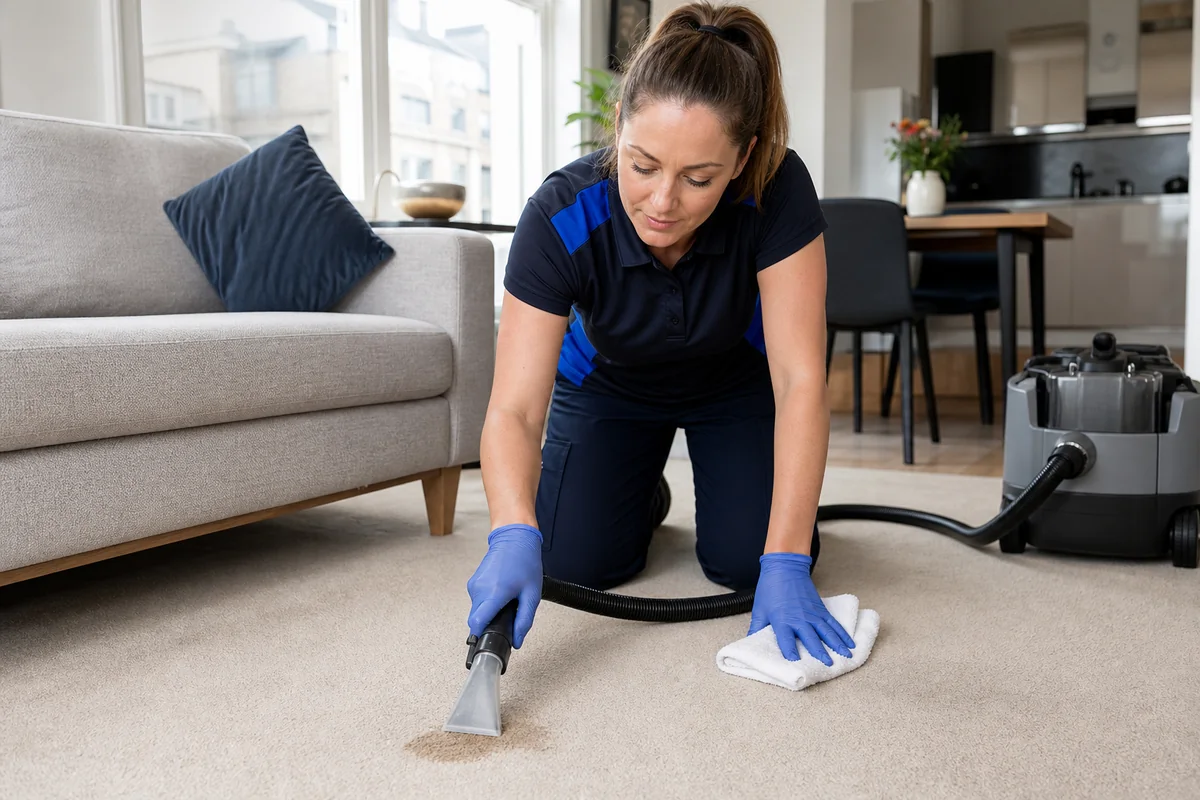
Choosing a carpet cleaning company is easier when you compare the work they propose, not just the price or the machine named in an advert. A useful provider asks about fibre, condition, room size, stains, access and previous treatment before promising a result. They can explain how they inspect, remove soil, manage moisture and handle a mark that does not respond. The aim is to find a company whose scope fits your actual carpet and whose limits are clear before the appointment.
Give every company the same starting information
List the rooms and approximate dimensions, stair treads, furniture that will remain and the property floor level. Identify specific stains, odours and any areas that have been treated with household products. Include photographs of the whole room and close details, but remember that a picture cannot show backing, dye stability or hidden moisture. If you request three quotes with three different descriptions, the prices may not be comparable. A full inventory lets each company state what it has included and where inspection could change the plan.
Mention practical access. A London flat with a lift, concierge and restricted loading differs from a ground-floor house with parking at the door. Ask whether the provider uses equipment suited to that route, whether power and water are needed and whether any access cost applies. A quote that ignores stairs, parking or the time needed to carry equipment may change on arrival. Honest details at the start reduce that surprise.
Ask about inspection before treatment
The cleaner should check fibre, backing, wear, seams and care guidance, then test colour stability where needed. A worn traffic path, bleach spot or pet accident in underlay cannot be treated as ordinary soil. Ask what they will do if the carpet proves moisture-sensitive or a previous product has left residue. A professional should be willing to revise the method or leave a risky area untreated. An absolute promise of full stain removal from a photograph is less credible than a clear explanation of what can and cannot be judged remotely.
The Carpet and Rug Institute’s residential maintenance standard suggests asking whether a cleaner vacuums before deep cleaning and whether suitable products and systems are used. It describes pre-vacuuming as critical. These are useful questions, but a company should also explain its approach to the specific carpet in your home. A list of brand names or certificates is not a substitute for identifying weak backing, unstable dye or a stain that requires a different treatment.
Compare the written scope line by line
Ask whether the quote includes inspection, pre-vacuuming, routine pre-treatment, extraction or another chosen process, spot attempts, recovery passes and aftercare. Find out which marks or odours are separate specialist work. Confirm the number of rooms and stairs, minimum charge, parking or congestion costs and whether VAT is included if relevant. Our price guide offers starting figures, while the carpet cleaning service describes the general service. The final quote should be based on the actual job.
Do not compare a quick surface maintenance visit with a restorative clean as though they were identical. Both may be reasonable for different conditions. Ask what soil the process is expected to remove and how product will leave the carpet. If a low-moisture system requires later vacuuming, clarify who will do it. If hot water extraction is proposed, ask about rinsing, recovery and drying. Our guide to steam cleaning versus hot water extraction helps decode those terms.
Check communication and realistic limits
A good company should answer ordinary questions in plain language. How will the technician protect a delicate edge? What happens if a test shows colour movement? When can children, pets and furniture return? Who should you contact if a mark reappears after drying? Vague promises such as “every stain guaranteed” or “all carpets completely dry instantly” ignore differences in fibre and construction. Ask for the important limits in writing so the result can be judged fairly.
Look at recent independent reviews for patterns, not just star ratings. Specific comments about punctuality, care of the property, communication over limitations and aftercare are more useful than a short generic compliment. Check that the business has a real contact route and can identify who is responsible for the appointment. If insurance or specialist training matters for an expensive rug or unusual fibre, ask for details rather than assume them from a website badge. No single signal guarantees good work; a consistent picture matters.
Make the booking work for your property
Schedule after dusty decorating or moving where possible, but leave enough drying time before a new tenant or office staff return. Clear small belongings and keep a decision maker available during the visit. The cleaner may find a weak seam or a stain that needs a revised scope. Agree any extra cost before additional work begins. After treatment, retain the invoice, starting photographs and the technician’s note of remaining marks. Judge colour after the carpet is dry in comparable light, and contact the company promptly if there is an unexpected issue.
The strongest choice is not necessarily the most expensive provider or the one with the most powerful machine. It is the company that understands your carpet, explains a suitable process, prices the same scope you requested and gives practical aftercare. A clear quote and honest limitations make the outcome reviewable, while a low headline price with undefined exclusions leaves both customer and cleaner guessing. Use the conversation before booking to test that clarity.
A short comparison you can keep
Write one line for each provider with the rooms covered, method, pre-vacuuming, stain exclusions, expected on-site time, drying guidance and total quoted price. Add any assumption about access or moving furniture. This makes differences visible without needing to interpret marketing language. If one company offers a substantially shorter visit, ask what stages are omitted or how it has assessed the work; there may be a legitimate difference in method, but it should be explained. If another includes specialist spot treatment, confirm which marks are actually covered and whether a failed attempt changes the cost.
Keep the quote and any amendments until the carpet is dry and the result has been checked. A follow-up question is easier to resolve when both sides can see the starting photographs and written scope. If you manage a rental or office, retain the record for the next maintenance cycle rather than starting again with only an invoice. It will show which areas needed more work and whether a different schedule would be sensible.