
How Professionals Assess Red Wine Marks on Carpet
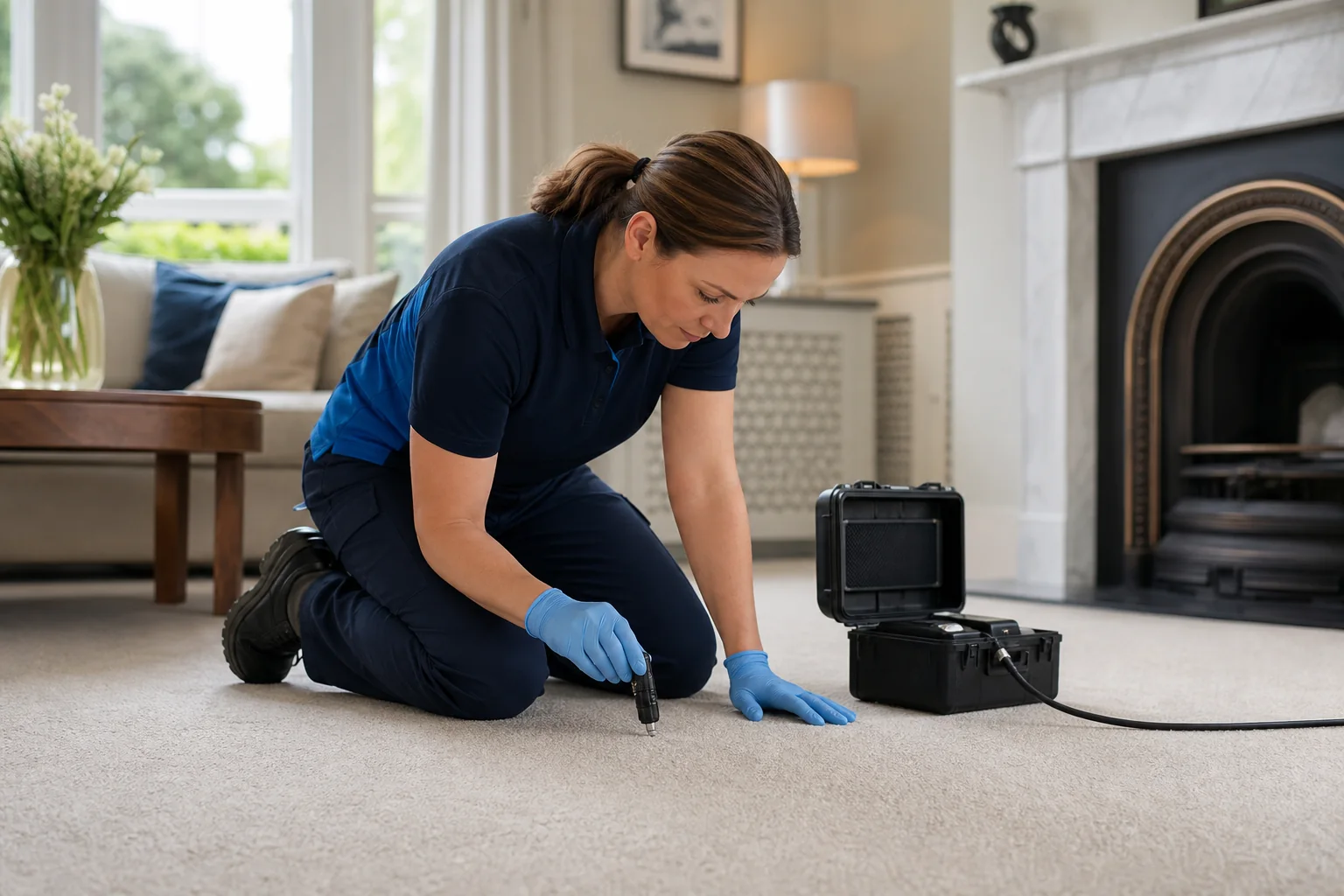
Direct answer: Blot a fresh red wine spill with a plain white absorbent cloth; do not rub or add untested household chemicals. A professional will assess the carpet fibre, dye stability, age of the mark and earlier treatments before choosing a targeted process. Complete colour removal cannot be guaranteed.
What to do in the first minutes
Keep people from walking through the spill and spreading it. Use plain white kitchen roll or an absorbent cloth to lift liquid gently, changing the material as it becomes saturated. Work from the outside towards the centre. Do not scrub, because friction can disturb the pile and widen the mark. Avoid pouring water across a large area: it may carry wine deeper into the backing and leave a broader ring. If the carpet is wool, delicate or unknown, a measured response is particularly important.
Record what spilled and when. Red wine differs from a coloured soft drink or berry juice, and a professional should know if food, grease or another substance was mixed with it. If you used a product already, keep its name or photograph the label. Do not layer a second cleaner over the first simply because the visible colour remains. WoolSafe's fine-fibre guidance recommends blotting, small quantities of suitable product and a pre-test rather than aggressive rubbing. That principle is safer than an internet recipe that assumes every carpet is colourfast.
Why the same spill gives different results
The yarn and its dyes determine what a cleaner can safely apply. A solution suitable for one synthetic carpet may change colour or texture on wool or a delicate blend. Some wine colour remains close to the surface; a larger spill can pass into backing and underlay. A dark red area on a light carpet is conspicuous, but visibility alone does not tell the technician how much removable material is present. Age, heat exposure and any previous home chemistry also affect the response.
Location changes the plan. A mark at a seam, stair nosing or damaged edge cannot be treated exactly like a sound open patch in the centre of a room. A carpet with a natural backing may need strict moisture control. A pale ring around a red centre can indicate an earlier treatment changed the dye, leaving two problems rather than one stain. The technician should ask for the sequence and inspect the construction before making a removal claim.
How a cleaner decides what to test
The professional may check colour stability in an inconspicuous place and trial a suitable treatment on a limited part of the mark. The aim is to see whether wine colour transfers, whether the carpet itself bleeds and whether the pile tolerates the proposed action. A test is evidence for the next step, not a guarantee for the whole stain. If different dyes or fibres occur in a patterned carpet, one test spot may not represent every section. An honest assessment includes uncertainty.
The cleaner also looks for dry soil and old residues. Removing ordinary soil before targeted stain work helps show the true outline of the wine mark. A previous detergent can cause foaming or hold new dirt, so it may need separate attention. The chosen process might include controlled pre-treatment, careful agitation where appropriate, extraction and drying. The exact chemistry is a professional decision based on the material and product instructions; it is not responsible to prescribe a universal bottle or concentration from the name of the drink alone.
Common home actions that complicate the job
Salt, hot water, bleach, washing-up liquid and strongly coloured cloths are often suggested in casual advice, but none should be treated as universally safe. A coloured cloth may transfer its own dye; a large amount of powder can be hard to remove; heat may alter some fibres or set other components of a mixed spill. Bleach can remove carpet dye and create a pale patch. An untested detergent can leave sticky residue that attracts soil after the wine colour seems to improve.
If a home attempt has already happened, tell the cleaner without embarrassment. The account helps them avoid an incompatible next treatment. Do not try to hide the mark with furniture before it is dry, because trapped moisture can create a further problem. Keep the area ventilated as appropriate and describe any new smell or dampness. For a broader first-response guide, see what to do after a spill on carpet.
Old wine marks and realistic limits
An older mark may improve substantially, partly or very little. The colour may be bound to the fibre, remain below the surface or have interacted with an earlier product. A light patch may be dye damage rather than residual wine. A cleaner can explain which part appears removable and should stop when further treatment risks a more conspicuous change. Repeating a process simply to chase the last pink shadow may not be in the carpet's interest.
The surrounding carpet matters too. A small cleaned island can appear bright against a generally soiled room. Discuss whether a targeted spot visit or a broader clean is more appropriate, and what the quote covers. The carpet cleaning service can assess the mark in context; published prices are a starting point, not a guarantee of stain outcome.
Check the result after drying
If the spill reached the underlay, a visual result and a moisture result should be considered separately. A carpet face can look clear while the layer beneath still needs drying or assessment. Conversely, a dry carpet can retain a faint colour change with no active moisture problem. Ask the cleaner which outcome they are judging and what was actually tested. That distinction prevents a cosmetic success from concealing a deeper concern and prevents a harmless residual shade from prompting unnecessary saturation.
For a household with repeated entertaining spills, prevention has a practical role. Keep an absorbent white cloth available, know the carpet's care guidance and avoid placing a glass on an unstable surface beside a pale carpet. No preparation guarantees a spotless floor, but it can shorten the time before safe blotting begins. A prompt, accurate account of what happened is more valuable to the cleaner than a series of improvised remedies.
Freshly wet pile can hide a residual shade or make it look darker. Allow the recommended drying time and compare the area in steady light with the photographs taken before work. If colour seems to return, note whether the patch is sticky or damp and when it reappeared; material moving from below the pile is a different question from permanent colour damage. Contact the cleaner before adding another product. A useful handover explains what was removed, what may remain and whether more treatment has a sensible chance of helping.
Wine marks are one example of why a stain name does not determine a result. The carpet's condition, the spill's depth and the treatment history are part of the problem. A measured immediate response and a professional assessment protect the carpet while giving the best realistic chance of improvement.